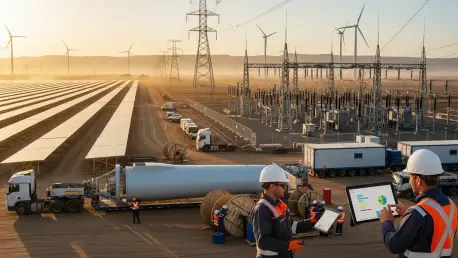

Christopher Hailstone has spent years deep in the engine room of India’s power system—running energy portfolios, standing up large renewable programs, and troubleshooting grid reliability. In this conversation, he breaks down how a KKR-backed platform can scale to 17 GW by 2029/30 while keeping risk in check, and how its sister transmission play, Resonia—backed by GIC—will stitch the grid together. We talk financing cadence, build sequencing across solar and wind, opportunistic M&A, and the practicalities of evacuation, curtailment, and community engagement. The through line is disciplined capital, ruthless execution metrics, and transmission-first planning that aligns with India’s 500 GW non-fossil ambition.
You plan to raise $6–8 billion over five years; walk me through the funding timeline, instruments you’ll favor, and the gating milestones you must hit each year, and share examples of past raises that shaped your approach.
The $6–8 billion program tracks our build curve: we front-load commitments to match procurement and construction windows, then layer in follow-ons as assets derisk. We lean on a mix of sponsor equity, construction-linked debt, and refinancing once projects season, with room for platform-level raises when scale unlocks pricing. Annual gates are simple: capacity awarded, PPAs signed, and transmission readiness. In a prior raise, we learned that pre-tying loan disbursements to equipment delivery and offtake sign-offs compresses carry and keeps lenders comfortable—so we’ll replicate that rhythm here.
To reach 17 GW by 2029/30, what project-by-project ramp do you envision, how do you sequence solar versus wind, and which execution metrics will you track quarterly to stay on course?
We start with solar-heavy blocks to accelerate megawatt additions, then layer wind to stabilize profiles and improve blended capacity factors. Quarterly, we track notice-to-proceed conversion, module/turbine arrival dates, interconnection readiness, and test energy milestones. A clean handoff from EPC to O&M—documented punch lists closed within weeks—is our tell that the ramp is holding. If transmission energization slips, we rebalance starts to nodes where evacuation is ready.
With 2 GW installed and another 2 GW due within 10 months, how will you de-risk commissioning, what bottlenecks have you already solved, and which early-warning indicators will your team watch weekly?
We push long-lead items into earlier slots and co-locate temporary substations where practical so commissioning isn’t hostage to one dependency. We’ve already streamlined land conversion and right-of-way sequencing to keep civil works ahead of nacelle and module arrivals. Weekly, we watch crew productivity, grid backfeed dates, weather windows, and punch list aging. If any line item trends the wrong way for two weeks, we trigger contingency crews and resequence tasks.
You said acquisitions will be “opportunistic and value-based”; what valuation thresholds, asset health checks, and counterparty tests do you apply, and can you share a story where diligence changed the bid?
Value-based means we price against long-term cash reliability, not headline megawatts. We put assets through energy yield re-forecasts, inverter and gearbox forensics, and PPA discipline checks. One diligence cycle uncovered an offtaker’s curtailment history that wasn’t visible in the teaser; we re-cut the bid and built a curtailment reserve into our model. The seller accepted because we shared the logic—transparency beats bravado.
Among the 3–5 GW of capacity up for sale in India, how do you prioritize operating versus under-construction assets, what yield bands define “go/no-go,” and how do you price curtailment and offtake risk?
Operating assets with clean PPAs get first look when integration value is high; under-construction works if we can drop in our playbook and fix schedule drift. Rather than chase headline yield, we screen for cashflow resilience under curtailment and delay scenarios. We haircut merchant tails, penalize weak grid nodes, and reward demonstrated payment discipline. If the downside case still clears our hurdle qualitatively, we proceed.
The first $3 billion phase is fully funded and the next $2 billion is partly funded; what capital stack mix will you target next, how will cost of capital evolve, and what triggers unlock the remainder?
We’ll extend the base with additional sponsor equity and construction debt, then recycle via portfolio refinancings once the second tranche seasons. Cost of capital tightens as the platform scales and the first wave performs. Triggers are straightforward: assets commissioned, availability targets met, and stable collections against contracted terms. That proof unlocks the remainder at better terms.
As a KKR-backed platform, how do you translate their governance and risk frameworks into day-to-day project decisions, what KPIs matter most to them, and which past KKR playbooks are you adapting?
Governance shows up as pre-defined risk gates—no major spend without offtake and evacuation clarity—and tight audit trails on procurement. KPIs that matter: safety, availability, collections, and schedule adherence. We’re adapting portfolio refinancing and operational excellence playbooks that focus on cash conversion and cost-out without compromising reliability. It’s disciplined, repeatable, and it works.
India wants 500 GW of non-fossil capacity by 2030; how do your projects slot into that buildout, which states or nodes are most attractive, and what timelines or permits most influence your siting choices?
We fit by delivering bankable megawatts where transmission is expanding and industrial demand is growing. We favor nodes with clear evacuation timelines and predictable land processes. The biggest swing factors are interconnection approvals and right-of-way; once those are locked, everything else is project management. We move only when those permits are on path, not promised.
What contracting model will you favor—C&I, utility PPAs, or merchant—and how do you structure clauses on escalation, penalties, and grid availability, with examples of terms that protected you in past volatility?
We’ll keep a core of utility PPAs for stability and add C&I where credit is strong; merchant is an optionality layer, not the foundation. We push for inflation-linked escalations, clear curtailment compensation, and grid availability warranties where grid owners take responsibility. In one volatile quarter, our curtailment clause preserved cash that would’ve evaporated under a softer form. Contracts are shock absorbers—engineer them that way.
How will you manage supply chain for turbines, modules, and storage, what localization targets are realistic, and which vendor scorecards or dual-sourcing rules will keep costs and delays in check?
Dual-source critical components and hold qualified alternates in reserve so a single hiccup doesn’t derail a site. Vendor scorecards combine delivery fidelity, quality escapes, and after-sales responsiveness. Localization follows performance and reliability—if the local option meets spec and service thresholds, it moves up the pecking order. We also pre-book logistics to de-risk port and road bottlenecks.
On operations, what step-by-step plan will you use to lift availability and capacity factors, how will digital tools or predictive maintenance feature, and which monthly metrics will you publish?
Start with preventive maintenance discipline, then add condition monitoring and anomaly alerts tied to work orders. We chase micro-losses—soiling, yaw misalignment, and inverter clipping—with targeted fixes. Monthly we’ll publish availability, energy yield versus plan, and collections performance. Transparency keeps teams sharp and lenders calm.
Grid integration is pivotal; how will you coordinate with CTU/STU, plan for evacuation capacity, and hedge curtailment, and can you share a case where transmission planning changed your project design?
We co-plan with CTU/STU from pre-bid to commissioning, mapping evacuation capacity and outage windows. Where risk is higher, we hedge with diversified nodes and contractual curtailment protections. In one case, moving a substation location advanced our energization date and cut curtailment risk materially. Transmission-first saved months on the schedule.
Resonia plans $1.5–2.5 billion annual transmission investment and to win $2–3 billion in projects; how will your teams align on corridors, phasing, and interconnections, and what joint milestones will you set?
We share a common corridor map and phase builds so generation meets ready bays, not construction fences. Joint milestones include right-of-way secured, tower erection curves, and substation readiness dates. A single integrated schedule avoids finger-pointing and maximizes on-time energization. That’s how you turn capex into electrons.
With India expected to award $14–16 billion in transmission projects, what bidding strategy, risk-sharing terms, and execution playbook will you rely on, and which lessons from Sterlite Power still guide you?
We bid where we have right-of-way confidence and construction muscle, not just where tariffs look pretty. Risk-sharing revolves around realistic timelines, clear variation mechanisms, and accountability for grid outages. From the Sterlite Power experience, we learned to over-invest in early surveying and community outreach—it saves money later. Execution is a logistics business; prepare like it.
On financing, which hedging tools, tenors, and amortization profiles best fit your cash flows, how do you manage currency or rate risk, and what debt covenants or DSCR targets keep lenders comfortable?
We match debt to contracted cash flows with sculpted amortization and keep rate exposure in a narrow band using plain-vanilla hedges. Currency is minimized at the asset level; if used, it’s hedged to the life of the exposure. Covenants center on prudent leverage and fixed-charge coverage so operations can breathe. Lenders back predictability, not heroics.
What community, land, and ESG practices will you apply from site scouting to operations, how will you measure outcomes, and can you share an instance where early engagement avoided a later setback?
We start engagement before the first survey peg, prioritize local hiring, and invest in services the community values. Outcomes are measured through grievance closure rates and project access metrics. In one instance, early dialogue rerouted a haul road away from grazing land—what could have been a blockade became a partnership. Respect buys you time you can’t purchase later.
Looking at workforce and partners, what talent pipeline, EPC selection rules, and incentive plans will you use, and which past team structures delivered the best on-time, on-budget builds?
We keep a bench of pre-qualified EPCs with proven safety and schedule records and align pay with milestone achievement. Internally, cross-functional pods—engineering, procurement, permits, and finance—own outcomes end-to-end. Incentives reward schedule fidelity and availability post-COD, not just mechanical completion. That structure consistently hits dates without cutting corners.
For storage or hybrid plants, how will you size batteries, set dispatch rules, and capture peak pricing, and what real-world data points have shifted your assumptions on duration or cycling?
We size storage to firm the profile and protect against curtailment, then refine dispatch rules based on node behavior. Operational data taught us that cycling discipline preserves asset life and cash; we don’t chase every price spike. Hybrids are designed to clear interconnection limits while maximizing deliverability during peak windows. It’s about certainty of revenue, not just chasing highs.
What are the top three risks that could derail the 17 GW target, how will you mitigate each with concrete steps and timelines, and which leading indicators will trigger course corrections?
Transmission delays, permitting slippage, and supply chain shocks. We mitigate with transmission-first planning, early permit locking, and dual-sourcing. Leading indicators are slippages in interconnection dates, aging permit trackers, and supplier delivery warnings. If any flash, we resequence builds and reallocate resources within weeks, not quarters.
When you look five years ahead, what success metrics beyond capacity—like LCOE, reliability, and customer retention—will define winning for Serentica and Resonia, and which milestones will tell you you’re truly on track?
Winning means competitive LCOE, grid-friendly profiles, and customers renewing because we deliver reliably. Milestones are steady availability, predictable collections, and on-time interconnections that keep capex productive. If we can scale while keeping those basics tight, 17 GW isn’t just a number—it’s durable value. That’s the bar we’re setting for ourselves.
What is your forecast for India’s transmission buildout?
With awards in the pipeline and capital ready, I expect the country to convert plans into steel at pace, especially where renewable corridors and demand centers align. If stakeholders maintain discipline on right-of-way and standardize timelines, the grid can keep up with the generation surge. The tell will be consistent commissioning of lines aligned with renewable hubs, not sporadic one-offs. Do that, and India’s 2030 vision becomes grid reality, not just a target.