
The massive, energy-hungry engines of the healthcare sector are finally meeting their match as New York State pivots toward a more sustainable clinical landscape. For decades, the constant operation of life-saving machinery and stringent climate control requirements has made hospitals some of the most difficult structures to transition away from fossil fuels. This new $20 million investment represents more than just a financial injection; it is a calculated effort to transform these 24/7 institutions from environmental liabilities into models of high-tech efficiency.
The Current State of Healthcare Infrastructure and Energy Intensity
New York’s hospitals operate as mini-cities that never sleep, requiring staggering amounts of energy to maintain sterile environments and power sophisticated diagnostic tools. This relentless demand creates a heavy carbon footprint, placing healthcare facilities in the “hard-to-abate” category of the state’s building landscape. Modernization is no longer a luxury but a clinical necessity, as aging boilers and outdated HVAC systems struggle to meet contemporary environmental standards while keeping operational costs manageable.
The New York State Energy Research and Development Authority (NYSERDA) is leading this charge through the Empire Building Challenge, an initiative designed to prove that institutional change is possible at scale. By focusing on hospitals, the state is aligning its broader mission for a zero-emissions economy by 2050 with immediate public health goals. Reducing on-site combustion does not just help the planet; it removes local pollutants from the very air that patients breathe during their recovery.
Strategic Evolution of the Empire Building Challenge
Emerging Technologies and the Shift Toward Electrification
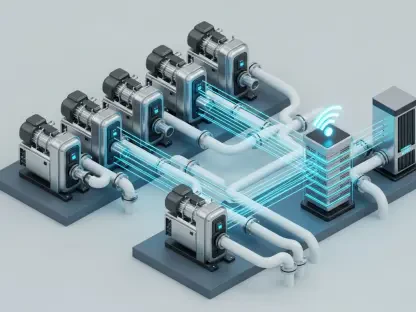
The technological frontier of hospital management is moving rapidly toward the total elimination of legacy fossil-fuel systems. High-efficiency electric heat pumps are replacing massive steam boilers, offering a precision in temperature control that was previously unattainable. Moreover, the integration of advanced heat recovery systems allows facilities to capture waste energy from one part of the building—such as data centers or laundry facilities—and repurpose it to provide hot water or space heating elsewhere in the clinical setting.
Evolving the building envelope is equally critical for handling the specialized ventilation needs of acute care environments. Smart HVAC controls are being deployed to monitor air quality in real-time, adjusting airflow based on occupancy and specific medical requirements. These innovations create scalable retrofits that serve as blueprints for national healthcare systems, proving that the high stakes of a hospital environment are compatible with deep decarbonization.
Market Projections and the Impact of Public Investment
The $20 million pool, which offers a $5 million per-project funding cap, is designed to de-risk the initial stages of these complex transitions. This public investment acts as a catalyst for the green construction sector, signaling to contractors and engineers that there is a long-term pipeline for specialized clean energy work. As more hospitals adopt these technologies, the workforce in New York is expected to grow, creating a specialized niche for technicians who understand both medical safety protocols and advanced thermal energy storage.
Looking ahead, the long-term operational savings generated by these upgrades create a virtuous cycle. When a hospital reduces its utility expenditures, those saved funds can be redirected into patient care, staff recruitment, and medical research. Forecasts for the healthcare decarbonization market through 2030 suggest that early adopters will be better positioned to weather rising energy costs and more stringent carbon penalties, effectively turning sustainability into a competitive advantage.
Technical and Financial Obstacles in Retrofitting Acute Care Facilities
Upgrading an active hospital is akin to performing surgery on a marathon runner mid-race. Navigating the complexities of high-stakes environments, such as intensive care units and sterile surgical zones, requires meticulous planning to ensure that life-support systems remain uninterrupted. The physical constraints of older urban hospitals often mean there is little room for new equipment, forcing engineers to find creative ways to fit modern electric infrastructure into footprints designed for the coal age.
Beyond the physical hurdles, the high initial capital expenditures remain a significant barrier for many non-profit healthcare providers. Deep energy retrofits require a level of upfront investment that can be difficult to justify against immediate clinical needs. Furthermore, there is a distinct expertise gap; the sophisticated nature of electric heat recovery systems requires specialized operations and maintenance training. Without a staff that understands how to manage these new digital and thermal systems, the full potential for energy savings can never be realized.
Navigating the Regulatory Landscape and Climate Standards
Compliance with the New York Climate Leadership and Community Protection Act (CLCPA) has become a primary driver for institutional planning. The mandates established by the act require a drastic reduction in statewide emissions, and hospitals are being looked to as anchor institutions that must lead by example. Funding for these initiatives is largely supported by the Regional Greenhouse Gas Initiative (RGGI), which reclaims carbon costs and reinvests them into local sustainability projects.
Environmental justice is a central pillar of this regulatory framework, with mandates requiring that 35 to 40 percent of the benefits from clean energy investments flow toward disadvantaged communities. This ensures that modernization efforts do not just happen in wealthy suburbs but are prioritized in urban centers where respiratory health issues are often most prevalent. Furthermore, the Public Service Commission’s 2025 Energy Efficiency and Building Electrification Order provides a clear regulatory roadmap for how utilities and institutions must collaborate to upgrade the electrical grid to handle the new loads.
The Future of Resilient and Sustainable Medical Institutions
Modern hospitals are evolving into anchor institutions that provide community stability during extreme climate events. By moving toward fully electrified, net-zero campuses, these facilities become more resilient against fuel supply chain disruptions. Innovations in indoor air quality are also proving to have a direct correlation to patient recovery rates, suggesting that the “green” hospital of the future will also be a more effective place for healing. This shift toward sustainable infrastructure is already influencing federal healthcare policy and sparking private sector investment in medical real-estate.
Reimagining Healthcare Through Clean Energy Innovation
The Empire Building Challenge has effectively positioned hospitals as a catalyst for systemic change across the entire built environment. This $20 million investment underscored the critical intersection of environmental stewardship, fiscal responsibility, and clinical excellence. For hospital administrators, the path forward required leveraging state funding not just as a subsidy, but as a foundation for a total infrastructure overhaul. Stakeholders who moved early to secure these resources were able to mitigate the risks of future regulatory non-compliance while simultaneously improving the quality of their care environments.
The initiative ultimately demonstrated that even the most energy-intensive sectors could align with a low-carbon future without compromising safety or performance. New York’s healthcare network transitioned toward a model of resilience that prioritized both planetary health and patient outcomes. As these retrofits were completed, the state established a national standard for institutional sustainability, proving that the financial and technical hurdles of decarbonization were surmountable through targeted public-private collaboration. Future efforts must now focus on expanding these successes to smaller rural clinics and long-term care facilities to ensure a comprehensive green transition for all medical services.