
The insatiable energy demand of the digital economy is placing an unprecedented strain on the nation’s aging power grid, leading to a critical debate over who should bear the multi-billion-dollar cost of supporting the infrastructure for artificial intelligence and cloud computing. In response to this mounting pressure, a bold and potentially transformative piece of federal legislation, the “DATA Act of 2026,” was introduced in the U.S. Senate to offer a radical solution: allowing massive energy consumers like data centers to completely sever ties with the public grid. Proposed by Senator Tom Cotton on January 8, the bill aims to create a new regulatory pathway for these facilities to develop their own private, isolated power systems. This approach seeks to shield the American public from the spiraling electricity rates driven by the tech industry’s growth, but it also raises profound questions about the future of the utility industry and the principle of shared infrastructure costs that has underpinned the U.S. power system for a century.
A New Framework for Energy Independence
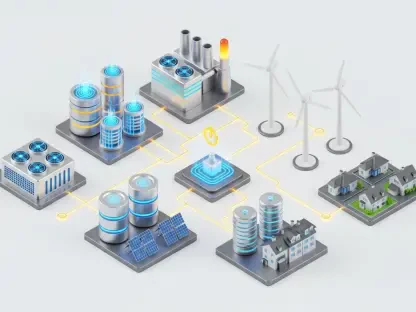
The legislation’s core mechanism is the creation of a novel legal entity defined as a ‘‘consumer-regulated electric utility,’’ or CREU. This entity would be uniquely authorized to generate and deliver electricity directly to a single, large industrial customer, such as a data center or advanced manufacturing plant. However, this freedom comes with a strict and non-negotiable stipulation: the entire operation, from the power generation facility to the customer’s site, must be “fully physically isolated” from the bulk power system. This clause is absolute, meaning the customer cannot rely on the existing grid for any purpose, including as a source of backup power in case of an emergency or equipment failure. This all-or-nothing approach is designed to create a clean break, ensuring that these private energy islands operate with complete self-sufficiency, thereby preventing any potential impact on the stability and reliability of the public electricity network that serves millions of homes and businesses.
Should a data center and its dedicated power provider meet this stringent isolation requirement, they would be rewarded with sweeping exemptions from the federal government’s energy oversight. The DATA Act explicitly removes the CREU and its customer from the jurisdiction of the Federal Power Act and the U.S. Department of Energy, effectively carving them out of most federal energy law. Critically, this would shield them from the authority of the Federal Energy Regulatory Commission (FERC), freeing them from federal oversight on electricity rates, mandatory reliability standards, and, most importantly, participation in regional transmission planning and its associated cost-allocation rules. While the bill also grants exemptions from the Public Utility Regulatory Policies Act (PURPA) and the Public Utility Holding Company Act (PUHCA), it is not a blanket deregulation. The legislation clearly states that these entities would remain fully subject to all applicable environmental laws, local zoning ordinances, and state permitting requirements.
The Rationale Behind the Radical Proposal
According to Senator Cotton, the legislation is intended to “eliminate outdated federal regulations” that hinder innovation and to empower energy-intensive industries to build and operate “customized electricity systems” tailored to their unique operational needs. The primary driver for this proposal is the growing alarm over the impact that massive new loads, particularly from data centers, are having on electricity markets and infrastructure. Recent capacity auctions and transmission cost studies, especially within the PJM Interconnection, have shown that data center demand is a principal factor behind the need for expensive new grid infrastructure. These substantial costs are ultimately socialized and passed on to all consumers, regardless of their consumption levels, in the form of higher monthly electric bills. By allowing these large loads to go off-grid, the bill aims to ensure that the entities creating the demand are the ones who bear the full financial responsibility for meeting it.
This legislative approach has been interpreted by some energy policy experts as a direct challenge to the data center industry to prove its claims of desiring energy independence. Mike Jacobs, a senior manager for the Union of Concerned Scientists’ energy program, suggested the bill effectively calls the bluff of developers, giving them the freedom they seek but also placing the full burden of risk squarely on their shoulders. Under the DATA Act’s framework, the responsibility for managing volatile power costs, ensuring near-perfect reliability for sensitive computing equipment, and handling any subsequent operational failures would belong entirely to the data center developers and their private power suppliers. In this view, the arrangement could be highly beneficial for the public, protecting the grid and its broader customer base from the immense financial and operational risks associated with integrating these gigawatt-scale facilities into an already stressed system.
Anticipated Opposition and Economic Headwinds
Despite its potential to insulate the public grid from the costs of the digital boom, the DATA Act is expected to face a formidable wall of opposition, primarily from the nation’s incumbent utility companies. For more than a century, large industrial consumers have represented a cornerstone of the regulated utility business model, providing a stable and substantial source of revenue that underpins the financial health of these companies. Allowing these major customers to completely defect from the grid would remove a key component of the utilities’ rate base, representing a direct and significant threat to their established revenue streams and future growth prospects. The conflict at the heart of this bill is a fundamental clash between the traditional public utility framework and a new, deregulated model of energy independence for large-scale consumers, a battle that pits established economic interests against a disruptive new approach.
The potential economic ramifications of such a policy are not merely theoretical. A state-level law signed in New Hampshire in the summer of 2025, which exempts off-grid power providers from state utility laws, offers a powerful and cautionary precedent. While proponents of the New Hampshire law praised it as an “elegant solution” to foster competition, critics quickly highlighted significant risks. Energy consultant Rao Konidena pointed out that if such laws successfully encourage large consumers to move off-grid through private bilateral agreements, the substantial fixed costs of maintaining the public grid infrastructure do not vanish. Instead, these costs are reallocated across a shrinking pool of remaining customers, a phenomenon known as “cost-shifting.” This could lead to progressively higher electricity rates for residential and small business users—the very consumers who cannot leave the grid. This scenario also threatens to undermine established state rules for recovering “stranded costs,” which are the prudent investments utilities made under the long-held regulatory assumption that their largest customers would remain on the system.
A Defining Moment for a Modern Grid
The introduction of the DATA Act of 2026 marked a pivotal moment in the national struggle to balance explosive industrial growth with the stability of public infrastructure. The legislation presented a clear, if radical, solution to the challenge posed by the digital economy’s energy appetite: complete physical and regulatory separation. The ensuing debate crystalized a fundamental tension between two competing models for the future of energy. On one side stood the traditional, regulated public utility model, designed over a century to provide universal service and socialize infrastructure costs across all users. On the other was a new, deregulated vision of energy independence for large-scale consumers, one that promised innovation while insulating the public grid from their immense demands. Ultimately, the proposal forced a national conversation about whether this separation, while protecting the public from direct cost impacts, would inadvertently threaten the established utility business model and create a two-tiered energy system, shifting billions in fixed grid costs onto captive residential and small commercial customers.