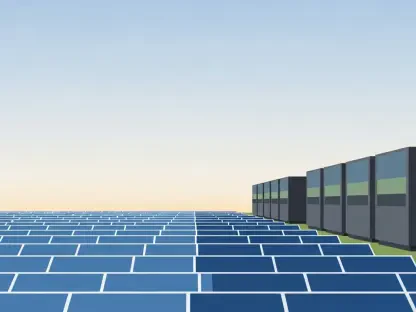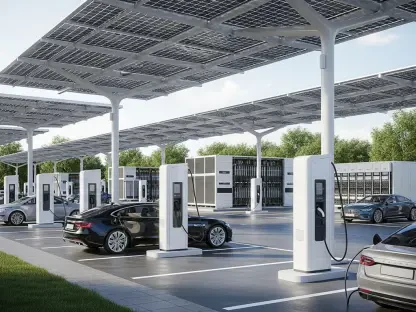

Modern global energy grids are currently undergoing a structural transformation as the relentless power requirements of artificial intelligence force a shift toward storage systems that can operate far beyond the four-hour limit of standard lithium-ion batteries. Long-Duration Energy Storage (LDES) has moved from a conceptual necessity to a critical infrastructure requirement. While traditional batteries excel at stabilizing momentary frequency fluctuations, they struggle to bridge the multi-day gaps inherent in a solar and wind-dependent grid. This technology bridges those gaps by providing discharge cycles that span from ten hours to several consecutive days, ensuring that high-compute facilities remain operational regardless of weather patterns.
The emergence of these technologies responds directly to the limitations of current lithium-based chemistries, which suffer from high costs and safety concerns when scaled for massive capacity. As industrial demand for 24/7 carbon-free energy grows, LDES provides the missing link for localized microgrids and regional utilities alike. By decoupling energy capacity from power output, these systems allow for more flexible installations that can be tailored to the specific needs of massive data centers or remote industrial complexes.
Evolution and Core Principles of Long-Duration Energy Storage
The fundamental principle of LDES centers on the ability to decouple the storage medium from the power conversion equipment. Unlike conventional batteries where the two are inextricably linked, many long-duration systems allow for the scaling of storage capacity simply by adding more low-cost material, such as water, air, or iron. This architectural shift enables energy to be stored during periods of excess renewable generation and released steadily over several days, solving the “intermittency” problem that has long plagued wind and solar adoption.
This evolution is specifically relevant in the context of the current industrial landscape, where the push for decarbonization intersects with a massive increase in power consumption. Short-duration batteries are effective for the “duck curve” peak in the evening, but they are insufficient for prolonged periods of low renewable output. LDES provides the resilience required for high-demand users to commit to fully green operations without the risk of blackouts or the need to fall back on fossil-fuel peaker plants during extended lulls in weather-driven power.
Diversification of LDES Technology Components
Iron-Air Battery Systems
The iron-air battery represents one of the most promising avenues for low-cost, high-capacity storage. This technology utilizes a “reversible rusting” process: during discharge, the battery breathes in oxygen from the air and converts iron metal to rust; during charging, an electrical current turns the rust back into iron. This cycle can provide discharge periods lasting 100 hours or more, making it an ideal solution for balancing the grid across several days of unfavorable weather.
In terms of large-scale infrastructure, iron-air systems offer a significant advantage over lithium because the primary materials—iron, water, and air—are abundant and inexpensive. This makes them particularly attractive for massive data center operations that require a “buffer” against grid instability. By deploying these systems, large-scale compute firms can maintain uptime during regional grid stress without relying on diesel generators, aligning their operational requirements with environmental targets.
Zinc-Based and Flow Battery Architectures
Zinc-based systems and flow batteries, specifically vanadium and organic varieties, provide a different approach to scalability and safety. Flow batteries store energy in liquid electrolytes housed in external tanks, which are pumped through a cell stack to generate electricity. This design is inherently non-flammable and allows for nearly infinite cycle life, as the electrolytes do not degrade in the same manner as solid-state battery electrodes.
In industrial settings where safety is a paramount concern, these chemistries are often prioritized over energy density. Since they do not carry the risk of thermal runaway, they can be installed in closer proximity to sensitive hardware and urban centers. Their modular nature also means that as a facility expands its power needs from 2026 to 2030, additional storage tanks can be added to the existing system without needing a complete overhaul of the power electronics.
Thermodynamic and Alternative Storage Media
Beyond chemical batteries, mechanical and thermodynamic systems are gaining traction as viable storage alternatives. CO2-based storage, for example, utilizes the phase change of carbon dioxide between its gaseous and liquid states to store and release energy. When excess electricity is available, CO2 gas is compressed into a liquid; when power is needed, the liquid is allowed to expand back into a gas, driving a turbine to generate electricity in a closed-loop system.
These mechanical alternatives often utilize existing industrial components, such as compressors and turbines, which helps in reducing maintenance costs and leveraging established supply chains. Their real-world usage is becoming more frequent in diversifying the global storage toolbox, providing a robust mechanical counterpoint to chemical storage. These systems are particularly effective for long-term seasonal storage, where the goal is to shift energy over months rather than just hours.
Emerging Trends and Industry Shifts
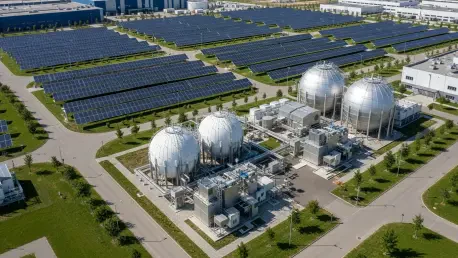
A significant trend in the current market is the shift from utility-led procurement to industrial-led demand. While utilities were historically the primary buyers of energy storage, technology firms and heavy industrial players are now driving the market. This change is fueled by the “need for speed,” as companies seek to bypass the years-long queues for grid connections by building their own self-sufficient energy ecosystems. By integrating LDES with onsite renewables, these firms can secure their power future independently of centralized grid upgrades.
Innovations in self-sufficiency models are also reshaping how industrial facilities are designed. We are seeing a move toward “islanded” operations where the facility generates, stores, and manages its own power. This trend is not just about sustainability; it is a logistical response to congested electrical infrastructure. Regulatory environments are beginning to adapt, allowing these private energy networks to interact with the broader grid as flexible assets rather than just passive consumers.
Real-World Applications in AI and Industrial Infrastructure
The most prominent application of LDES is currently found within the AI sector. Data centers supporting high-compute workloads require a level of power stability that traditional grids are struggling to provide. Collaborations between storage providers and cloud infrastructure firms have resulted in the creation of massive energy capacity projects that act as “giant batteries” for the digital world. These installations ensure that even if the primary grid fails, the immense computational tasks of modern AI can continue uninterrupted.
Beyond the tech sector, LDES is proving vital for stabilizing microgrids in regions with aging infrastructure. In areas where the grid cannot handle the influx of renewable energy or the surge in industrial demand, long-duration batteries serve as a shock absorber. They capture energy that would otherwise be wasted during peak production times and release it when the local grid is most stressed, preventing local outages and reducing the need for expensive infrastructure overhauls.
Technical, Regulatory, and Market Challenges
Despite the clear benefits, LDES faces significant technical hurdles, most notably a lower round-trip efficiency compared to lithium-ion batteries. While lithium systems can return approximately 85% to 90% of the energy put into them, many LDES technologies operate in the 60% to 70% range. Additionally, these systems often require a much larger physical footprint, making them less suitable for space-constrained urban environments where land costs are high.
The market and regulatory frameworks also remain behind the curve. Most current payment mechanisms compensate storage operators for short-term services like frequency regulation, which favors lithium-ion’s rapid-fire capabilities. There is a pressing need for sophisticated financial frameworks that value “patience”—the ability to provide backup power over several days. Without these incentives, the broad commercial deployment of LDES across the utility sector may continue to lag behind the rapid adoption seen in the private industrial market.
Future Outlook and Technological Trajectory
The trajectory of LDES points toward a future where material science breakthroughs will further drive down costs. As production scales from 2027 onward, the use of earth-abundant materials like iron and zinc will make these systems significantly cheaper than their lithium counterparts for large-scale applications. The maturation of these technologies will facilitate a full transition to a resilient, 100% renewable energy grid, where long-duration storage acts as the foundational layer of stability.
As LDES moves from an “early adopter” phase into the mainstream, its impact will be felt far beyond the AI sector. It will become a cornerstone of global energy security, allowing nations to rely on their own renewable resources without the fear of weather-induced energy crises. The integration of advanced AI management software will further optimize these systems, predicting energy needs and weather patterns to manage discharge cycles with unprecedented precision.
Summary and Final Assessment
The analysis of long-duration energy storage revealed a symbiotic relationship between the exponential growth of AI and the evolution of power infrastructure. It was observed that while the utility sector remained cautious, the urgent demands of the data center industry acted as a primary catalyst for technological advancement. LDES proved to be the essential bridge required to connect variable renewable generation with the constant, high-stakes demand of modern industrial processes.
The transition toward these systems signaled a major departure from the short-term storage models of the past decade. It was concluded that the success of LDES would depend on the development of more sophisticated market mechanisms and continued improvements in round-trip efficiency. Ultimately, the maturation of long-duration technology established the groundwork for a more resilient and flexible global energy landscape, ensuring that the digital age remained powered by sustainable and reliable sources.