
A single splintered utility pole, left standing against the fierce Texas wind despite prior warnings of its decay, has become the focal point of a monumental legal battle with billions of dollars and corporate accountability hanging in the balance. Two years after the Smokehouse Creek Fire scorched a path of destruction across the Texas Panhandle, the state’s lawsuit against utility giant Xcel Energy raises profound questions about corporate responsibility in an era of escalating climate-related disasters. The case is not just about assigning blame for a tragedy; it’s a high-stakes confrontation that could redefine how public utilities are held accountable for the safety and maintenance of their infrastructure.
A Single Pole and a Billion Dollar Blaze
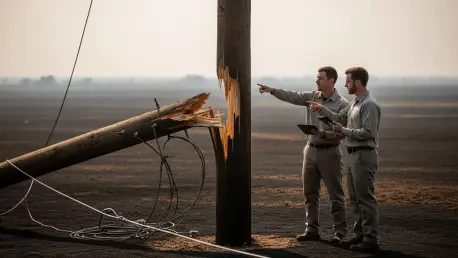
The origin of the largest wildfire in Texas history is traced back to a seemingly unremarkable moment on February 26, 2024, when a wooden utility pole owned by Xcel subsidiary Southwestern Public Service Co. snapped and fell. The state’s lawsuit alleges this was no random accident. Investigators claim that nearly three weeks prior, a contractor had flagged this very pole for “priority one replacement,” a warning that Texas argues went unheeded. The fallen power line is accused of igniting the dry grasslands, sparking a blaze that would soon rage out of control.
This singular event set the stage for a legal showdown between the State of Texas and one of the nation’s major energy providers. The state, represented by Attorney General Ken Paxton, has framed the incident not as an unavoidable catastrophe but as the direct result of corporate neglect. In contrast, Xcel Energy is preparing a robust defense, creating a conflict that pits a state’s demand for justice against a corporation’s defense of its operational practices.
The Scope of Devastation Beyond the Land
The impact of the Smokehouse Creek Fire extended far beyond charred earth, leaving a permanent scar on the landscape and its communities. The inferno consumed over one million acres, an area larger than the state of Rhode Island, and tragically claimed three lives. Among the ecological casualties was a state-run wildlife preserve, completely obliterated by the flames, erasing decades of conservation efforts and decimating local ecosystems.
The economic repercussions are equally staggering. The state’s lawsuit estimates the total damages to be at least $1 billion, a figure encompassing lost property, livestock, and agricultural revenue. For Texas, the direct costs mounted into the tens of millions, covering everything from extensive firefighting operations and emergency infrastructure repairs to the complex aftermath of managing injured wildlife and canceling long-standing grazing and hunting leases that are vital to the local economy.
Texas’s Case A Pattern of Alleged Negligence
At the heart of the state’s lawsuit are accusations of “blatant negligence,” with Texas officials asserting that the historic fire was “entirely preventable.” The legal filings detail a timeline of alleged failures, beginning with the collapse of the decayed pole on February 26. The state’s case was compounded when, just a day later, a second Xcel pole allegedly failed, starting the nearby Reamer Fire, which quickly merged with the Smokehouse Creek Fire and intensified its destructive power.
Texas argues this represents a systemic problem, not an isolated incident. The lawsuit contends that Xcel Energy ignored clear and repeated warnings about its aging infrastructure across the region. Moreover, the state accuses the company of making false or misleading public statements about its commitment to safety and reliability, creating a dangerous gap between its public image and its operational realities that ultimately put Texans at significant risk.
A Battle of Words Xcel’s Rebuttal and a History of Litigation
In response to the lawsuit, Xcel Energy has expressed deep disappointment, stating it had attempted to work with the Attorney General’s office to find a resolution before legal action was taken. The company has vowed to “vigorously” defend itself against the allegations of negligence. However, Xcel’s public statements have been complex; while denying legal fault, the company has also asserted that it has “accepted responsibility from the beginning” for its role in the fire.
This dual approach is reflected in its actions. In contrast to its denial of negligence, Xcel established an expedited claims process for victims of the fire, which has already resulted in settlement agreements totaling $361 million for a majority of the claims filed. This legal strategy is not without precedent. Following the 2021 Marshall Fire in Colorado, Xcel reached a $640 million civil settlement while simultaneously maintaining that its equipment was not the cause of that devastating blaze.
The High Price of Accountability What Texas Demands
The state’s objectives in this lawsuit extend beyond simple financial compensation, aiming to enforce long-term changes in Xcel’s business practices. While the suit seeks a minimum of $1 million in monetary damages for the state’s losses, its most significant demands are preventative. Texas is asking the court for a powerful injunction to prohibit Xcel from passing any fire-related costs, legal fees, or penalties on to its customers through rate increases, thereby shielding the public from the financial fallout of the company’s alleged failures.
Furthermore, the state is pursuing an order that would bar Xcel from advertising its equipment as safe or reliable until it can prove that systemic infrastructure issues have been addressed. This demand strikes at the core of corporate messaging, aiming to curb what the state considers deceptive safety claims. If successful, these legal remedies would set a new standard for utility accountability, forcing the company to internalize the full cost of the disaster and reform its safety protocols before it can rebuild public trust.
The legal battle that ensued from the Smokehouse Creek Fire became a landmark case in corporate accountability. The state’s aggressive pursuit of both financial and preventative measures highlighted a growing intolerance for what it deemed systemic neglect of critical infrastructure. Ultimately, the court’s decisions reflected a pivotal shift, underscoring that the responsibility for preventing such catastrophes rested heavily on the corporations whose equipment crisscrossed the vulnerable landscapes, forever altering the expectations for utility providers in Texas and beyond.