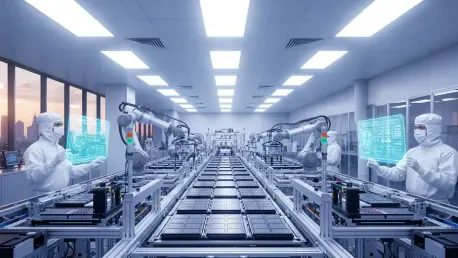

The Indian government’s aggressive pursuit of a localized electric vehicle battery supply chain marks a pivotal shift in the nation’s industrial strategy toward achieving complete energy independence within the next three years. This initiative, spearheaded by the Ministry of Mines, focuses on establishing a resilient and comprehensive ecosystem that integrates raw material acquisition, advanced domestic processing, and strategic international partnerships. Central to this ambitious roadmap is the management of lithium, which remains the fundamental component for current and near-future battery technologies. Despite having relatively limited domestic lithium reserves at this stage, India intends to leverage its growing technological expertise to process imported spodumene and other lithium-bearing minerals. By establishing a robust regulatory framework and providing clear incentives for industrial growth, the nation is positioning itself to bridge the gap between resource scarcity and the soaring demand for clean transportation solutions across the subcontinent. This strategy is not merely about manufacturing but involves a fundamental restructuring of how the country views its mineral wealth and its role in the global technology trade.
Strategic Asset Acquisition: Securing the Global Supply Chain
A primary pillar of this strategy involves the aggressive pursuit of overseas mineral assets in resource-rich regions such as South America, Australia, and Canada to ensure a steady supply of battery-grade materials. State-owned enterprises, including Hindustan Copper Limited, are currently participating in competitive bidding processes for copper blocks in Chile, recognizing that copper is as vital to the electrification process as lithium itself. This outward-looking approach is designed to mitigate the risks associated with global price volatility and supply chain bottlenecks that have historically hampered the domestic automotive sector. By securing long-term offtake agreements and ownership stakes in foreign mines, India is building a buffer against external shocks. Furthermore, these international collaborations often involve knowledge sharing and technological transfers, which are essential for enhancing the technical proficiency of Indian mining firms as they adapt to the specific requirements of the global energy transition. This proactive international diplomacy ensures that the country remains a key player in the global mineral trade.
Parallel to international mining ventures, the government is developing a dedicated policy for critical mineral processing to encourage private sector participation in high-value conversion activities. There is a significant focus on providing financial and regulatory incentives to companies that establish large-scale lithium and nickel conversion facilities within Indian borders. This addresses a historical vulnerability where raw materials were often shipped abroad for refinement only to be re-imported as expensive finished products. By fostering a domestic refining industry, the government aims to capture a larger share of the value chain while reducing the carbon footprint associated with long-distance shipping of unrefined ores. The strategy emphasizes the creation of specialized industrial parks equipped with the necessary infrastructure, such as dedicated power lines and water treatment facilities, to support the complex chemical processes required for battery-grade mineral production. This shift toward domestic value addition is expected to create thousands of high-tech jobs while cementing India’s role as a major regional hub.
Resource Optimization: Innovation in Extraction and Recycling
Beyond conventional mining, the strategy incorporates circular economy principles by promoting the recovery of critical minerals from industrial waste streams and secondary sources. The National Critical Mineral Mission has recently accelerated efforts to extract valuable elements like gallium, cadmium, and tantalum from non-traditional sources such as coal fly ash and mining tailings. This innovative approach not only reduces environmental degradation but also provides a supplemental stream of materials that are otherwise difficult to procure. Legislative reforms and the introduction of the National Geoscience Data Repository have streamlined the entire mining sector, leading to a record 212 mineral blocks being auctioned during the 2025–26 cycle. The government intends to reach a milestone of 100 active critical mineral blocks within the current fiscal year to ensure that domestic production keeps pace with the expanding EV market. This comprehensive data-driven approach allows for more precise exploration and reduces the time between discovery and commercial extraction.
The transition toward self-sufficiency also encompasses a significant overhaul of the copper and rare earth sectors to support the broader electronics and green energy industries. India is moving away from its traditional reliance on refined copper imports, shifting its focus toward processing imported ores locally to meet the entirety of its domestic demand this year. Projections suggest that this increased capacity will eventually lead to a surplus, allowing the nation to become a net exporter of processed copper to neighboring markets. Additionally, the government is tapping into coastal monazite resources located in southern and eastern states to build a sustainable rare earth supply chain. These minerals are essential for the high-performance magnets used in electric vehicle motors and wind turbines. By integrating these diverse mineral streams into a single industrial policy, the nation is creating a multi-layered defense against resource scarcity. This systematic development of the entire mineral lifecycle ensures that the battery ecosystem remains viable even as global competition intensifies.
Strategic Resilience: Navigating Geopolitical and Economic Realities
The successful realization of this battery ecosystem required a sophisticated understanding of global geopolitical tensions and their impact on industrial inputs. While the primary focus remained on energy storage, the government proactively monitored disruptions in West Asia to stabilize the supply of key minerals and agricultural inputs like potash. Policymakers established a framework that prioritized the diversification of trade routes and the strengthening of bilateral ties with emerging mineral powers. This foresight allowed the domestic industry to bypass potential price spikes and maintain a steady production rhythm throughout the middle of the decade. Looking ahead, the focus shifted toward the mass adoption of solid-state and alternative battery chemistries to further reduce the dependency on traditional lithium-ion systems. Industry leaders were encouraged to invest in research and development that utilized more abundant materials, ensuring that the progress made during this three-year push became a permanent fixture of the industrial landscape. The integration of advanced analytics and automated mining technologies eventually secured India’s position as a resilient leader.