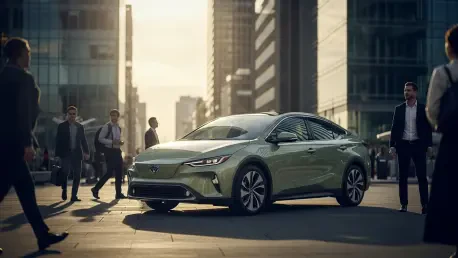

Imagine a world where the push for cleaner transportation hits a sudden roadblock, yet drivers still find a way to steer toward greener options. In the United States, the elimination of the $7,500 federal tax credit for electric vehicles has jolted the market, sending shockwaves through sales of battery electric vehicles (BEVs) and plug-in hybrids (PHEVs). Despite this setback, hybrid electric vehicles (HEVs) are emerging as a surprising lifeline. This roundup dives into diverse perspectives from industry analysts, environmental advocates, and market watchers to explore how hybrids are sustaining the clean car momentum amid subsidy cuts. The goal is to unpack the shifting dynamics, compare opinions on the role of government incentives, and assess what this means for the future of sustainable mobility.
Decoding the Post-Subsidy Clean Car Landscape
The abrupt end to federal tax credits has reshaped the clean vehicle market in profound ways. Sales data reveals a staggering 47% drop in BEV sales and a 19% decline in PHEV sales in a single month following the policy change, marking some of the lowest figures in recent memory. Industry observers note that many consumers rushed to buy before the subsidies vanished, creating a temporary spike that made the subsequent fall even more pronounced. This sharp downturn raises questions about whether pure electric and plug-in hybrid models can remain competitive without financial nudges from the government.
Environmental groups, however, argue that the importance of clean vehicles transcends short-term sales dips. They emphasize that reducing fossil fuel dependence in transportation—a sector responsible for a significant chunk of US emissions—remains non-negotiable. Some advocates suggest that while the subsidy cut stings, it could force manufacturers to innovate on pricing and technology. This perspective paints a picture of a market at a crossroads, compelled to adapt rather than collapse under policy pressures.
Meanwhile, a contrasting view from market analysts highlights an unexpected bright spot: the resilience of non-plug-in hybrids. With a 6% sales increase to a record 159,431 units in a key month, HEVs are bucking the trend of decline seen in other categories. This surge suggests that consumers still crave low-emission options, especially when the upfront costs align closer to traditional cars. The roundup of opinions points to a consensus that hybrids might be the pragmatic choice for many Americans navigating economic constraints.
Voices on Hybrid Dominance and Market Shifts
Unpacking the BEV and PHEV Sales Slump
The drastic fall in BEV and PHEV sales has sparked heated debate among industry watchers. Data from national research labs shows year-to-date figures for these vehicles still reflect growth compared to past years, with combined sales hitting 1.3 million units. Yet, the month-over-month plunge underscores a stark reality: without subsidies, the price gap between electric models and conventional vehicles becomes a dealbreaker for many. Some analysts argue this exposes a heavy reliance on government support, suggesting that consumer price sensitivity could stall full electrification efforts.
On the flip side, certain market experts believe the downturn is a temporary hiccup. They point to historical patterns where pre-subsidy purchase surges often lead to exaggerated drops, predicting a stabilization as dealers adjust pricing strategies. This optimism hinges on the belief that education around long-term cost savings—such as lower fuel and maintenance expenses—could offset initial sticker shock. The divergence in thought here reveals a tension between immediate market reactions and longer-term adoption potential.
Environmental policy advocates add another layer, cautioning against overreacting to monthly data. They stress that while subsidies are powerful tools, their absence shouldn’t derail the broader mission of cutting emissions. Their take is that focusing on infrastructure—like expanding charging networks—might matter more than financial incentives in convincing hesitant buyers to go electric. This blend of views underscores the complexity of navigating a post-subsidy era.
Hybrids as the Unexpected Market Leader
Amid the gloom surrounding BEVs and PHEVs, hybrids have seized the spotlight with remarkable sales growth. Year-to-date figures show HEVs reaching 1.64 million units, outpacing combined electric and plug-in hybrid sales by 25%. Industry insiders attribute this success to lower upfront costs and the lack of dependence on charging infrastructure, making hybrids a seamless transition for drivers wary of range anxiety. This practical appeal seems to resonate deeply in a cost-conscious market.
However, not everyone sees hybrids as the ultimate solution. Some environmentalists warn that leaning too heavily on HEVs risks delaying the shift to full electrification, as hybrids still rely on gasoline to some extent. They argue that while hybrids reduce emissions, they fall short of the zero-emission promise of BEVs. This critique suggests a need for balance—using hybrids as a bridge while pushing for innovations that make pure electric vehicles more accessible.
A third perspective from market strategists highlights the adaptability of consumer preferences. They note that hybrids cater to a wide demographic, from urban dwellers to rural drivers, offering fuel efficiency without lifestyle upheaval. This flexibility, they contend, positions HEVs as a stabilizing force in turbulent times. Together, these insights reveal hybrids as both a savior and a stopgap, sparking discussion on their long-term role in clean transportation.
Consumer Trends and Technological Horizons
Economic pressures post-subsidy cuts have undeniably shifted buyer priorities toward affordability, with many gravitating to hybrids for their middle-ground appeal. Regional differences also play a part, as urban areas with better charging access see steadier BEV interest, while rural regions favor the no-fuss nature of HEVs. Analysts observing these trends suggest that consumer education on total ownership costs could sway decisions, even without tax credits to sweeten the deal.
Innovation remains a recurring theme among tech-focused commentators. They point to potential advancements in battery production that could slash BEV prices over the next few years, from 2025 onward. Others advocate for aggressive expansion of public charging stations to ease infrastructure concerns. These ideas challenge the notion that subsidies alone drive clean car adoption, proposing instead that market-driven solutions could fill the gap left by policy changes.
A more nuanced take emerges from sustainability experts who question whether full electrification is the only viable path. They propose that hybrids, with their immediate emission reductions, offer a realistic stepping stone while the industry tackles larger hurdles. This diversity of thought illustrates a market in flux, where consumer behavior and technological progress must align to sustain momentum toward greener roads.
Policy Impacts and Global Comparisons
The subsidy cut has exposed the limits of government-driven growth, prompting varied reactions from policy analysts. Many argue that while federal incentives jumpstarted EV adoption, their removal highlights the urgent need for self-sustaining market mechanisms. Ideas like manufacturer rebates or state-level programs surface as potential alternatives to keep clean vehicles competitive against traditional gasoline models.
Looking globally, some observers draw parallels with other nations where clean car adoption thrives without heavy subsidies, relying instead on strict emission regulations and public awareness campaigns. These examples suggest the US could benefit from a broader policy toolkit, balancing support for HEVs, BEVs, and PHEVs to meet diverse needs. The comparison sparks curiosity about whether a less incentive-dependent model could work domestically.
Finally, forward-thinking voices call for enhanced collaboration between policymakers and automakers to prioritize consumer trust. They envision initiatives that demystify clean vehicle benefits, from fuel savings to environmental impact, as a way to maintain interest. This spectrum of opinions on policy underscores a shared recognition that subsidies are just one piece of a much larger puzzle in decarbonizing transportation.
Lessons Gathered from Diverse Insights
Reflecting on this roundup, the clean car market’s adaptability stood out as a key takeaway. While BEVs and PHEVs stumbled without federal support, hybrids surged ahead, proving that consumer demand for cleaner options endured despite hurdles. Industry perspectives clashed on whether subsidies are indispensable, yet most agreed that cost reduction and infrastructure growth were critical to reviving electric vehicle appeal.
Environmental advocates reminded everyone of the ultimate goal—slashing transportation emissions—urging a focus on practical steps over policy setbacks. Market analysts, meanwhile, celebrated hybrids as a bridge technology, though cautioned against sidelining full electrification ambitions. These differing views painted a rich tapestry of challenges and opportunities that shaped the ongoing conversation around sustainable mobility.
Looking back, the collective insights offered a roadmap for stakeholders. Automakers could have doubled down on making BEVs more affordable, while policymakers might have explored creative incentives beyond tax credits. For consumers, weighing the immediate benefits of hybrids against the long-term potential of electric vehicles became a prudent approach. Moving forward, digging deeper into global case studies or emerging tech innovations could have provided even more clarity on navigating this evolving landscape.