
The sudden convergence of Japanese capital and American industrial demand has triggered a massive $550 billion energy infrastructure realignment that few could have predicted just a short time ago. This landmark trade agreement has emerged as a cornerstone of American industrial policy, designed specifically to fortify the national power grid against the surging electricity demands of the digital age. By merging Japanese technical expertise with vast American natural resources, the partnership creates a unique framework where federal governments maintain asset ownership while industry giants lead the actual execution. As the nation stares down a looming capacity crisis, this initiative provides a blueprint for how international alliances can solve domestic infrastructure bottlenecks and fuel the next generation of industrial growth through 2026 and beyond.
Public-private partnerships of this scale represent a historic shift in how the United States manages its power reliability. Rather than relying solely on local utility commissions to plan for incremental growth, this deal utilizes a centralized strategy to address the rapid load requirements of modern manufacturing and cloud computing. The collaboration serves as a signal to global markets that the American energy landscape is entering a period of high-capacity expansion, moving away from fragmented regional planning toward a more cohesive national security strategy. Consequently, this transpacific cooperation is not just about building plants; it is about redefining the economic sovereignty of the American grid.
Strategic Power Hubs and the Race for Grid Reliability
NextEra Energy: The Blueprint for Large-Scale Natural Gas Hubs
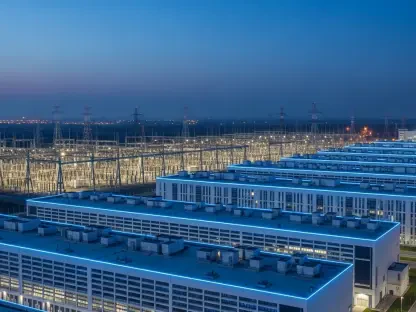
At the core of this infrastructure surge is a major push for reliable, dispatchable power led by NextEra Energy Resources. The company is currently spearheading the development of 9.5 gigawatts of natural gas generation distributed across two critical regional clusters. In Anderson County, Texas, a $16 billion facility is being integrated into the ERCOT territory to leverage the state’s abundant fuel supplies for 5.2 gigawatts of industrial demand. This move highlights a growing recognition among energy providers that “firm” power—energy available at any time regardless of weather—is essential for the high-intensity needs of modern industrial users who cannot afford even momentary fluctuations in supply.
Simultaneously, a $17 billion hub in southwest Pennsylvania is designed to plug directly into the PJM Interconnection, utilizing the Marcellus and Utica shale regions to stabilize the mid-Atlantic grid. By placing generation so close to the source of the fuel, these projects minimize transportation costs and maximize efficiency for the 3.5 gigawatts of load they are intended to support. This dual-hub strategy challenges the recent assumption that renewable energy alone can meet the rapid load growth seen in the 2026 industrial sector, positioning natural gas as a necessary bridge for maintaining grid stability during the transition to a high-demand future.
The Nuclear Renaissance: Deploying Small Modular Reactors in the Southeast
While natural gas provides immediate scale, the deal also places a heavy bet on carbon-free baseload power through a partnership with GE Vernova Hitachi. This $40 billion venture focuses on deploying BWRX-300 small modular reactors in Tennessee and Alabama to provide 3 gigawatts of nuclear capacity. Unlike the massive, often-delayed nuclear projects of previous decades, these reactors offer a scalable and flexible approach to atomic energy. Industry observers view this as a significant policy shift toward “energy dominance,” where advanced nuclear technology is treated as a vital tool for long-term grid decarbonization and national security.
The deployment of these reactors signifies a departure from traditional utility models that favored massive, centralized plants. By focusing on smaller, modular designs, the project aims to reduce the financial risks and long construction timelines that historically hampered the nuclear industry. Though high upfront costs and complex regulatory hurdles remain, the federal commitment to this technology suggests that advanced nuclear is now seen as an indispensable component of the “always-on” energy mix required to sustain American technological leadership. This move effectively integrates cutting-edge Japanese engineering with the established American nuclear regulatory framework to create a more resilient Southeast power corridor.
SoftBank’s Ohio Mega-Project: The Integration of Data Centers
In Pike County, Ohio, a disruptive model of energy development is taking shape through a collaboration between Japan’s SoftBank Group and AEP Ohio. This 10 gigawatt project utilizes Department of Energy land at the Portsmouth Site to power a massive data center complex with 9.2 gigawatts of dedicated natural gas generation. This “behind-the-meter” strategy bypasses traditional grid congestion by placing generation and consumption in the same physical location. It reflects a growing trend where federal land is used to fast-track critical infrastructure, ensuring that the systems required for artificial intelligence have dedicated power without straining residential energy supplies.
This localized approach addresses one of the most significant challenges facing modern grid operators: the sheer speed at which data center demand is outstripping transmission capacity. By decoupling these massive loads from the public grid, developers can avoid the years-long queues typically associated with new interconnects. The Ohio project serves as a laboratory for future industrial parks, demonstrating that the future of energy may lie in self-contained ecosystems where the power source and the end-user exist in a symbiotic, closed-loop arrangement.
Joint Sovereignty: The Changing Economics of Infrastructure
The structure of this $550 billion deal introduces a “Joint Sovereignty” ownership model that could redefine how major American infrastructure is financed. By sharing ownership between the U.S. and Japanese governments while outsourcing operations to the private sector, the deal mitigates the financial risks typically associated with multi-billion-dollar energy projects. This arrangement allows for the injection of massive amounts of foreign capital while ensuring that the physical assets remain under the strategic oversight of federal authorities. However, this model also forces a re-evaluation of the traditional utility model, suggesting that future grid expansions may rely more on geopolitical treaty-making than on local utility commissions.
Market analysts emphasize that this framework allows the federal government to play a more active role in securing “off-take” agreements, essentially helping to find the customers who will buy the electricity before the plants are even finished. This de-risking mechanism is crucial for attracting the private investment necessary to build at this scale. While it raises questions about the long-term influence of foreign capital on domestic energy prices, it provides a much-needed solution for financing the high-capacity infrastructure that the 2026 economy demands.
Navigating the Path Toward Implementation
To successfully integrate these massive projects, energy providers and policymakers prioritized the alignment of “off-take” agreements with physical construction timelines. Stakeholders focused on securing long-term contracts with “hyperscaler” clients early in the development phase to ensure financial viability. Furthermore, streamlining the interconnection process within the PJM and ERCOT regions was essential to prevent these projects from languishing in administrative queues. For industry leaders, the strategy involved leveraging federal land leases to bypass local zoning hurdles, ensuring that the speed of deployment matched the rapid growth of energy-intensive industries like AI and advanced manufacturing.
The coordination between the Department of Commerce and the Department of Energy facilitated a smoother regulatory path than many had anticipated. By creating a unified front for these developments, the federal government was able to reduce the friction that often stalls large-scale energy initiatives. This proactive stance allowed developers to move from memorandum to physical site preparation with unprecedented speed. The focus remained on ensuring that the infrastructure for artificial intelligence and cloud computing had the dedicated power it needed, preventing a situation where industrial growth could be throttled by a lack of available electrons.
The Transformation of the American Power Landscape
The U.S.-Japan energy deal marked a decisive turning point in how the United States approached its energy future, moving away from fragmented, local planning toward a centralized, strategic industrial policy. By blending natural gas, advanced nuclear, and innovative financing, this $550 billion investment addressed the urgent power needs of the 21st-century economy while strengthening a vital geopolitical alliance. As these projects transitioned from concepts to operational assets, they served as the foundation for a more resilient, high-capacity grid capable of sustaining American technological leadership. The success of this initiative was measured by its ability to provide the “always-on” energy required to power the next industrial revolution, proving that international cooperation was the key to domestic energy security.
Moving forward, the focus must shift toward optimizing the existing transmission corridors to accommodate the influx of new power while maintaining the stability of local distribution networks. Industry leaders should explore the potential for modular grid upgrades, such as high-voltage direct current lines, to bridge the gap between these new generation hubs and emerging industrial centers. Additionally, policymakers might consider expanding this joint-sovereignty model to other sectors like water infrastructure or telecommunications, leveraging similar international partnerships to address aging national assets. The legacy of this deal will likely be its role in creating a more flexible and robust energy market that can adapt to the unpredictable demands of an increasingly electrified global economy.