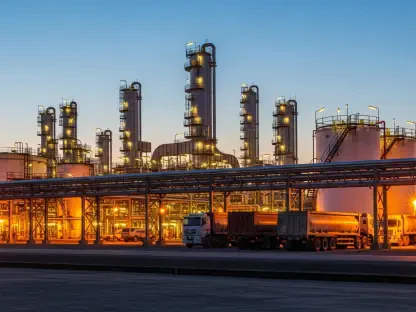
What happens when a nation’s energy lifeline is suddenly squeezed by global politics? For India, one of the world’s largest importers of crude oil, the answer is unfolding in real time as Western sanctions on Russian oil tighten their grip. Once a cornerstone of affordable energy amid volatile global prices, Russian crude is fast becoming a geopolitical liability for Indian refiners. This dramatic pivot, driven by intensifying restrictions tied to the Ukraine conflict, raises pressing questions about energy security and economic stability in a developing giant.
Why This Shift Matters
The stakes couldn’t be higher. India’s reliance on Russian oil, which peaked at a staggering 1.87 million barrels per day (bpd) just months ago, is projected to plummet to a mere 600,000-650,000 bpd by the close of this year—a three-year low. This isn’t just a statistic; it’s a signal of a tectonic shift in global oil dynamics, with India caught between the allure of discounted fuel and the pressure of international compliance. The ripple effects touch everything from fuel prices at the pump to diplomatic ties with Western powers, making this a story of far-reaching consequence.
The Roots of Reliance on Russian Crude
For years, India has leaned heavily on Russian oil to fuel its burgeoning economy. The appeal was undeniable: discounted rates offered a buffer against the wild swings of global markets, especially since the Ukraine conflict began. This partnership wasn’t merely opportunistic; it became a strategic pillar for a nation hungry for cost-effective energy to power industrial growth and keep inflation in check. Yet, this dependency placed India on a diplomatic tightrope, drawing scrutiny from Western nations keen to isolate Russia economically.
How Sanctions Are Redrawing the Map
Now, the landscape is shifting under the weight of Western sanctions from the United States, European Union, and Britain targeting Russian oil giants like Rosneft and Lukoil. Key deadlines—such as the November cutoff for winding down dealings and the EU’s January limit on processing Russian crude—have sent shockwaves through Indian refineries. Moreover, upcoming EU regulations banning fuel refined from Russian oil by 2026 are already casting a long shadow, forcing companies to rethink export strategies well ahead of schedule.
The impact is immediate and stark. Indian refiners, once eager to capitalize on cheap Russian crude, are pulling back under mounting pressure. State-run giants like Indian Oil Corp and Bharat Petroleum Corp have publicly committed to avoiding sanctioned entities, while others, such as Hindustan Petroleum Corp, have stopped purchases altogether. Even Reliance Industries, operator of the world’s largest refining complex, now limits processing to domestic needs rather than exports, signaling a broader wave of caution sweeping the sector.
Inside the Industry: Voices of Uncertainty
The tension is palpable among industry insiders. A senior official from a major refinery, speaking anonymously, described the situation as “a tightrope walk between affordability and compliance.” Analysts echo this sentiment, noting that the loss of discounted oil could strain operational budgets while banks heighten scrutiny on transactions involving Russian crude. Nayara Energy, with ties to Rosneft, stands as an outlier, continuing to process Russian oil despite growing isolation from other suppliers—a decision that underscores the uneven impact across the industry.
Beyond the numbers, there’s a human dimension to this crisis. Refinery managers grapple with sleepless nights over supply chain disruptions, while policymakers weigh the risk of diplomatic fallout. One expert in energy markets remarked, “India’s pivot away from Russian oil isn’t just a business decision; it’s a geopolitical chess move.” These insights paint a vivid picture of an industry at a crossroads, wrestling with choices that will shape its future for years to come.
Adapting to a New Energy Reality
As the sanctions bite deeper, Indian refiners are scrambling to chart a new course. A notable trend is the turn toward alternative suppliers, with U.S. oil imports recently hitting a high due to competitive pricing. This diversification, though necessary, isn’t without hurdles—matching the cost benefits of Russian crude remains a tall order. Still, securing non-sanctioned sources offers a pragmatic path to stabilize supply chains in these turbulent times.
Diplomatic navigation adds another layer of complexity. With the U.S. doubling tariffs on Indian imports to 50% as a nudge to curb Russian oil purchases, balancing national interests with international expectations is no small feat. Strategies to ease friction might include deeper engagement in energy dialogues with Western allies, alongside a clear commitment to phased compliance. Such steps could help mitigate economic penalties while preserving vital trade relationships.
Building a Resilient Energy Future
Looking ahead, the focus must shift to long-term resilience. Investments in domestic oil production and renewable energy sources stand as critical buffers against over-reliance on any single supplier. Policymakers could prioritize frameworks to accelerate solar and wind projects, reducing import dependency over the next decade. Preparing for future EU regulations also means rethinking refinery processes now to avoid last-minute scrambles.
Reflecting on this turning point, the sharp drop in Russian oil imports marked a defining moment for India’s energy sector. It was a period when geopolitical pressures forced a rapid recalibration, pushing refiners to diversify and adapt under intense constraints. The path forward demanded bold action—securing alternative supplies, investing in sustainable energy, and navigating diplomatic waters with finesse. These steps, taken with urgency, held the promise of transforming a crisis into an opportunity for greater energy independence.