
The rapid electrification of the American economy has reached a critical juncture where the sheer volume of demand is outstripping the traditional pace of grid modernization. As the United States grapples with the dual pressures of carbon reduction and the relentless power requirements of artificial intelligence, a major international player has stepped forward with a definitive answer. RWE AG, the German energy giant, recently signaled a massive shift in its corporate trajectory by dedicating nearly half of its $40 billion global investment fund specifically to the North American market. This $19.6 billion commitment is not merely an incremental update; it is a fundamental reconfiguration of how one of the world’s largest power producers views the American energy landscape.
This move marks a transition from RWE acting as a specialized renewable developer to becoming a foundational pillar of the U.S. utility sector. By targeting a total capacity of 22 GW by 2031, the company is betting heavily on the long-term stability and growth potential of the domestic grid. The strategy reflects a sophisticated understanding of the current market, where the ability to provide reliable, high-volume electricity is becoming the most valuable currency in the corporate world. Rather than retreating in the face of economic volatility, the firm is doubling down on a region it now considers its most vital theater of operations.
Beyond Renewables: The Pivot to Baseload Reliability
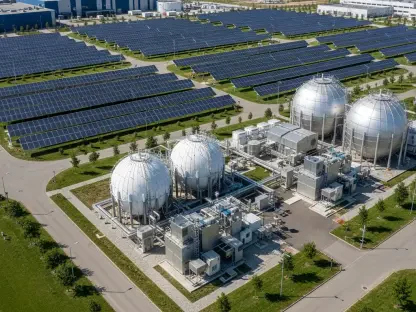
For much of the last decade, the presence of European firms in the American energy sector was defined almost exclusively by aggressive wind and solar expansion. However, the reality of managing a modern grid has exposed the inherent limitations of relying solely on intermittent weather-dependent sources. RWE’s updated strategy acknowledges this complexity by adopting a pragmatic “all-of-the-above” philosophy. By integrating gas-fired peaking plants and advanced battery storage into its portfolio, the company aims to provide the constant, 24/7 reliability that major industrial and commercial consumers now demand.
This shift is a response to a digital economy that operates without pause, where even a micro-second of power instability can result in millions of dollars in lost data or productivity. The inclusion of natural gas assets represents a significant departure from the pure-green rhetoric of the past, illustrating a new industry consensus: renewables provide the low-cost energy for the future, but gas provides the essential safety net for the present. This balanced approach ensures that as more solar and wind are added to the mix, the underlying infrastructure remains robust enough to handle the peaks and troughs of consumer usage.
Strategic Pillars of the $20 Billion Investment
The roadmap for this $20 billion deployment focuses on adding 9 GW of new capacity in some of the most congested and high-demand energy markets in the country, including Texas, California, and New York. A key tactical advantage in RWE’s plan involves the utilization of existing grid access points. By repurposing or expanding sites that already have a connection to the transmission network, the company can bypass the years of bureaucratic red tape and logistical delays that typically stall “greenfield” energy projects. This focus on “brownfield” optimization allows for a faster rollout of capacity when the grid needs it most.
Furthermore, the strategy emphasizes the role of gas peakers—highly efficient facilities capable of ramping up to full power almost instantly. These units act as a bridge, filling the gaps when solar generation drops off at sunset or when wind speeds fluctuate. By positioning these assets in states with volatile weather patterns and high cooling demands, RWE is positioning itself as a critical partner for grid operators who are struggling to maintain equilibrium. This physical footprint across diverse geographic regions also helps the company hedge against localized regulatory changes or climate-related disruptions.
Legislative Catalysts and Regulatory Certainty
The primary driver behind this renewed American focus was the passage of the “One Big Beautiful Bill Act” (OBBBA) in 2025, which provided the long-term regulatory framework the industry had been seeking. Prior to this legislation, many energy firms remained in a state of investment paralysis, wary of shifting tariffs and expiring tax credits. The OBBBA changed the calculus by offering a clear, multi-year roadmap that, while phasing out some traditional renewable incentives, significantly bolstered the case for integrated oil and gas infrastructure. CEO Markus Krebber highlighted that this clarity was the deciding factor in moving from a cautious stance to a multi-billion dollar offensive.
This legislative environment has effectively derisked the American market for foreign capital. While the bill introduced stricter requirements for domestic content and foreign-entity restrictions, particularly regarding battery technology, it also created a predictable environment for large-scale capital projects. For RWE, the ability to forecast returns over a ten-year horizon allowed the board to greenlight the $19.6 billion allocation. The company’s leadership viewed the bill not as a hurdle, but as a stabilizing force that synchronized federal policy with the practical needs of the private energy sector.
Powering the Digital Frontier: The Data Center Demand
The explosion of generative artificial intelligence and the expansion of massive data processing hubs have fundamentally altered the demand profile of the American grid. These “hyper-scalers” require massive amounts of electricity, and more importantly, they require it to be unfailingly consistent. RWE has positioned its “hybrid bridge” strategy specifically to capture this market, offering tech giants a combination of carbon-neutral renewable credits and the ironclad reliability of gas-backed baseload power. This makes the company an ideal partner for Big Tech firms that are trying to balance aggressive sustainability goals with the non-negotiable power requirements of their server farms.
Looking ahead, the success of this strategy will likely serve as a blueprint for the broader utility industry as it navigates the tension between decarbonization and reliability. By the time the first of these new gas units come online toward the end of the decade, the integration of diverse energy sources will have become the standard for maintaining a competitive economy. The massive investment from RWE demonstrated that the path to a cleaner future required a foundation of stable, dispatchable power. Stakeholders began to view the U.S. grid not just as a collection of wires, but as a dynamic marketplace where flexibility and reliability became the ultimate indicators of success.