
Christopher Hailstone stands at the forefront of a pivotal era for the American power grid. As a seasoned expert in energy management and electricity delivery, he has spent decades deconstructing the complexities of grid reliability, but today his focus is on the digital brain starting to oversee our physical infrastructure. With electricity demand reaching unprecedented heights due to the very technology meant to solve its problems, Christopher provides a vital bridge between the mechanical world of high-voltage transformers and the algorithmic world of predictive modeling. His insights come at a moment when the industry is grappling with the double-edged sword of innovation—trying to harness the speed of machine learning without compromising the absolute safety required by public utilities.
This discussion explores the shift toward “vertical AI” applications that target specific operational headaches like vegetation management and load forecasting. We examine the stark disconnect between the cybersecurity risks utilities identify and the actual processes they have in place to mitigate them, alongside the surprising ways outdated data can lead to faster, more confident mistakes. The conversation also highlights how specialized tools are already unlocking hidden grid capacity and why the future of the industry depends less on code and more on “domain experts” who understand the unwritten rules of the engine room.
Most utilities are currently deploying what you call vertical AI for specific tasks like vegetation management or load forecasting. Why are we seeing this narrow focus instead of a broader, company-wide adoption of horizontal AI platforms?
The utility industry operates on a foundation of absolute reliability, where a single error can lead to a literal blackout for thousands of people, so we naturally gravitate toward controlled, niche environments. We are seeing success in vertical AI because these tools are built to solve one specific problem with high precision, such as identifying a sagging branch over a power line before it sparks a fire. While broad horizontal platforms are exciting for general business, they lack the “agentic architecture” needed to touch physical assets safely, and the evidence of these systems performing consistently at scale is still quite limited. Currently, about 80% of utility leaders have fully deployed at least one AI application specifically for large-load customer planning, proving that the value lies in specialized problem-solving. It’s about building trust in the technology through small, verifiable wins before we ever consider letting an algorithm take the wheel of the entire grid.
There is a significant concern regarding the quality of data being fed into these systems. How does the discrepancy between paper records and the physical reality of the field impact the decisions AI is making right now?
The reality on the ground is often messier than what is reflected in a digital database, and if you automate against bad data, you simply get the wrong answer at a much faster speed. I’ve seen cases where utility records do not match what a technician actually finds in the field, creating a dangerous feedback loop for any AI trying to optimize that circuit. This is why many executives are hesitant to move beyond human-in-the-loop systems; no one can tell you how often the AI is wrong if the baseline data is flawed. We must treat data integrity as a physical safety requirement, because an AI-driven forecast is only as reliable as the sensor data and historical logs we feed it.
The cybersecurity gap in the utility sector seems alarming, with 70% of companies identifying AI as a risk but very few having a documented process to manage it. What are the specific access control risks that worry you the most as these systems become more interconnected?
The primary fear is that as our information technology and operational technology networks become more interconnected, these “super intelligence” tools could introduce vulnerabilities that we can’t easily audit or reconstruct. Currently, only about 23% of utilities and a staggering 9% of energy companies have a documented process for managing the risks they’ve already identified, which is a massive oversight. If an AI system makes a decision that impacts the grid, most utilities today could not tell you what the system read, what it did, or why it made that specific choice. Without a governed record-keeping process, we are essentially flying blind into a future where the evolving capabilities of these tools could be exploited to bypass traditional security perimeters.
We have seen some impressive results from specialized AI tools, such as the discovery of 80 MW of capacity in Oregon. Could you elaborate on how these “vertical” applications are providing tangible benefits for data center connections and grid efficiency?
The discovery of that 80 MW of capacity by Portland General Electric is a perfect example of how hourly demand modeling can find “hidden” headroom that traditional planning cycles might miss for years. By using these specialized platforms, they were able to greenlight data center connections much earlier than expected, which is critical as demand from the tech sector continues to surge. We are also seeing platforms like Emerald AI that can slash data center power demand by up to 40% during periods of grid curtailment while keeping the most critical server workloads running. These aren’t just incremental gains; they represent a fundamental shift in how we manage load without having to build massive, expensive new power plants immediately.
You mentioned that the hardest roles to fill are “domain experts with AI fluency.” Why is it so difficult to find people who can bridge the gap between traditional utility operations and machine learning?
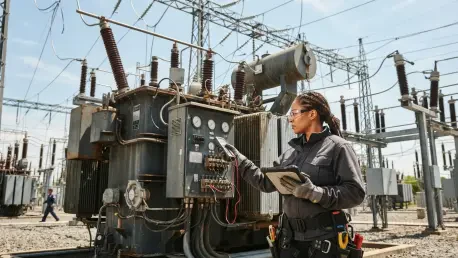
The challenge is that much of the knowledge required to run a power grid safely is “empirical”—it’s based on years of hands-on experience and gut feeling that has never been written down in a manual. You can hire a brilliant data scientist, but if they don’t understand the physical limitations of a substation or the nuances of regional weather patterns on a specific circuit, their models will fail in the real world. We need people who can speak the language of transformers and circuit breakers while simultaneously understanding how to tune a neural network. This combination of skills is incredibly rare, and it’s the primary reason why we haven’t seen widespread automation of mission-critical grid operations yet.
Regulatory frameworks are often cited as a major hurdle to innovation in this sector. How are outdated rate cases and oversight models specifically preventing utilities from seeing a return on their AI investments?
The traditional regulatory model was designed for a world of slow, predictable growth and physical asset depreciation, not for the rapid-fire evolution of software and artificial intelligence. Roughly 87% of industry leaders feel that these outdated frameworks are actively hindering their ability to get a return on innovation, which creates a stalemate where companies are afraid to invest in the very tools they need. Furthermore, about 83% of respondents are concerned that the high costs of building infrastructure to support AI data centers are being unfairly passed on to residential customers through higher monthly bills. We need a regulatory shift that rewards efficiency and digital transformation just as much as it rewards building new poles and wires, or we risk falling behind the demand curve entirely.
Virtual Power Plants have been using machine learning for about five years now to coordinate distributed resources. What is the next step for this technology as it moves toward more active grid management?
The next evolution involves moving from simple coordination to a more “active” management style where a large language model is specifically trained on utility operations and equipped with industry-specific guardrails. We are looking at a future where these systems aren’t just reacting to demand, but are actually creating a digital representation of the physical world to predict and prevent issues before they occur. I expect to see this gain significant momentum over the next couple of years as the “agentic” capabilities of these tools improve. While we aren’t at the point of full automation, the integration of real-time machine learning with virtual power plants will be where the most significant innovations in grid reliability will emerge.
What is your forecast for the role of AI in utility cybersecurity over the next few years?
I anticipate a massive regulatory crackdown where inventories of AI use will become mandatory, similar to what we are already seeing in New York and Connecticut. By the time we reach the end of this decade, the “wild west” era of undocumented AI experimentation will be over, replaced by strict audit requirements that force utilities to prove they can reconstruct every decision an algorithm makes. We will likely see the emergence of specialized “governance software” that acts as a black box for AI, ensuring that even as these systems become more intelligent, they remain fully transparent to human overseers. Ultimately, the successful utilities will be those that treat AI as a high-security asset, similar to how they treat the physical perimeter of a nuclear plant or a major substation.