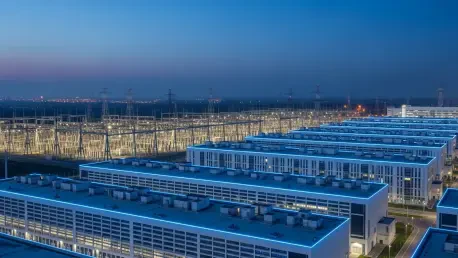

The expansion of digital infrastructure has effectively ended a long-standing period of stagnant energy consumption, pushing the American power grid into a high-stakes era of expansion. As of the start of this year, the operational capacity of data centers has reached a monumental 50 GW, reflecting a massive shift in how the nation utilizes its electrical resources. This surge is not merely a technical milestone but a fundamental reordering of the energy landscape, driven by the insatiable appetite of generative AI and cloud computing services.
A Historical Shift: From Stagnation to Rapid Expansion
For decades, the United States benefited from a relatively predictable energy market where efficiency gains offset the needs of a growing population. However, the last five years have dismantled that stability, as data center capacity grew at a compound annual rate of 24%. This pivot has transformed the power sector from a low-growth environment into a high-demand industrial frontier, forcing utilities to scrap old projections in favor of aggressive infrastructure development.
This transition is particularly striking because much of the existing grid was never intended to support such concentrated, high-density loads. The historical focus on residential and light commercial growth has been superseded by the need for massive, industrial-scale digital hubs. Consequently, the pressure on regulators and planners to modernize aging systems has reached a critical point, as the lag between digital innovation and physical construction continues to widen.
Navigating the Complexities: A High-Demand Landscape
Regional Variations: The Concentration of Digital Loads
The geographical distribution of this growth reveals significant localized pressures, with the Midcontinent Independent System Operator (MISO) region emerging as a primary hub. Recording a 43% annual increase in capacity, this area illustrates how specific markets can become overwhelmed by rapid digital adoption. Other regions, such as the Texas-based ERCOT and the Southeast, have also seen growth rates near 30%, creating a competitive scramble for available land and power.
Grid Reliability: The Impact of Large-Scale Facilities
Individual facilities have scaled up dramatically, with the average new data center jumping from 25 MW to nearly 80 MW in just five years. These “megascale” sites consume as much electricity as small cities, requiring extensive upgrades to transmission lines and substations. While demand remains at record highs, the pace of new project starts has recently faced headwinds due to persistent bottlenecks in zoning, permitting, and the sheer difficulty of securing reliable power connections.
Market Volatility: The Rising Cost of Power
Economic consequences have followed this consumption boom, with average power prices at major trading hubs surging by 25%. National electricity usage has climbed to 4,230 TWh, a significant increase that reflects tightening supply conditions across the board. These rising costs are felt most acutely in the Northeast, where supply constraints and high fuel prices have created a volatile environment for both industrial operators and everyday utility customers.
Emerging Solutions: The Future of Energy Infrastructure
To counter these challenges, the energy mix is evolving toward a model that prioritizes both flexibility and “firm” baseline power. Battery storage has seen a massive rollout, with over 15 GW added recently to help stabilize grids in California and Texas during peak periods. Interestingly, while solar remains popular, there is a resurgent reliance on natural gas. In the most recent interconnection queues, gas-fired generation combined with storage accounted for 55% of new entries, signaling a shift toward a diversified strategy that can handle the massive, fluctuating loads of modern data hubs.
Strategic Management: Navigating a High-Growth Market
Successfully managing this growth requires a proactive approach to both infrastructure and regulatory policy. Utilities must prioritize the expansion of transmission corridors while streamlining the often-cumbersome process of connecting new generation sources to the grid. For data center developers, the focus moved toward “behind-the-meter” innovations, such as on-site microgrids and dedicated energy storage, which allowed them to bypass some of the instability inherent in the aging national infrastructure.
Balancing Innovation: Grid Sustainability and Resilience
The recent data indicated that the American power sector successfully navigated the initial shock of the digital boom by diversifying its energy portfolio. Stakeholders recognized that maintaining the momentum of the digital economy required a shift away from traditional, slow-moving planning cycles. By integrating advanced storage solutions and addressing regulatory bottlenecks, the industry began to bridge the gap between energy supply and technological demand. This period served as a vital lesson in the necessity of an agile, multi-source energy strategy to support a high-tech future.