
After years of seemingly unstoppable expansion that crowned it the undisputed king of the global battery market, China’s formidable battery industry is now bracing for an abrupt and painful reckoning in 2026. The very forces that propelled its ascent—aggressive government support and insatiable global demand—are now converging to create the perfect storm, threatening to halt the sector’s meteoric rise and forcing a fundamental reevaluation of its future.
From Global Dominance to a Precarious Peak
For much of the last decade, China has been the epicenter of the battery universe. Its manufacturers, led by giants like CATL and EVE Energy, have not only achieved staggering production scale but have also secured a commanding grip over critical segments of the supply chain, from raw material processing to cell manufacturing. This dominance has made China an indispensable partner in the worldwide transition to electric vehicles, with its batteries powering a significant share of the cars rolling off assembly lines globally.
This position, however, now appears to be a precarious summit rather than a stable plateau. The industry’s relentless focus on capacity expansion, fueled by robust domestic and international demand, has built an industrial machine of unparalleled size. While this scale has been a source of strength, it also creates a vulnerability to sudden shifts in market dynamics, setting the stage for a severe correction as key growth drivers begin to falter.
The Gathering Storm Market Trends and Projections for 2026
The Twin Engines of Decline Subsidy Cliffs and Stagnant Exports
The predicted slump is rooted in the simultaneous weakening of the industry’s two main pillars: domestic consumption and foreign exports. At home, the engine of growth is set to sputter as crucial tax incentives for EV purchases are phased out. This policy shift is expected to create a “subsidy cliff,” where consumer demand, previously accelerated by government support, falls sharply once those benefits are withdrawn.
Compounding this domestic challenge is a significant deceleration in export growth. International markets, once a reliable outlet for China’s vast battery output, are no longer providing the explosive growth needed to offset a cooling home market. This dual pressure from both internal and external forces is creating a formidable headwind that the industry has not previously faced at this scale.
Decoding the Downturn A Data Driven Forecast
Quantitative forecasts paint a stark picture of the impending downturn. Projections indicate that domestic sales of green passenger vehicles could plummet by as much as 30% in the wake of expiring tax incentives. The commercial EV sector faces an even more dramatic collapse, as fleet operators who rushed to make purchases before year-end subsidy deadlines will have little reason to buy in 2026.
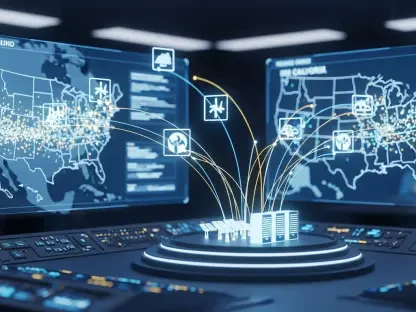
Export figures offer little relief. Growth into the European Union, China’s largest battery market, is expected to slow to a modest 4%. More concerning is the 9.5% decline in exports to the United States, a clear signal that even rising demand from new sectors, such as energy storage for the AI boom, is failing to benefit Chinese firms amidst a challenging geopolitical climate.
Confronting the Crisis Overcapacity and Intensifying Competition
The most immediate challenge stemming from this drop in demand is the collision with the industry’s massive overcapacity. Years of aggressive investment have left Chinese manufacturers with a production capability that far exceeds projected near-term needs. This glut of supply is poised to trigger intense price wars as companies compete for a shrinking pool of buyers, squeezing profit margins and threatening the financial stability of smaller players.
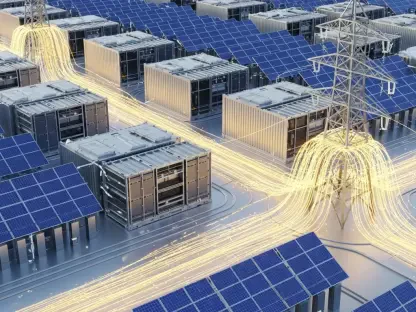
This surplus cannot be easily absorbed by adjacent sectors. While emerging industries like grid-scale energy storage and power for AI data centers represent long-term opportunities, their current demand is a mere fraction of what is required to soak up the excess battery production. Consequently, manufacturers are facing a period of heightened domestic competition with few alternative outlets for their products.
Navigating the Geopolitical and Regulatory Minefield
The industry’s path forward is further complicated by a shifting regulatory landscape both at home and abroad. Domestically, Beijing’s move away from direct subsidies signals a policy pivot toward market-driven development, removing a critical support structure that fostered rapid growth. This internal policy evolution forces companies to stand more on their own financial and competitive merits.
Externally, geopolitical tensions are erecting significant barriers to trade. U.S. restrictions targeting “foreign entities of concern” are effectively barring Chinese battery makers from participating in key segments of the American market, including federally supported clean energy projects. These regulations create a minefield that limits access to one of the world’s most lucrative markets, irrespective of the competitiveness of Chinese products.
Future Proofing the Industry Strategies for Survival and Beyond
In the face of these headwinds, Chinese battery makers must adopt new strategies to ensure their survival and long-term health. The immediate imperative, as advised by industry analysts, is to implement production cuts. Scaling back output is a necessary first step to manage ballooning inventories, stabilize plummeting prices, and prevent a deeper market collapse.
Beyond these short-term defensive measures, a strategic pivot is essential. This includes diversifying product portfolios by investing in next-generation battery chemistries that can open new markets and offer a competitive edge. Furthermore, companies must actively explore and cultivate untapped global markets in regions not yet saturated or constrained by geopolitical restrictions, turning a moment of crisis into an opportunity for strategic geographic expansion.
A Watershed Moment for China’s Battery Titans
The impending 2026 slump represents more than a cyclical downturn; it is a critical watershed moment for China’s battery industry. The convergence of slowing demand, massive overcapacity, and geopolitical barriers signals the definitive end of the growth-at-all-costs era. This period of adversity tests the resilience of industry titans and will likely trigger a painful but necessary consolidation.
Ultimately, navigating this crisis requires a fundamental shift in mindset. The new paradigm demands a focus not just on scale, but on sustainability, innovation, and strategic market positioning. The companies that successfully adapt to this more complex and challenging global landscape will be the ones that define the next chapter of the global battery industry, while those that cling to old models risk being left behind.