
Setting the Stage for a Critical Market Challenge
In the high-stakes world of global energy markets, few arteries are as vital as the Caspian Pipeline Consortium (CPC), which channels oil from the Caspian region through its Black Sea terminal near Novorossiysk, Russia. A recent drone attack on this critical infrastructure has sent shockwaves through the industry, slashing export capacity at a time when demand for CPC Blend oil is climbing. With geopolitical tensions simmering and maintenance issues compounding the crisis, the ability of CPC to rebound is under intense scrutiny. This analysis aims to unpack the immediate market impacts, assess recovery prospects, and explore what this means for stakeholders across the oil supply chain.
The importance of this situation cannot be overstated. CPC’s terminal at Yuzhnaya Ozereevka is a linchpin for transporting crude from Kazakhstan and Russia to international buyers, and any prolonged disruption threatens not just regional economies but global energy stability. This examination will dive into current operational data, market trends, and projections, shedding light on whether CPC can restore its footing amid mounting pressures.
Diving Deep into Market Dynamics and CPC’s Struggles
Operational Setbacks and Their Immediate Fallout
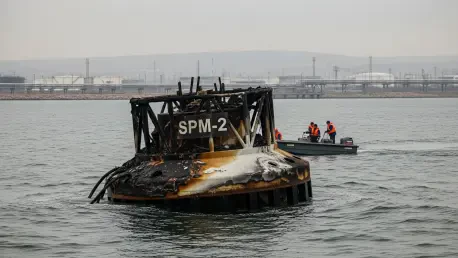
The drone strike by Ukrainian naval forces on CPC’s Marine Terminal has inflicted serious damage, particularly to one of its three single point moorings (SPMs), known as SPM-2. Hit on a recent Saturday, this mooring remains offline, with repairs or potential replacement expected to stretch over months. Currently, CPC operates at just over half its usual capacity, relying on a single functional SPM. This bottleneck has cast doubt on the consortium’s ability to meet its ambitious target of ramping up CPC Blend exports to 1.7 million barrels per day (bpd) in December, up from 1.45 million bpd in November. Market watchers are bracing for possible downward revisions if delays persist.
Beyond the numbers, the ripple effects are palpable. Suppliers dependent on CPC’s infrastructure face the looming threat of output cuts, which could tighten supply in an already volatile market. The reduced capacity has introduced uncertainty among buyers, potentially driving up spot prices for light, low-sulfur crude like CPC Blend. As limited loadings resumed from the remaining operational mooring earlier this week, the market is keenly observing whether CPC can stabilize operations or if further disruptions lie ahead.
Recovery Prospects and Glimmers of Hope
On a more optimistic note, CPC has shown agility in addressing another piece of the puzzle: the maintenance of SPM-3. Originally slated for a two-month downtime starting in mid-November, repairs are now projected to conclude within seven days—well ahead of schedule. Bringing SPM-3 back online could restore full export capacity, providing a much-needed buffer against the SPM-2 setback. This accelerated timeline reflects CPC’s determination to mitigate losses and maintain credibility among stakeholders.
However, challenges remain. While SPM-3’s return offers short-term relief, the uncertainty surrounding SPM-2’s long-term fix keeps the market on edge. Industry analysts suggest that CPC might need to explore temporary rerouting of exports or alternative storage solutions to manage supply chain pressures. The consortium’s ability to balance these logistical hurdles with rising export targets will be critical in shaping market confidence over the coming weeks. If successful, this could position CPC as a resilient player, even in the face of adversity.
Geopolitical Shadows Over Energy Infrastructure
The drone attack on CPC’s terminal isn’t just a localized incident—it’s a stark reminder of the vulnerability of energy assets in conflict zones like the Black Sea. With ongoing regional tensions, particularly between Russia and Ukraine, critical infrastructure has become a strategic target, amplifying risks for oil markets. Anonymous industry sources stress that swift restoration is essential to prevent deeper economic fallout for suppliers and buyers alike, as prolonged disruptions could destabilize pricing and supply agreements.
This incident also highlights a broader trend: the rise of hybrid warfare tactics aimed at energy hubs. Market analysts are increasingly concerned about the adequacy of security measures at facilities like CPC’s terminal. Investments in surveillance and defensive technologies are becoming a priority, though budget constraints may slow implementation. As geopolitical risks mount, the oil market must grapple with the reality that such disruptions could become more frequent, pushing players to rethink how they safeguard vital supply chains.
Charting the Future: Trends and Projections
Looking ahead, the CPC crisis underscores a pivotal shift in the energy sector’s approach to infrastructure resilience. Emerging trends point toward greater adoption of advanced security systems, including drone detection and cybersecurity protocols, to counter hybrid threats. Economically, the cost of such upgrades may strain operators, but the alternative—recurring disruptions and revenue losses—is far costlier. Projections suggest a rise in public-private partnerships to fund these measures, especially in geopolitically sensitive regions like the Black Sea.
Regulatory changes are also on the horizon. Governments and international bodies may impose stricter guidelines for protecting energy assets, potentially mandating risk assessments and contingency planning. Over the next few years, from 2025 to 2027, the industry could see a push for decentralized export routes to reduce reliance on singular hubs like CPC’s terminal. While such innovations are still in early discussions, this crisis may accelerate long-term strategic shifts, reshaping how oil markets mitigate risk.
Speculatively, market dynamics could evolve as buyers diversify suppliers to hedge against CPC’s uncertainties. If disruptions persist, alternative sources of light crude may gain traction, subtly altering global trade patterns. The energy sector is at a crossroads, with CPC’s recovery serving as a litmus test for how well the industry can adapt to an era of heightened geopolitical and operational challenges.
Reflecting on the Path Forward
Looking back, the analysis of CPC’s predicament revealed a market grappling with immediate operational setbacks and broader systemic risks. The drone attack on SPM-2, coupled with maintenance delays, had exposed the fragility of critical energy infrastructure, while the accelerated repair of SPM-3 offered a lifeline amid the turmoil. Geopolitical tensions had cast a long shadow, amplifying concerns about future disruptions and their impact on oil supply stability.
For stakeholders, the next steps demanded a dual focus: supporting CPC’s short-term recovery through flexible supply agreements and advocating for long-term investments in security and infrastructure diversification. Buyers and suppliers alike needed to prepare for potential volatility by exploring backup sources and hedging strategies. The lessons from this crisis underscored a critical truth—resilience in the oil market required proactive adaptation to an increasingly unpredictable landscape, ensuring that such setbacks became catalysts for innovation rather than enduring obstacles.