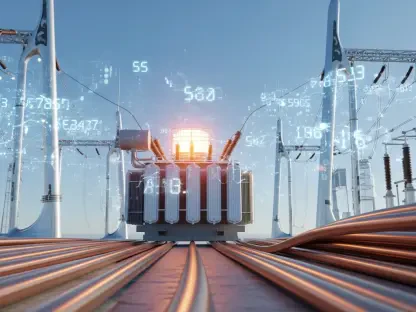

The race for artificial intelligence supremacy is rapidly being redefined not by processing power alone but by the colossal energy appetite required to sustain it, prompting a trillion-dollar debate over the future of the world’s power infrastructure. As the digital and physical worlds converge, the conversation has centered on a seemingly simple solution: build more power plants. However, this approach overlooks a more fundamental and costly failure. The true challenge is not a crisis of power generation but a profound crisis of imagination, rooted in an outdated, brute-force model of energy distribution that is fundamentally unequipped for the demands of the 21st century.
The Misdiagnosed Crisis: An Appetite for Power or Intelligence?
The prevailing narrative, amplified by calls from industry giants for an additional 100 gigawatts of new generation, frames AI’s energy consumption as a simple supply-and-demand problem. This perspective, often termed the “engineer’s mindset,” identifies a resource gap and seeks to fill it with more capacity. It is a linear, straightforward solution that appeals to a history of industrial expansion, where bigger has always been better. Yet, this diagnosis focuses on the symptom—the need for more electrons—while ignoring the underlying disease.
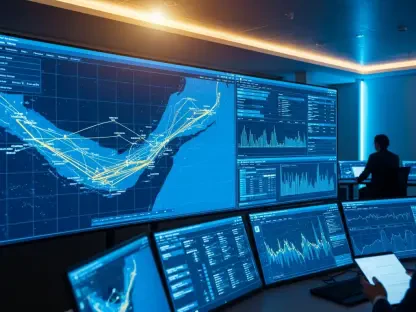
A more nuanced analysis, championed by systems thinkers like Evan Caron of Montauk Capital, reveals the core issue is not a shortage of energy but a profound failure of coordination. The grid’s primary bottleneck is its inability to intelligently manage and distribute the power it already produces. The system is characterized by inefficiency, a lack of real-time communication between supply and demand, and an architecture designed for a bygone era of predictable, centralized power.
This inefficiency is starkly illustrated by the American grid itself, which operates at a utilization rate below 50%. It is a leaky bucket on a national scale. Pouring trillions of dollars into new generation capacity without first repairing the fundamental coordination layer is akin to filling that bucket faster while ignoring the holes. The result is a monumental waste of capital, resources, and opportunity, perpetuating a cycle of inefficiency that no amount of new power can solve.
Brute Force vs. Brains: The Flaws of a Capacity-First Strategy
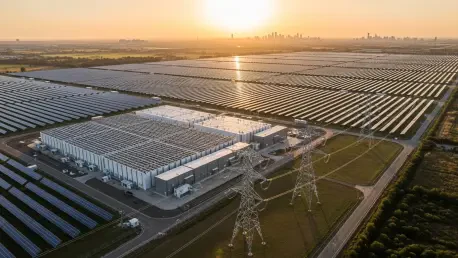
The rush toward a capacity-first strategy leads to shortsighted and ultimately destabilizing solutions. When large consumers like data centers opt to build their own private power plants, they create isolated islands of reliability. While this secures their operations, it weakens the public grid by removing a significant and potentially flexible load from the system. This phenomenon creates a modern tragedy of the commons, where private stability is achieved at the expense of collective resilience.
By disconnecting from the broader network, these major energy consumers become unresponsive to the price and demand signals that are essential for balancing the grid. Every megawatt that goes “off-grid” is a megawatt that cannot participate in demand response programs or help stabilize fluctuations from renewable sources. This isolation erodes the network effect, where each connected node adds to the strength of the whole, leaving the public system more fragile and less adaptable for residential and commercial users.
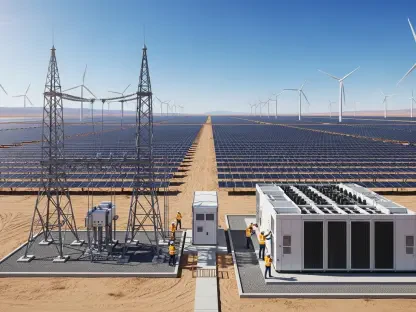
The fallacy of this approach is demonstrated by China’s recent experience. Despite an unprecedented expansion that added 400 GW of new capacity, the nation still faces significant renewable energy curtailment, where wind and solar farms are forced to shut down because the grid cannot absorb the power they produce. This paradox proves that raw capacity without intelligent coordination is a dead end, leading to stranded assets and wasted potential. Adding more power to an unintelligent system simply creates a larger, more expensive, and equally inefficient system.
The Systems Intelligence Blueprint: Lessons from Cybernetics and the Internet
A more effective path forward lies in reimagining the grid not as a monolithic utility but as a decentralized, intelligent network. This concept draws inspiration from Norbert Wiener’s principles of cybernetics, which emphasize feedback loops and self-regulating systems. Instead of relying on a few central command centers to manage power flow, a cybernetic grid would empower millions of distributed assets—from electric vehicles and home batteries to smart appliances—to act as autonomous agents, constantly communicating and adjusting to maintain system balance.
This model is not theoretical; it is the very foundation of the modern internet. The internet’s stability relies on the Border Gateway Protocol (BGP), which allows countless independent networks to route data packets efficiently without a central controller. A similar “BGP for energy” would enable distributed energy resources to self-organize, trade electricity, and respond to local conditions in real-time. This creates a resilient, bottom-up system that can absorb shocks and adapt to change far more effectively than a rigid, top-down hierarchy.
Applying Claude Shannon’s Information Theory further clarifies this vision. The problem with today’s grid is not a lack of “bandwidth” (generation) but poor “encoding” (coordination). The system is noisy, with delayed and imprecise signals between producers and consumers. By improving the information layer—creating better protocols for communication and coordination—the grid can dramatically increase its throughput and efficiency using existing assets, just as better encoding allows more data to be sent over the same physical cable.
The Agile Grid: Pathways to System-Wide Intelligence
Achieving this intelligent grid does not require waiting for decade-long, multi-trillion-dollar infrastructure overhauls. The transition can begin now through an agile, software-centric approach focused on iterative improvements. Technologies like Dynamic Line Ratings, which use sensors to determine the real-time capacity of power lines, can unlock up to 40% more throughput from existing wires. Likewise, AI-driven demand response platforms can orchestrate thousands of devices to reduce consumption during peak hours, providing flexibility that is faster and cheaper than building a new power plant.
The very technology driving this energy demand—artificial intelligence—holds the key to solving it. The core principles of modern AI, such as efficient resource allocation and predictive optimization, can be applied directly to grid management. AI algorithms can forecast demand with unprecedented accuracy, optimize the dispatch of renewable energy, and manage the charging of millions of EVs to support grid stability. In this model, AI is not just a load but the operating system for a smarter, more efficient energy future.
Ultimately, realizing this vision requires rewriting the rules of the energy market. Current regulations and market structures were designed for a world of large, slow-moving power plants and passive consumers. A new framework is needed that values flexibility, speed, and coordination as much as it values raw kilowatt-hours. Governance must evolve to align the interests of private entities with the resilience of the public grid, creating incentives for participation rather than isolation. This shift represents the next frontier in the AI race, where leadership will be defined not by who can build the most power plants, but by who can build the most intelligent energy system.Fixed version:
The race for artificial intelligence supremacy is rapidly being redefined not by processing power alone but by the colossal energy appetite required to sustain it, prompting a trillion-dollar debate over the future of the world’s power infrastructure. As the digital and physical worlds converge, the conversation has centered on a seemingly simple solution: build more power plants. However, this approach overlooks a more fundamental and costly failure. The true challenge is not a crisis of power generation but a profound crisis of imagination, rooted in an outdated, brute-force model of energy distribution that is fundamentally unequipped for the demands of the 21st century.
The Misdiagnosed Crisis: An Appetite for Power or Intelligence?
The prevailing narrative, amplified by calls from industry giants for an additional 100 gigawatts of new generation, frames AI’s energy consumption as a simple supply-and-demand problem. This perspective, often termed the “engineer’s mindset,” identifies a resource gap and seeks to fill it with more capacity. It is a linear, straightforward solution that appeals to a history of industrial expansion, where bigger has always been better. Yet, this diagnosis focuses on the symptom—the need for more electrons—while ignoring the underlying disease.
A more nuanced analysis, championed by systems thinkers like Evan Caron of Montauk Capital, reveals the core issue is not a shortage of energy but a profound failure of coordination. The grid’s primary bottleneck is its inability to intelligently manage and distribute the power it already produces. The system is characterized by inefficiency, a lack of real-time communication between supply and demand, and an architecture designed for a bygone era of predictable, centralized power.
This inefficiency is starkly illustrated by the American grid itself, which operates at a utilization rate below 50%. It is a leaky bucket on a national scale. Pouring trillions of dollars into new generation capacity without first repairing the fundamental coordination layer is akin to filling that bucket faster while ignoring the holes. The result is a monumental waste of capital, resources, and opportunity, perpetuating a cycle of inefficiency that no amount of new power can solve.
Brute Force vs. Brains: The Flaws of a Capacity-First Strategy
The rush toward a capacity-first strategy leads to shortsighted and ultimately destabilizing solutions. When large consumers like data centers opt to build their own private power plants, they create isolated islands of reliability. While this secures their operations, it weakens the public grid by removing a significant and potentially flexible load from the system. This phenomenon creates a modern tragedy of the commons, where private stability is achieved at the expense of collective resilience.
By disconnecting from the broader network, these major energy consumers become unresponsive to the price and demand signals that are essential for balancing the grid. Every megawatt that goes “off-grid” is a megawatt that cannot participate in demand response programs or help stabilize fluctuations from renewable sources. This isolation erodes the network effect, where each connected node adds to the strength of the whole, leaving the public system more fragile and less adaptable for residential and commercial users.
The fallacy of this approach is demonstrated by China’s recent experience. Despite an unprecedented expansion that added 400 GW of new capacity, the nation still faces significant renewable energy curtailment, where wind and solar farms are forced to shut down because the grid cannot absorb the power they produce. This paradox proves that raw capacity without intelligent coordination is a dead end, leading to stranded assets and wasted potential. Adding more power to an unintelligent system simply creates a larger, more expensive, and equally inefficient system.
The Systems Intelligence Blueprint: Lessons from Cybernetics and the Internet
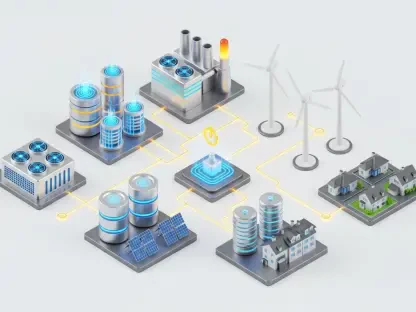
A more effective path forward lies in reimagining the grid not as a monolithic utility but as a decentralized, intelligent network. This concept draws inspiration from Norbert Wiener’s principles of cybernetics, which emphasize feedback loops and self-regulating systems. Instead of relying on a few central command centers to manage power flow, a cybernetic grid would empower millions of distributed assets—from electric vehicles and home batteries to smart appliances—to act as autonomous agents, constantly communicating and adjusting to maintain system balance.
This model is not theoretical; it is the very foundation of the modern internet. The internet’s stability relies on the Border Gateway Protocol (BGP), which allows countless independent networks to route data packets efficiently without a central controller. A similar “BGP for energy” would enable distributed energy resources to self-organize, trade electricity, and respond to local conditions in real-time. This creates a resilient, bottom-up system that can absorb shocks and adapt to change far more effectively than a rigid, top-down hierarchy.
Applying Claude Shannon’s Information Theory further clarifies this vision. The problem with today’s grid is not a lack of “bandwidth” (generation) but poor “encoding” (coordination). The system is noisy, with delayed and imprecise signals between producers and consumers. By improving the information layer—creating better protocols for communication and coordination—the grid can dramatically increase its throughput and efficiency using existing assets, just as better encoding allows more data to be sent over the same physical cable.
The Agile Grid: Pathways to System-Wide Intelligence
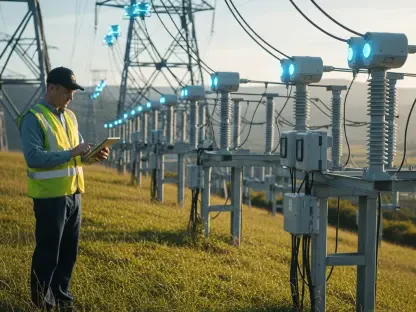
Achieving this intelligent grid does not require waiting for decade-long, multi-trillion-dollar infrastructure overhauls. The transition can begin now through an agile, software-centric approach focused on iterative improvements. Technologies like Dynamic Line Ratings, which use sensors to determine the real-time capacity of power lines, can unlock up to 40% more throughput from existing wires. Likewise, AI-driven demand response platforms can orchestrate thousands of devices to reduce consumption during peak hours, providing flexibility that is faster and cheaper than building a new power plant.
The very technology driving this energy demand—artificial intelligence—holds the key to solving it. The core principles of modern AI, such as efficient resource allocation and predictive optimization, can be applied directly to grid management. AI algorithms can forecast demand with unprecedented accuracy, optimize the dispatch of renewable energy, and manage the charging of millions of EVs to support grid stability. In this model, AI is not just a load but the operating system for a smarter, more efficient energy future.
Ultimately, realizing this vision requires rewriting the rules of the energy market. Current regulations and market structures were designed for a world of large, slow-moving power plants and passive consumers. A new framework is needed that values flexibility, speed, and coordination as much as it values raw kilowatt-hours. Governance must evolve to align the interests of private entities with the resilience of the public grid, creating incentives for participation rather than isolation. This shift represents the next frontier in the AI race, where leadership will be defined not by who can build the most power plants, but by who can build the most intelligent energy system.