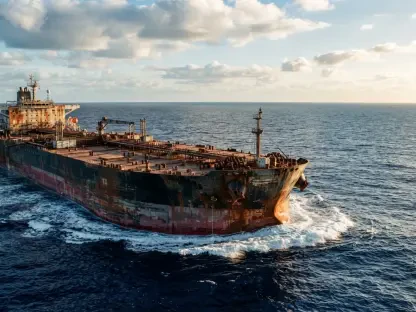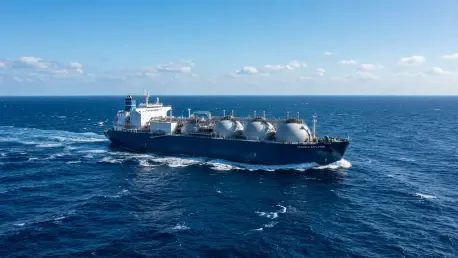

Operational learning begins immediately as the Terra Clove translates theoretical engine performance into practical data for future vessel designs and fuel procurement. This landmark achievement, finalized on October 22, 2026, at the HD Hyundai Heavy Industries shipyard in Ulsan, South Korea, signifies the official commercial debut of ammonia-based propulsion for large-scale maritime transport. Commissioned by Eastern Pacific Shipping, the vessel represents far more than a standard cargo ship; it serves as a sophisticated floating laboratory designed to rigorously test the safety, efficiency, and scalability of ammonia in real-world oceanic conditions. As the global shipping industry faces intensifying pressure to decarbonize, the arrival of this first-of-its-kind ammonia dual-fuel Very Large Ammonia Carrier provides a tangible proof of concept. The delivery effectively bridges the gap between ambitious climate goals and the practical realities of operating heavy-duty vessels across international trade routes.
Innovative Propulsion: The Engineering Behind the Terra Clove
The core of the vessel’s technological superiority lies in its specialized propulsion system, which was engineered to handle the unique chemical properties of ammonia without sacrificing power or reliability. With a carrying capacity of 93,000 cubic meters, the ship is powered by the Everllence B&W 6G60ME-C10.5-LGIA engine, making it the first seagoing application of a two-stroke ammonia dual-fuel unit. This specific engine configuration allows for a high degree of operational flexibility, enabling the crew to switch between ammonia and traditional marine fuels to accommodate varying supply chain conditions or port requirements. Everllence, formerly known as MAN Energy Solutions, spent years refining this technology to ensure that the combustion process remains stable even under the variable loads typical of deep-sea voyages. This engineering feat demonstrates that zero-carbon fuels can meet the demanding energy density requirements of the world’s largest merchant fleets.
Beyond the raw mechanical power, the environmental implications of this engine choice are profound, especially when considering the use of green ammonia synthesized via renewable energy sources. When operating in ammonia mode, the vessel has the capacity to drastically reduce lifecycle greenhouse gas emissions, directly supporting the decarbonization targets set by the International Maritime Organization. This transition is not merely about replacing one fuel with another but about validating a completely new propulsion architecture that can eventually scale across other vessel types, such as container ships and tankers. The dual-fuel capability acts as an essential insurance policy during this transition period, ensuring that the ship remains a viable commercial asset even as the global infrastructure for green ammonia bunkering continues to mature from 2026 to 2030. This strategic versatility ensures that the investment remains future-proof while driving down the overall carbon footprint.
Strategic Alliances: Building a Collaborative Decarbonization Framework
Establishing a successful ammonia propulsion ecosystem required an unprecedented level of cooperation between diverse stakeholders who traditionally operate in silos. The development of the Terra Clove was the product of a robust consortium including the shipowner, Eastern Pacific Shipping, and the shipbuilder HD Hyundai Heavy Industries, alongside the technical experts at Everllence. These industry titans were supported by regulatory and classification bodies, namely the Maritime and Port Authority of Singapore and the American Bureau of Shipping. These organizations provided the necessary oversight to ensure that every aspect of the vessel’s design complied with the most stringent international safety and environmental standards. This integrated model of partnership serves as a blueprint for the maritime sector, showing that the high risks and costs associated with pioneering green technology can be effectively managed through shared resources and collective technical expertise as we move forward from 2026.
Expanding upon this collaborative foundation, Eastern Pacific Shipping has recently formalized a strategic research partnership with the Fonden Mærsk Mc-Kinney Møller Center for Zero Carbon Shipping. This alliance is specifically designed to address the remaining technical hurdles that accompany the use of ammonia, such as the potential for ammonia slip and the refinement of emission monitoring systems. By pooling operational data with world-class research capabilities, the partners intend to produce a series of comprehensive white papers that will be released throughout the coming months. These documents will offer the broader industry essential guidance on the design requirements and the specialized technical assurance frameworks needed for safe zero-carbon operations. Such intellectual leadership is crucial for accelerating the adoption of alternative fuels, as it provides shipowners and operators with the confidence to invest in new technologies based on validated, transparent data.
Operational Integration: Safety Protocols and Future Trajectories
The successful deployment of ammonia as a marine fuel hinges significantly on the human element, as the substance poses unique toxicity risks that are far more complex than those of traditional fuels. Recognizing this, the project prioritizes an intensive training regimen for the crew and technical staff, ensuring that every individual on board is equipped to manage the specific hazards of ammonia handling. EPS personnel work closely with Everllence engineers to master the complexities of the new dual-fuel engine and its integrated fuel supply systems. These efforts lead into a series of intensive sea trials and ammonia-burning tests conducted in the waters off Ulsan, South Korea. Using green ammonia supplied by LOTTE Fine Chemical and produced by Envision Energy, these trials showcase a fully integrated green value chain. This phase is critical for translating theoretical engineering into practical knowledge, providing the data needed to optimize performance and safety for future vessels.
The delivery of the Terra Clove established a definitive milestone that demonstrated the commercial viability of ammonia as a sustainable alternative for heavy industrial shipping. Stakeholders across the maritime sector recognized that the successful integration of complex engine systems and stringent safety protocols provided a clear path forward for the industry’s decarbonization journey. This vessel represented a circular energy model, carrying the very fuel it used for propulsion, which simplified many of the logistical challenges associated with alternative fuel bunkering. To build on this success, it was determined that global policymakers needed to prioritize the expansion of green ammonia bunkering hubs at strategic maritime crossroads. Furthermore, shipowners were encouraged to adopt standardized crew certification programs to ensure safety across the fleet. These collective actions ensured that the industry’s transition remained both safe and commercially scalable.