
The year 2025 is now recognized as a fundamental turning point in the global approach to climate change, a moment when the established order of international cooperation was decisively upended. With the United States, under a renewed Trump administration, conspicuously abandoning its leadership role, a significant political vacuum emerged. In response, the world has initiated a complex and rapid recalibration, moving away from a decades-long reliance on American-led diplomatic and political initiatives. A new, more distributed paradigm for climate action is taking shape, one driven less by rhetoric and more by the powerful, pragmatic forces of industrial economics. This emerging framework, with China at its industrial forefront and new leadership coalescing among other global actors, suggests that while the path to decarbonization has become more fragmented, it may also be growing more resilient to the political volatility that has long plagued progress. The once-unthinkable scenario of a global climate effort proceeding without its historically largest emitter is no longer a hypothetical; it is the new reality.
The American Abdication
A Decisive Break from Global Consensus
The actions signifying America’s withdrawal from the global climate consensus were both swift and unequivocal, leaving no room for interpretation. The administration’s formal withdrawal from the 2015 Paris Agreement served as the centerpiece of this policy reversal, dismantling the country’s commitment to the landmark accord uniting nearly every nation in a voluntary pledge to combat climate change. This was followed by an unprecedented decision to not send an official U.S. delegation to the annual United Nations climate conference, COP30, held in Belém, Brazil. This marked the very first time in the 30-year history of these critical international climate negotiations that the United States was officially absent, sending a potent signal of its disengagement and disregard for the multilateral process. This move effectively silenced the American voice in forums where global climate policy is shaped, ceding influence to other nations ready to fill the void and chart a different course for the planet’s future.
The administration’s assault on climate policy extended far beyond these high-profile symbolic gestures, reaching deep into the legislative and diplomatic machinery of climate action. Domestically, President Trump successfully lobbied a Republican-controlled Congress to dismantle a key piece of Biden-era climate legislation. This law was not merely symbolic; it had been projected to reduce U.S. emissions by approximately one-third from their peak levels, a reduction that was essential for placing the nation’s commitments under the Paris Agreement within achievable reach. On the international stage, the administration engaged in deliberately obstructive tactics aimed at stalling, and potentially derailing, a crucial global plan to decarbonize the heavily polluting international shipping industry. Furthermore, in a move that drew widespread condemnation, the administration enacted drastic cuts to global climate aid funding. This financial support is considered essential for helping developing nations, which have contributed negligibly to the problem, adapt to the increasingly severe impacts of a warming planet.
A World Moving On
The abrupt reversal in U.S. policy was met with unconcealed and widespread frustration from the international community, which quickly coalesced around a narrative of resilience and forward momentum. This sentiment was powerfully encapsulated by Christiana Figueres, a distinguished Costa Rican diplomat and a key architect of the Paris Agreement. Speaking to reporters at COP30, she dismissed the U.S. departure with the pointed Italian phrase, “Ciao, bambino!,” which translates to “bye-bye, little boy.” Her comment captured a global mood of exasperation mixed with a firm resolve to proceed without American leadership, signaling that the international community would no longer allow its progress to be held hostage by the political whims of a single nation. The focus at the conference immediately shifted from lamenting the U.S. absence to strategizing how to accelerate climate action through new coalitions and alternative mechanisms, demonstrating a remarkable capacity for adaptation in the face of a significant diplomatic setback.
These events were not an isolated incident but rather the culmination of a deeper, decade-long trend that saw the erosion of a long-held global expectation. The assumption that wealthy, high-emitting nations would spearhead climate action—owing to both their historical responsibility and their greater financial and technological resources—had been progressively undermined. This failure of developed countries to consistently lead has been attributed to a confluence of factors, including pronounced rightward shifts in their domestic politics, the necessary diversion of resources and attention by external crises like Russia’s invasion of Ukraine, and widespread voter backlash against the perceived high costs of climate policies amidst persistent concerns over the cost of living. The unambiguous message sent to the developing world was that the promised significant financial and technological assistance from the West was no longer a reliable prospect, forcing a necessary and urgent pivot toward self-reliance and new partnerships.
The Rise of a New Climate Paradigm
An Industrial and Technological Revolution
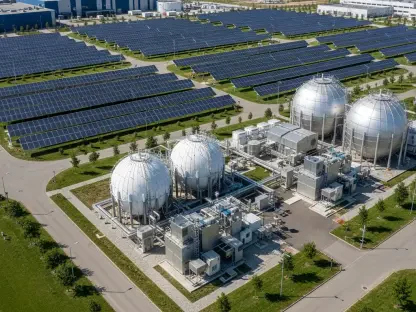
As the political leadership of the West faltered, a different and more resilient engine for global climate action emerged, one that is not primarily political or diplomatic but fundamentally industrial and technological in nature. The rapid maturation and dramatically falling costs of a global marketplace for green technologies—specifically solar power, wind power, and battery storage—have accelerated the adoption of renewable energy at a pace that few had predicted just a decade ago. This transition is no longer solely dependent on government subsidies or international treaties; it is increasingly driven by pure market economics. The growth in solar power has been particularly explosive, with global generation in 2024 reaching a level roughly eight times higher than it was in 2015 when the Paris Agreement was signed. This technological momentum has created an independent force for decarbonization that is proving remarkably resilient to the shifting winds of international politics and diplomatic failures.
China has been identified as the primary and indispensable driver of this breakneck technological transition, establishing a commanding position across the entire green technology supply chain. The nation now produces approximately 60 percent of the world’s wind turbines and a staggering 80 percent of its solar panels, effectively becoming the world’s factory for the energy transition. The scale of its domestic deployment is equally impressive; in the first half of 2025 alone, China installed more than double the new solar capacity of the rest of the world combined. This Chinese-led industrial boom, coupled with the continued commitments of other nations, has significantly and positively altered the world’s long-term warming trajectory. Climate projections that a decade ago foresaw a catastrophic 5 degrees Celsius of warming by 2100 have now been revised downward to a range of 2.3 to 2.5 degrees Celsius—a substantial improvement, though still well above the Paris Agreement’s targets of 1.5 to 2 degrees.
A Multi-Polar Realignment
Crucially, experts emphasize that China’s motivation is primarily one of economic self-interest rather than altruistic environmentalism. According to analysts like Li Shuo of the Asia Society Policy Institute, this very economic grounding is what makes China’s approach so effective and durable. The politics-and-rhetoric-driven strategy long favored by Western nations has proven unreliable and highly susceptible to changes in political leadership and public opinion. In stark contrast, China’s model, which strategically aligns national economic and industrial agendas with decarbonization, is creating a new and demonstrably more successful narrative for climate action. As China’s mass production continues to drive down the global cost of solar panels, wind turbines, and electric vehicles, it enables countries across the Global South—from Pakistan and Indonesia to Vietnam and even Saudi Arabia—to choose clean energy over fossil fuels on purely economic grounds, bypassing political debates entirely.
In the wake of America’s retreat into a more isolationist stance, which now includes imposing tariffs on its traditional allies, other nations have begun a pragmatic reorganization of their diplomatic and economic ties. European countries, facing new U.S. tariffs, are actively deepening trade relationships with China and other Asian nations, prioritizing economic stability over historical alliances. The European Union’s carbon border tax, once a potential point of major conflict with the U.S., is now proceeding without significant American engagement or opposition. Simultaneously, other regions are asserting their own agency with newfound confidence. African nations, for instance, hosted their own continental climate summit, pledging to raise substantial funds for thousands of locally-led solutions in energy, agriculture, and resilience. This represents a significant pivot, as described by one African Union official, from a passive “aid-recipient” mindset to one of an active “architect” of the continent’s own climate-resilient future, focusing on investment and opportunity.
Forging a New Path Forward
The tangible shift in global power dynamics was crystallized at the COP30 negotiations in Brazil. With U.S. negotiators absent, China successfully advanced its own agenda, particularly on the sensitive issue of international trade. Concerned that tariffs on its green technology exports could hinder both its own economy and the global energy transition, China pushed for and secured specific language in the final, non-binding COP30 agreement. This text stipulated that unilateral trade measures should not be used as a form of “disguised restriction on international trade.” According to seasoned observers, achieving such a prominent placement for this language would have been nearly impossible had the U.S. been present to object. The overarching trend was one of global adaptation and realignment. The world demonstrated that it was learning to operate without American leadership on climate. As this pivot continued, the lingering pressures from the U.S. on issues like shipping and finance began to fade, and the international community ultimately found that this new, multi-polar approach to climate action held more promise than was initially expected.