
A sudden spike in fuel truck traffic at a key border crossing recently ignited security concerns and diplomatic friction between Thailand and Laos, raising questions about illicit trade networks operating in Southeast Asia. The situation, centered around allegations that Laos was serving as a transit hub for Thai fuel illegally destined for Cambodia, prompted a swift security response from Bangkok and an equally firm denial from Vientiane. However, through a series of high-level communications and mutual assurances, the two neighboring nations have successfully navigated the delicate issue, transforming a potential crisis into an opportunity to reinforce their commitment to transparent trade and collaborative security monitoring.
Navigating a Cross-Border Controversy
Laos Presents a Vehement Rebuttal
The Lao government, through its Minister of Industry and Commerce, Malaithong Kommasith, issued a comprehensive and unequivocal denial of the smuggling allegations. Officials in Vientiane firmly stated that all oil imported from Thailand is designated exclusively for domestic consumption, emphasizing that the re-export of fuel is strictly prohibited under Lao law. To substantiate this claim, the ministry highlighted that official import volumes have shown no abnormal increases that would suggest a large-scale diversion of resources. The fluctuating traffic of fuel trucks at the border, which initially raised alarm, was attributed to normal, seasonal variations in logistical scheduling. Furthermore, Lao authorities provided a clear economic rationale for the recent uptick in domestic fuel demand, linking it directly to the expansion of mining activities in the country’s southern provinces, an industry that traditionally ramps up operations following the end of the rainy season. This detailed explanation was intended to counter the smuggling narrative with verifiable economic data and underscore Laos’s commitment to its own legal frameworks.
Thailand’s Precautionary Security Measures
From the Thai perspective, the actions taken were a direct response to tangible security observations rather than a targeted measure against Laos. Military authorities stationed at the Chong Mek border crossing had reported an unusually high volume of fuel shipments crossing into Laos, raising suspicions that the final destination was not Vientiane but rather Cambodia. Acting on these security assessments, Thai officials temporarily suspended exports of both fuel and certain military equipment through the crossing. The Thai Defence Ministry later clarified that this suspension was a precautionary step driven by broader security tensions along the Thai-Cambodian border. In a significant diplomatic gesture aimed at de-escalation, the ministry issued a formal apology to Laos for any disruption caused, stressing that the measures were not intended to impugn Lao integrity or disrupt legitimate bilateral trade. This clarification was crucial in reframing the incident as a localized security response rather than a broader accusation of state-level complicity in smuggling activities.
Forging a Path Toward Renewed Cooperation
Diplomatic Channels Lead to De-escalation
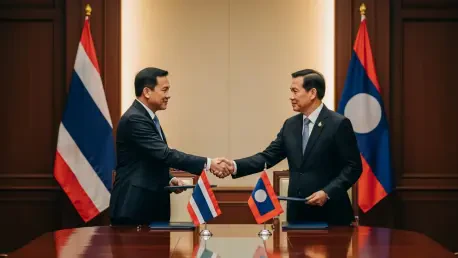
The swift resolution of the potential diplomatic fallout was a testament to the effective use of communication channels between the two nations. Following Laos’s strong rebuttal and detailed explanations, Thai authorities moved quickly to manage the situation and prevent long-term damage to bilateral relations. The apology from Thailand’s Defence Ministry was a pivotal moment, signaling a desire to respect Lao sovereignty and maintain the spirit of friendly cooperation. This act of diplomacy was well-received in Vientiane and paved the way for constructive dialogue. The incident underscored the importance of distinguishing between security-driven border management and broader trade policy. Both sides recognized the mutual benefits of their extensive economic partnership and demonstrated a shared interest in ensuring that security concerns, while valid, are addressed in a manner that does not unduly penalize legitimate commerce. The focus shifted from accusation and defense to a shared problem-solving approach, highlighting the maturity of their diplomatic relationship.
A Shared Commitment to Future Monitoring
In the wake of the diplomatic exchange, both Thailand and Laos established a framework for enhanced cooperation to prevent future misunderstandings and curb any potential illicit activities. The core of this new understanding was a mutual agreement to jointly monitor the movement of oil and other sensitive goods across their shared border. This collaborative approach was designed to increase transparency and provide both sides with verifiable data, directly addressing the security concerns that initially triggered the incident. By pooling resources and intelligence, the two nations aimed to create a more secure and predictable trade environment, ensuring that legal commerce could proceed unimpeded while making it more difficult for smuggling networks to operate. This forward-looking solution effectively transformed a moment of tension into a strengthened partnership, reinforcing the principle that shared challenges were best met with shared responsibilities and joint action, ultimately bolstering legal trade protocols and contributing to greater regional stability.