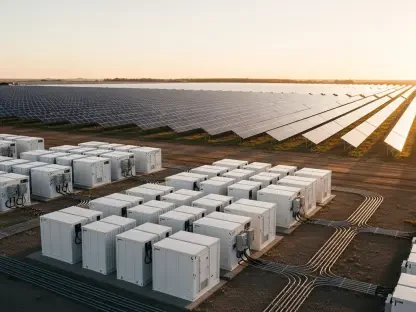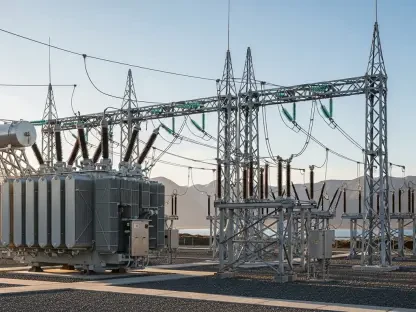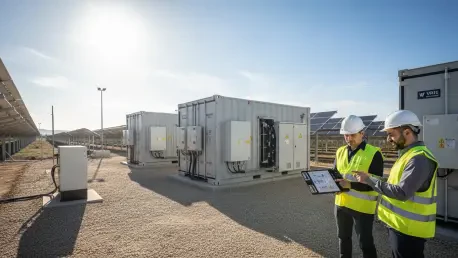

A sweeping modernization of energy regulations is fundamentally reshaping Spain’s power grid, driven by a concerted effort from the autonomous communities of Galicia, Andalusia, and the Valencian Community to eliminate administrative logjams. These regions are at the forefront of a strategic push to accelerate the deployment of vital energy storage infrastructure, formally recognizing its critical role in stabilizing the grid and unlocking the full potential of renewable energy sources. This regional initiative is creating an attractive investment landscape and serves as the practical foundation for achieving Spain’s ambitious national energy transition targets. By pioneering streamlined permitting and offering clear legal support, these communities are demonstrating a powerful, decentralized approach to building a more resilient and sustainable energy future for the entire nation.
Regional Regulatory Frameworks
Galicia Declaring Storage a Public Interest
In the north-western region of Galicia, the passage of Law 5/2025 has provided a powerful legal catalyst for energy storage development by officially elevating it to the status of “energy infrastructure of public interest.” This critical designation legally equates storage projects with essential transmission and distribution networks, a move that confers significant advantages. Projects under this classification are granted full planning compatibility, including on rural land, which circumvents one of the most common and time-consuming development hurdles. Furthermore, they gain access to priority permitting procedures, ensuring their applications are processed with greater urgency. The law also introduces simplified environmental impact assessments, a particularly valuable provision for hybrid projects that pair storage with renewable generation facilities. This comprehensive legal framework is fortified by a strengthened “strategic project” designation, which empowers the regional government to assume sole control over territorially significant developments, effectively bypassing potential local-level administrative bottlenecks and accelerating the timeline from proposal to operation.
Valencian Community Creating a Unified Fast Track
The Valencian Community has taken a similarly aggressive approach with the enactment of Decree-Law 14/2025, which introduces a series of urgent measures aimed at boosting both renewable generation and energy storage capacity. The centerpiece of this legislation is the creation of an extraordinary fast-track technical assessment process specifically for designated “priority projects for the energy transition.” This innovative procedure consolidates numerous sectoral permits, which were previously sought sequentially, into a single, unified application. This consolidation drastically reduces administrative complexity and shortens the review period. The decree also directly addresses common land-use conflicts, a frequent source of project delays, by relaxing compatibility requirements on non-developable land. To further expedite the process, it imposes shorter reporting deadlines on municipal authorities, compelling quicker responses and approvals. This explicit prioritization of projects related to self-consumption and renewable-hybrid storage systems signals a clear commitment to integrating storage at every level of the energy system, from large-scale grid support to localized consumer applications.
Andalusia Prioritizing Strategic Development
In southern Spain, Andalusia’s Law 4/2025 has established a robust framework that identifies energy storage as a “project of strategic regional interest.” This official status provides developers with a crucial advantage by granting their projects priority processing throughout the entire administrative chain, from initial application to final approval. Perhaps its most impactful provision is the authority it grants to modify or even override existing urban planning rules. This ensures that the energy-use designation can prevail over other potential land uses, a critical factor in securing suitable locations for large-scale facilities in a region with competing demands for land. The Andalusian law also recognizes the importance of a diverse ecosystem of storage solutions by introducing simplified environmental permitting for smaller-scale systems. This measure is specifically designed to encourage a wider range of developments and significantly shorten their development timelines, fostering innovation and broadening participation in the region’s energy transition.
From Policy to Projects
Translating Reforms into Real World Action
The direct impact of these ambitious regulatory overhauls is clearly visible in the growing number of tangible energy storage projects advancing across the three pioneering regions. In the Valencian Community, which already has an impressive pipeline of over 500 megawatts of storage projects awaiting permits, X-ELIO Energy recently secured environmental approval for its substantial 63 MW El Tello project. Concurrently, Endurance Motive is developing the region’s first large-scale system designed for renewable hybridization, boasting a significant 50 MWh capacity. In Andalusia, momentum is building with major developments like Rolwind’s 77.6 MW ST Cerrillo project, which is currently in its public consultation phase. The region is also benefiting from European-funded initiatives, including the 24 MWh BESS La Vega and the massive 310 MWh Solacor TES1 project. Meanwhile, Galicia, now reviewing 30 distinct projects, is home to Spain’s first operational standalone energy storage plant in Sanxenxo, a 5 MW / 20 MWh facility developed by Sungrow Renewables capable of supplying power to approximately 2,000 households.
A Unified National Vision
The coordinated actions of Galicia, Andalusia, and the Valencian Community created a powerful blueprint for Spain’s national energy strategy, demonstrating that targeted regional reforms could effectively de-risk investment and compress project timelines. These legislative changes, which ranged from public-interest declarations to streamlined permitting and preferential land-use designations, proved instrumental in turning policy goals into operational assets. This regional momentum aligned perfectly with Spain’s broader ambition to install over 20 gigawatts of energy storage capacity by 2030, a target set to ensure grid stability and maximize the integration of intermittent renewable sources. The success of these pioneering communities established energy storage not as an accessory but as a foundational pillar of the nation’s energy transition, providing a scalable and replicable model for other regions to follow. Their collective efforts ensured that Spain was well-positioned to achieve long-term system flexibility and energy independence.