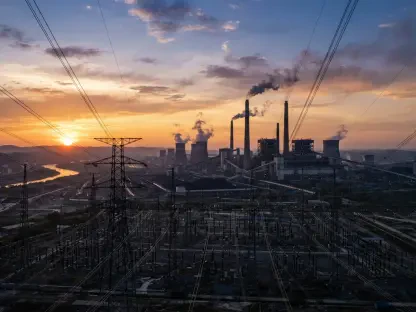

The survival of heavy industrial sectors often clashes with the evolving standards of judicial oversight, creating a profound dilemma for the New South Wales regional economy. The state government has moved to shield the Mount Pleasant coal mine expansion from a landmark High Court invalidation, signaling a priority for economic continuity over legal finality. This decision followed a successful challenge by the Denman Aberdeen Muswellbrook Scone Healthy Environment Group, which argued that the project’s approval failed to account for the environmental consequences of coal burned overseas.
The Coal Industry’s Economic Weight and Judicial Vulnerability
Coal exports remain a dominant force in the regional economy, generating the revenue required to fund essential state infrastructure and public services. However, the reliance on these fiscal contributions has created a state of judicial vulnerability where court rulings against mining projects can jeopardize the financial health of the entire Muswellbrook region. The current landscape forces a constant re-evaluation of how industrial output can coexist with a legal system that is increasingly sensitive to the climate crisis.
The conflict surrounding MACH Energy’s operations involves a complex array of stakeholders, ranging from state regulators to local advocacy groups. Community members remain divided between the immediate benefits of employment and the long-term health of their environment. Meanwhile, the operational scale of thermal coal production in Muswellbrook continues to drive global energy supply chains, making any disruption a matter of international market significance.
Evolving Legal Standards and the Future of Australian Coal
Emerging Precedents in Climate Litigation and Scope 3 Accountability
The introduction of Scope 3 emissions into the legal discourse has fundamentally altered the approval process for new mining projects. This standard requires regulators to consider the pollution generated by consumers of Australian coal, a shift that aligns with the global movement toward ESG compliance. Investors are increasingly wary of projects that do not meet these stringent criteria, as judicial bodies begin to favor broader environmental accountability over narrow local benefits.
The High Court victory for local environmentalists redefined the public interest test, emphasizing that the long-term impact of carbon emissions is a relevant consideration for state planning bodies. This precedent suggested that the Independent Planning Commission must look beyond immediate job creation when assessing the validity of mine expansions. Consequently, the legal framework for resource extraction is now under more pressure to reflect national and global climate commitments.
Market Projections and the 2032 Operational Horizon
Market data indicates that thermal coal demand will remain a significant factor in the energy mix from 2026 toward the 2032 operational horizon. Despite the transition to renewable sources, the stability of the current grid and the energy needs of developing nations ensure that projects like Mount Pleasant remain economically viable. This longevity is the foundation upon which local businesses and service providers have built their growth strategies for the coming decade.
Job security remains the most emotive issue in this debate, as the potential for sudden mine closures threatens the fiscal stability of hundreds of families. Economic dependency on the mine means that any judicial interruption has an immediate negative impact on regional retail and small business sectors. Projections suggest that maintaining operations through the 2032 deadline is critical for preventing a localized economic depression during the transition period.
Navigating the Friction Between Economic Stability and Environmental Law
The government’s decision to override a court ruling has led to allegations of state capture, where corporate interests appear to hold undue influence over legislative priorities. Critics argue that such moves erode the independence of the judiciary and undermine the democratic process by rendering legal victories meaningless. This friction highlights the growing gap between the executive branch’s economic goals and the judicial branch’s interpretation of environmental law.
Confusion regarding employment data has further fueled the controversy, specifically the debate over whether the expansion creates 100 or 400 new positions. Environmental advocates have used internal documents to suggest that the economic benefits were overstated to secure public and political support. This discrepancy has complicated the narrative of industrial survival and increased skepticism regarding the transparency of major project approvals.
Managing the fallout from alleged production breaches by MACH Energy during the litigation phase has also tested the state’s regulatory resolve. Balancing the survival of regional industries with the commitment to reach net-zero emissions requires a more integrated approach than simple legislative overrides. Without a clear path that respects both the rule of law and economic reality, the state risks ongoing social and political instability.
Legislative Intervention and the Regulatory Response
The Minns Government proposed a bill to effectively bypass the High Court’s invalidation of the Mount Pleasant expansion. This legislative intervention was designed to restore certainty for the workforce and the regional supply chain after months of legal ambiguity. By focusing on the immediate threat to livelihoods, the government sought to position itself as a defender of workers against what it characterized as activist-led judicial disruption.
The NSW Minerals Council has been instrumental in lobbying for these activist-proof approvals, arguing that the mining sector cannot operate effectively under constant legal threat. The proposed laws attempt to retroactively address the procedural failures of the Independent Planning Commission by clarifying that pollution considerations must be balanced against economic factors. This response underscores the tension between executive power and the administrative governance that oversees the mining industry.
The Long-Term Outlook for Mining Governance in NSW
Legislative bypasses of court rulings could have significant ripple effects on how future environmental challenges are handled in Australia. If the government continues to intervene whenever a major project loses in court, the incentive for community groups to participate in the judicial process may vanish. This trend could lead to more radical forms of protest as traditional legal avenues are perceived to be compromised by political intervention.
Technological innovation in extraction techniques may offer a partial solution by reducing the local environmental footprint of mines. However, these advancements do not address the legal challenges associated with global carbon emissions that were at the heart of the High Court’s ruling. Furthermore, global carbon border adjustments could eventually impact the mine’s viability, making domestic legislative protection a temporary fix for a much larger market problem.
Balancing Industrial Livelihoods with the Integrity of the Courts
The debate over Mount Pleasant centered on the conflict between economic protectionism and the sanctity of the High Court. While the government prioritized the immediate survival of the regional workforce, the move raised fundamental questions about the future of the rule of law in Australia. The intervention proved that the legislative branch was willing to use its power to neutralize judicial decisions that threatened state revenue streams or industrial stability.
Future regulatory frameworks sought to integrate climate science and Scope 3 accountability directly into the initial assessment phase to avoid the need for retrospective legislation. By establishing clearer guidelines for the Independent Planning Commission, the state aimed to create a more predictable environment for both investors and environmental groups. Ultimately, the focus shifted toward developing robust regional transition plans that ensured economic resilience without bypassing the scrutiny of the judicial system.