
As the artificial intelligence boom promises unprecedented economic growth, it brings with it an insatiable demand for energy, turning states like Michigan into critical battlegrounds over how to manage this new industrial revolution. The state is currently embroiled in a high-stakes debate that pits the immense potential for technological investment against the pressing need to protect its energy grid, natural resources, and the wallets of its residential electricity customers. This escalating conflict has drawn clear lines between state regulators, major utility providers, and consumer advocates, creating a complex standoff over the rules that will govern the future of large-scale data centers. At the center of this dispute are two powerful forces: Michigan’s Attorney General, who is championing stringent consumer protections, and one of the state’s largest utilities, which is advocating for rapid development to secure Michigan’s place as a leader in the global tech economy.
A Challenge to the New Rules
The simmering debate boiled over when Attorney General Dana Nessel’s office launched a formal challenge against new regulations approved by the Michigan Public Service Commission (MPSC), which were designed to manage the relationship between utilities and incoming data center operators. In a petition for rehearing, the Attorney General’s office described the approved rules as “inadequate,” arguing that the MPSC’s findings were “arbitrary and capricious” and failed to properly address substantial evidence regarding the potential for massive cost risks to be shifted onto average ratepayers. The intervention is framed not as an “anti-investment” move but as a necessary measure to “ensure the utility monopolies in this state act responsibly to their existing residential customers.” This action directly confronts the framework that utilities had hoped would streamline the process for attracting these energy-intensive facilities, setting the stage for a prolonged regulatory and legal battle over who should bear the infrastructure costs of the AI era.
A key point of contention in the Attorney General’s petition is the provision that allows utilities to submit special contracts for data centers through an ex parte consideration—a private review process that bypasses public input and scrutiny. This very process was recently utilized by DTE Energy for a major contract involving Oracle and OpenAI, a move that raised concerns among consumer advocates about transparency. To counteract what her office sees as insufficient safeguards, Nessel has proposed a series of more stringent requirements. These recommendations include extending the minimum contract term for large customers from 15 to 20 years to ensure long-term commitment, increasing the minimum billing demand from 80% to 90% to make data centers pay for more of the capacity they reserve, and mandating that these new facilities cover the full compliance costs associated with the state’s renewable energy goals, thereby shifting the financial burden of the green transition onto the new industrial consumers rather than the public.
The Case for Innovation and Security
Consumers Energy has mounted a forceful counter-argument, characterizing the Attorney General’s petition as a “bad idea” that “creates uncertainty” and threatens to slow Michigan’s momentum in a critical and fast-moving economic race. Brandon Hoffmeister, the company’s Senior Vice President, has been a vocal proponent of the current MPSC-approved rules, asserting that they provide sufficient protections for existing customers. The utility’s central claim is that the arrival of data centers will not lead to any increase in electricity rates for the general public. Instead, Consumers Energy contends that the enormous financial investments from Big Tech companies will directly fund “much-needed infrastructure upgrades.” This, they argue, will ultimately result in a more robust, modern, and reliable electric grid that benefits all Michigan residents, effectively turning the data centers’ massive energy needs into a catalyst for system-wide improvements that might otherwise take years to finance and implement.
Beyond the economic benefits, the utility has elevated the debate to a matter of national and economic security, framing the development of domestic data centers as an essential part of a global competition, particularly with China. Hoffmeister warns that if regulatory hurdles prevent these facilities from being built in well-regulated states like Michigan, the void will be filled by geopolitical rivals. This could allow China to gain a decisive advantage in the race for AI supremacy, which he argues would pose a significant long-term threat to America’s security and economic future. He highlights the construction of domestic data centers as a rare point of bipartisan agreement, supported by political figures from across the spectrum. From this perspective, any delays caused by the Attorney General’s legal challenges are not just hindering state progress but are actively jeopardizing the nation’s competitive edge in a technology that will define the coming decades.
Environmental Impacts and Community Concerns
The dispute between the state and its utilities is being closely watched by environmental organizations, which are actively working to ensure that the growth of data centers accelerates, rather than hinders, Michigan’s transition to clean energy. The Environmental Law and Policy Center (ELPC) has cautioned that without strong clean-energy mandates for these new facilities, their immense power demands could jeopardize the state’s ability to meet its renewable energy targets. The scale of this potential new load is staggering; an ELPC economist testified that Consumers Energy has already received inquiries for over 15 gigawatts of potential data-center demand. To put that figure in perspective, it is an amount nearly double the utility’s entire current peak demand, highlighting the monumental challenge of integrating these facilities into the grid without relying on fossil fuels and derailing statewide climate goals.
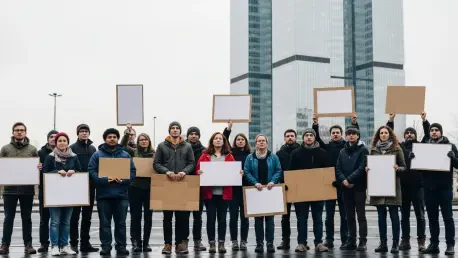
This high-level regulatory conflict is mirrored by a growing wave of public resistance at the local level, where communities are grappling with the tangible impacts of data center development. In Saline Township, residents recently protested outside DTE headquarters over a proposed one-gigawatt data center, voicing strong concerns about potential pollution, significant water usage for cooling, and the impact on their electricity costs. A similar scenario played out in Howell Township, where intense public backlash prompted a Fortune 100 company to withdraw its rezoning request for a data center project. In response, township officials enacted a six-month moratorium on such developments to give them time to study the implications. In defense of the industry, Consumers Energy’s Hoffmeister stated that Michigan’s existing laws are strong enough to protect natural resources, pointing to technologies like closed-loop water cooling systems that minimize environmental impact.
A Standoff With an Uncertain Future
The state of Michigan found itself at a critical inflection point, tasked with the complex challenge of balancing the immense economic promise of the AI revolution against the significant risks it posed to energy infrastructure, consumer costs, and environmental health. The direct conflict between the Attorney General’s demand for stricter, preemptive regulations and the utility’s determined push for a rapid, business-friendly development framework encapsulated this difficult dilemma. While both DTE and Consumers Energy maintained that their data center contracts were structured to avoid raising rates for existing customers, the Attorney General’s office and numerous community groups remained deeply skeptical, demanding more transparent and robust safeguards be put in place before the state committed to such a massive energy expansion. The MPSC had not yet indicated when it would respond to the petition for a rehearing, and with Consumers Energy anticipating the dispute would likely extend into the next year, the future of data center regulation in Michigan was left unresolved.