In the face of increasing climate-related challenges, including the record-warm summer of 2025, a recent report presented to senior leaders at Leeds City Council has illuminated the city’s remarkable progress since declaring a climate emergency in 2019. This detailed analysis chronicles a comprehensive, multi-faceted strategy designed to achieve the ambitious goal of becoming the United Kingdom’s first net-zero and nature-positive city. The findings reveal not just aspirational targets but tangible achievements across multiple sectors, demonstrating a determined and coordinated effort to reshape the city’s environmental future. The report serves as a critical benchmark, outlining a roadmap within the new “Leeds Ambitions” framework and underscoring the significant momentum gained in the journey toward profound and lasting sustainability. This comprehensive overview of the city’s actions provides a compelling case study in urban environmental stewardship and strategic decarbonization.
A Multifaceted Approach to Decarbonization
The report’s central finding reveals a substantial and encouraging reduction in the city’s overall carbon footprint, a key metric in its fight against climate change. Since 2005, Leeds’ total contribution to climate change has seen a significant decline of 38 percent, dropping from 6.3 million to just 3.9 million tonnes of carbon. This achievement is particularly noteworthy given that it has occurred during a period of sustained population growth, indicating that economic and demographic expansion can be successfully decoupled from rising emissions. Even more impressive is the progress made within the council’s own operations. Its direct operational carbon footprint has been slashed by an extraordinary 65 percent over a similar timeframe, showcasing a commitment to leading by example. This drastic reduction is a direct result of targeted policies and investments aimed at transforming how the city’s public services are powered and delivered, setting a high standard for other public and private sector organizations to follow.
A core component of the city’s strategy centers on decarbonizing its housing stock, simultaneously addressing fuel poverty and reducing residential emissions. The council is advancing a dual-pronged approach, with a massive £100 million program dedicated to improving the energy efficiency of its existing council homes now more than halfway to completion. This initiative involves retrofitting properties with better insulation and modern heating systems to lower energy consumption and reduce utility bills for residents. Complementing this effort, a separate project launched in 2025 is specifically targeting the upgrade of 100 traditionally hard-to-insulate back-to-back homes, a common housing type in the region. Furthermore, the city’s innovative Leeds PIPES district heating network continues to expand its reach. This network provides affordable, lower-carbon heat generated from a non-recyclable waste plant, now servicing over 4,000 homes and 70 commercial buildings, effectively turning waste into a valuable energy resource and reducing reliance on fossil fuels.
Pioneering Sustainable Transport and Public Infrastructure
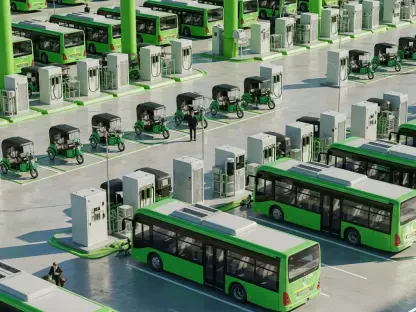
Significant progress in transportation and public infrastructure forms another cornerstone of Leeds’ ambitious climate strategy, with a focus on electrifying its vehicle fleet. Leeds City Council now proudly operates what is believed to be the largest zero-emission vehicle fleet of any local authority in the country, boasting an impressive 332 electric vehicles. This transition is not only an environmental victory but also a financial one; internal data has confirmed that the council’s electric vans are 40 percent cheaper to maintain compared to their traditional combustion-engine counterparts. This demonstrates a clear economic case for electrification that complements the ecological benefits. To encourage wider public adoption of electric vehicles, the city is actively expanding its charging infrastructure. A key milestone in this effort is the planned installation of the city’s very first on-street charging point by the end of 2025, a move designed to make EV ownership more practical and accessible for residents without private driveways.
Beyond transport, the decarbonization of public buildings has been a major priority, backed by substantial investment to modernize the city’s infrastructure. More than £50 million in government funding has been strategically allocated to upgrade 75 public buildings, including schools, libraries, and community centers. These upgrades have focused on implementing cutting-edge, low-carbon technologies, such as advanced heat pumps and extensive solar panel installations. This initiative not only significantly reduces the carbon footprint of the public estate but also lowers long-term operational costs and improves the energy resilience of crucial community assets. By retrofitting these buildings, the council is creating healthier, more comfortable environments for public use while making a visible commitment to sustainability that permeates every aspect of civic life. These efforts collectively transform public spaces into models of energy efficiency and responsible resource management for the entire city.
Cultivating a Greener Nature-Positive Future
The city’s comprehensive climate plan successfully extended beyond emissions reduction to encompass a deep commitment to environmental restoration and biodiversity. Key initiatives were established to foster a more natural and resilient urban landscape, including an extensive woodland creation scheme aimed at significantly increasing the city’s tree canopy cover. This project was not merely about planting trees but about creating new, thriving ecosystems that supported local wildlife and enhanced air quality. In parallel, a program to establish dedicated “wild spaces” across the city was implemented to help critical pollinator populations, such as bees and butterflies, flourish. These efforts reflected a holistic vision where technological and infrastructural advancements were balanced with the nurturing of the natural world. Councillor Mohammed Rafique highlighted that these remarkable achievements were the result of a powerful collaborative spirit, thanking the private sector, third-sector organizations, and other city partners whose critical contributions had been instrumental in moving toward a shared, ambitious vision for Leeds.