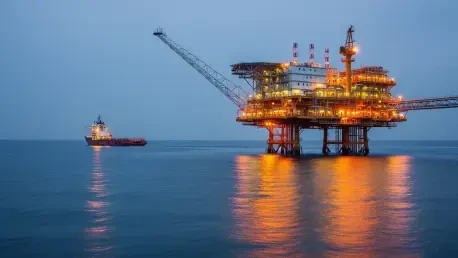

In the high-stakes arena of global energy politics, the Caspian Sea has emerged as both a promising alternative to Russian supplies for Europe and a logistical minefield where sanctions against one nation can entangle all its neighbors. This landlocked body of water, critical for the continent’s energy diversification, presents a unique geopolitical puzzle. While nations like Kazakhstan, Azerbaijan, and Turkmenistan are key partners for the West, their shared maritime environment with heavily sanctioned Iran and Russia creates a complex web of operational and financial risks. Recent shifts in U.S. sanctions enforcement, targeting not just states but the intricate networks that support their trade, have intensified these challenges, forcing compliant Caspian exporters to navigate an increasingly treacherous commercial landscape.
The Caspian Corridor: Europe’s Critical, Yet Complicated, Energy Lifeline
The Caspian Sea region holds immense strategic importance for European energy security, offering a vital corridor for oil and gas that bypasses Russian-controlled infrastructure. As Europe continues its determined pivot away from reliance on Russian hydrocarbons, the resources of the Caspian basin have become more critical than ever. This route represents not just an alternative source but a cornerstone of a more diversified and resilient European energy strategy for the coming decades.
Central to this strategy are the region’s primary energy exporters: Kazakhstan, Azerbaijan, and Turkmenistan. Kazakhstan, as Central Asia’s largest oil producer, and Azerbaijan, a key player in the Southern Gas Corridor, are already significant suppliers to European markets. Turkmenistan, with its vast natural gas reserves, holds further potential to bolster the continent’s long-term energy supply. The success of these nations in maintaining and expanding their export capacity is directly linked to Europe’s ability to achieve its energy security objectives.
However, the operational environment is fraught with complexity. The Caspian is a shared maritime domain bordered by Iran and Russia, two of the world’s most heavily sanctioned countries. This geographical reality means that legitimate commercial activities from compliant nations inevitably operate in close proximity to, and often share infrastructure with, sanctioned trade. This co-location of lawful and illicit maritime logistics creates a fundamentally challenging landscape, where the risk of sanctions spillover becomes a constant operational concern for all regional actors.
Shifting Tides: The Escalating Sanctions and Market Reactions
The U.S. Enforcement Pivot: Targeting Networks, Not Just Nations
The landscape of sanctions compliance was significantly altered by the U.S. announcement on February 6, 2026, which designated numerous entities, individuals, and vessels involved in Iranian petroleum shipping. This move signals a strategic evolution in U.S. enforcement, moving beyond targeting state actors to dismantling the logistical and intermediary networks that facilitate sanctioned trade. The focus is now squarely on Iran’s “shadow fleet” and the ecosystem of service providers that enables it to circumvent oil export restrictions.
This enforcement pivot, guided by frameworks like National Security Presidential Memorandum-2 (NSPM-2), broadens the scope of scrutiny to include non-sanctioned actors whose activities might be perceived as facilitating sanctioned commerce. Ports, shipping companies, insurers, financiers, and transshipment facilities now face a heightened risk of secondary sanctions if their services are linked, even inadvertently, to illicit trade. Consequently, the burden of due diligence has intensified for all participants in the Caspian maritime supply chain.
The Market’s Conservative Turn: Financial Headwinds and Heightened Scrutiny
In response to this heightened enforcement environment, a wave of conservatism has swept through the international financial sector. Banks and financial institutions, particularly those reliant on U.S. dollar clearing and Western correspondent networks, are adopting a more risk-averse posture. They are applying stricter interpretations of guidance from the U.S. Treasury’s Office of Foreign Assets Control (OFAC), leading to increased scrutiny of any transaction connected to the Caspian region.
This conservative turn has tangible consequences for legitimate trade. Caspian exporters are encountering significant operational headwinds, including longer processing times for financial transactions and higher compliance-related costs. The need for exhaustive due diligence on all counterparties and intermediaries adds layers of complexity and expense, creating friction even for fully compliant cargo shipments. The designation of new entities with connections to the region only reinforces this trend, compelling the market to exercise extreme caution.
Navigating Treacherous Waters: The Structural Risk of a Shared Maritime Domain
The primary challenge for compliant Caspian nations is best understood as a “spillover risk” that is fundamentally structural rather than policy-driven. Their geographical and logistical proximity to sanctioned activities means that risk is an inherent feature of the operating environment, regardless of their own robust compliance frameworks. The shared nature of the Caspian Sea’s infrastructure—from ports to shipping lanes—creates unavoidable overlaps between legitimate and illicit trade flows.
This co-location poses a persistent challenge in separating compliant commerce from sanctioned activities. An insurer, financier, or logistics provider may service a Kazakhstani oil shipment one day and an Iranian vessel the next, using the same port facilities and personnel. This makes it difficult for international partners to gain complete assurance, placing a heavy burden on Caspian exporters to demonstrate the integrity of their specific supply chains within a high-risk ecosystem.
Kazakhstan serves as a prime case study for these dynamics. As a major crude oil supplier to Europe, its exports are essential for the continent’s energy security. Yet, its reliance on the Caspian Sea for trade, particularly through the port of Aktau, exposes its entire export apparatus to the structural risks emanating from its neighbors. Ensuring the continued, uninterrupted flow of its energy to Europe now depends on its ability to manage these complex, geographically imposed challenges.
The Compliance Crucible: From Regulatory Burden to Strategic Advantage
The intensified sanctions environment places a significant regulatory burden on Caspian exporters, who must now meet heightened due-diligence expectations from their international partners. Financial institutions and buyers demand unprecedented levels of transparency to ensure that transactions are completely insulated from any association with sanctioned Iranian or Russian entities. This requires meticulous tracking and verification at every stage of the supply chain.
In this context, strong institutional frameworks can transform a compliance burden into a distinct strategic advantage. Kazakhstan’s favorable 2023 evaluation by the Financial Action Task Force (FATF) is a key asset. The report highlighted the country’s effective anti-money laundering and counter-terrorist financing (AML/CFT) regime, signaling to the global financial community that it possesses the institutional capacity to manage complex risks.
A robust and transparent AML/CFT regime acts as a powerful signal of reliability to international partners. For nations like Kazakhstan, demonstrating high levels of technical compliance and institutional effectiveness is no longer just about adhering to global standards; it is a critical tool for building confidence. It allows them to differentiate themselves within a high-risk region and assures markets that their exports are a secure and dependable component of Europe’s energy supply.
Charting the Course Forward: Securing the Caspian’s Role in European Energy Security
The future of Caspian energy exports to Europe is contingent on the region’s ability to effectively manage sanctions-related spillover risks. The path forward is not about fundamentally altering national policies but about implementing rigorous operational safeguards that can withstand intense international scrutiny. Success in this endeavor will directly impact the stability and reliability of a key pillar in Europe’s energy diversification strategy.
Proactive measures are essential for navigating this complex environment. This includes investing in enhanced transparency technologies, conducting exhaustive due diligence on all supply chain intermediaries, and maintaining stringent oversight of all maritime and financial logistics. By creating a demonstrable “clean corridor” for their exports, Caspian nations can provide the assurances that global markets and financial institutions now demand.
Ultimately, successful compliance will do more than just mitigate risk; it will reinforce the geopolitical standing of the Caspian exporters. By proving they can operate as dependable energy partners even within a challenging neighborhood, countries like Kazakhstan, Azerbaijan, and Turkmenistan can solidify their role as indispensable contributors to Western energy security, ensuring continued access to global finance and strengthening their strategic alliances.
A Strategic Imperative: Balancing Regional Realities with Global Partnerships
Caspian states currently occupy a dual position: they are vital partners for European energy diversification while simultaneously operating in one of the world’s most scrutinized maritime zones. Their proximity to Russia and Iran places them at the center of a complex geopolitical landscape where commercial operations are inseparable from high-stakes international relations. Navigating this reality requires a delicate balance between regional cooperation and alignment with global partners.
The primary challenge facing these nations is therefore operational, not political. It demands a commitment to meticulous risk management and a level of transparency that goes beyond standard international norms. The goal is to build a compliance architecture so robust that it insulates their legitimate trade from the ambient risks of the region, thereby assuring Western partners of the integrity of their energy supply chains.
Looking ahead, the recommended path is one of demonstrable transparency. By proactively implementing and documenting stringent oversight mechanisms, Caspian exporters can ensure their continued access to global finance and solidify their strategic importance. This approach transforms a daunting compliance challenge into an opportunity to prove their reliability, securing their crucial role in the future of European energy security.