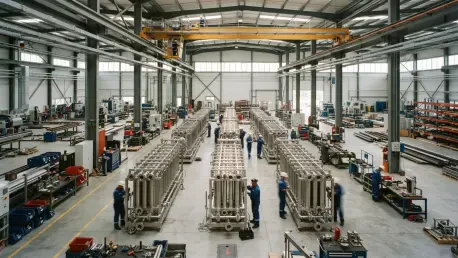

The competitive landscape of global energy is shifting as India aggressively transitions from mere policy drafting to the large-scale industrial deployment of green hydrogen. By mid-2026, the nation has already surpassed significant milestones in setting up the necessary infrastructure to meet its ambitious 2030 targets. This transformation is driven by a need to decarbonize sectors that are traditionally difficult to electrify, ensuring that the country moves away from carbon-intensive fossil fuels toward a more sustainable and self-reliant industrial model.
The current momentum suggests that the National Green Hydrogen Mission is no longer just a vision but a functioning industrial reality. With the implementation of strategic financial incentives and the construction of high-capacity electrolyzer plants, the market is witnessing a fundamental shift in how energy is produced and consumed. This analysis explores the core components of the strategy, examining the financial drivers, sector-specific impacts, and the technological innovations that are paving the way for a cleaner future.
The Dawn of a Decarbonized Industrial Era in India
India is currently undertaking one of the most ambitious energy transformations in its history, moving aggressively from policy blueprints to the active industrial implementation of green hydrogen. As the world seeks viable alternatives to fossil fuels, India has positioned the National Green Hydrogen Mission (NGHM) as the cornerstone of its strategy to decarbonize “hard-to-abate” sectors. This transition involves a comprehensive overhaul of traditional manufacturing processes, replacing carbon-heavy energy sources with a versatile fuel that leaves only water as a byproduct.
By focusing on internal industrial capacity, the nation is building a shield against the volatility of international fuel prices. The ongoing efforts are not just about environmental targets; they are about creating a new economic engine that can power the country for decades. By late 2026, the shift has already begun to manifest in specialized industrial corridors where the integration of green energy and heavy manufacturing is becoming the standard rather than the exception.
The Foundation of India’s Green Energy Ambitions
The journey toward a hydrogen-based economy is rooted in India’s urgent need to reduce energy imports and meet international climate commitments. Historically, India’s industrial base has relied heavily on grey hydrogen—produced from natural gas—which carries a significant carbon footprint. The shift toward green hydrogen, generated through the electrolysis of water using renewable electricity, represents a fundamental change in industrial philosophy. This background is essential for understanding why the government has prioritized this specific technology over others.
This transition is not merely about environmental stewardship; it is a calculated move toward energy sovereignty. By building on past successes in solar and wind power expansion, India is now applying those lessons to the hydrogen value chain, ensuring that the infrastructure and technology are developed domestically to avoid future dependencies on foreign energy tech. The ability to generate fuel from water and sunlight provides a path to permanent energy security that was previously unattainable.
Strategic Frameworks for Industrial Scaling
The NGHM and the Financial Engine: SIGHT
At the heart of this strategy lies the National Green Hydrogen Mission, backed by an initial outlay of Rs 19,744 crore. A critical component of this mission is the Strategic Interventions for Green Hydrogen Transition (SIGHT) program, which acts as the financial backbone for the entire operation. This initiative serves as a dual-action catalyst, providing substantial financial incentives for both electrolyzer manufacturing and actual hydrogen production to ensure that domestic companies can compete on a global stage.
By late 2026, the program had already facilitated offtake commitments exceeding 5.5 lakh tons annually, proving that the market has moved beyond the experimental phase. This structured financial support ensures that private enterprises can mitigate the high initial capital costs, allowing the market to move from theoretical potential to tangible commercial contracts and operational capacity. The focus on domestic electrolyzer manufacturing ensures that the primary tools of production remain under local control.
Transforming Hard-to-Abate Industrial Sectors
The implementation strategy focuses on sectors where hydrogen is already an essential feedstock but currently contributes to high emissions. In fertilizer production, replacing grey hydrogen with green ammonia is set to revolutionize the carbon footprint of Indian agriculture. This is a critical development for food security, as it decouples the cost of fertilizer from the price of imported natural gas. Similarly, in petroleum refining, green hydrogen is being integrated into desulfurization processes to clean up liquid fuels.
Perhaps the most significant impact is seen in the steel industry, where hydrogen is replacing coking coal as a reducing agent. This shift toward green steel not only aligns with domestic climate goals but also prepares Indian manufacturers for a global market that is increasingly demanding low-carbon industrial products. By decarbonizing these heavy industries, India is positioning itself as a preferred supplier for environmentally conscious international buyers, turning a climate challenge into a competitive advantage.
Validating Technology: Pilot Initiatives and Transport
Beyond heavy industry, India is utilizing pilot projects to test the versatility of hydrogen across various transport modalities. Notable successes include the inauguration of indigenous hydrogen-powered trains and the deployment of hydrogen fuel-cell buses on specialized routes. These projects provide real-world data on fuel consumption, durability, and safety, which are essential for scaling the technology in the coming years.
In the maritime sector, projects at major ports like V.O. Chidambaranar are exploring green methanol bunkering, which is vital for decarbonizing international shipping lanes. These pilots serve as essential “proof of concept” steps, allowing engineers and policymakers to address technical challenges in storage, refueling infrastructure, and safety protocols before full-scale national deployment. Each pilot project acts as a building block for a future where hydrogen is as common as diesel or gasoline.
Future Projections and Emerging Technological Shifts
Looking ahead, the evolution of India’s hydrogen strategy will likely be shaped by rapid innovations in electrolyzer efficiency and the integration of digital twins for grid management. As the cost of renewable energy continues to fall, the economic parity between green and grey hydrogen is expected to be reached sooner than previously anticipated. We can expect a shift toward regional hydrogen hubs—clusters where production and consumption are co-located to minimize transportation and storage costs.
Furthermore, regulatory frameworks are evolving to allow for hydrogen blending in existing city gas networks, which could provide a massive secondary market for surplus production. As the nation moves from 2026 to 2030, the maturation of these technologies will likely lead to an explosion of commercial activity. The convergence of digital monitoring and better storage materials will make hydrogen a flexible asset that can balance the national power grid during times of low renewable generation.
Actionable Insights for a Seamless Transition
To successfully navigate this transition, stakeholders must prioritize vertical integration and infrastructure resilience. For businesses, the primary strategy should involve securing long-term offtake agreements and investing in domestic manufacturing capabilities to benefit from government incentives. Strategic partnerships between renewable energy producers and industrial consumers will be key to ensuring a steady supply of low-cost fuel.
Professionals in the energy sector should focus on acquiring specialized skills in hydrogen safety and cryogenic storage, as these will be in high demand. On a broader scale, the industry must advocate for standardized international certification for green hydrogen to ensure that Indian-produced fuel meets the rigorous “green” criteria required for export. Being ahead of the curve in certification will allow Indian firms to capture early market share in Europe and East Asia.
Securing a Sustainable Energy Future
The National Green Hydrogen Strategy for 2030 represents a bold testament to the country’s commitment to a low-carbon future. By aligning financial incentives with industrial necessity and technological innovation, the mission successfully moved the nation toward its goal of becoming a clean energy powerhouse. The transition from policy blueprints to real-world industrial sites demonstrated that a coordinated approach could bridge the gap between environmental idealism and economic reality.
The significance of this journey extended beyond environmental metrics; it was about creating a resilient, self-reliant economy powered by clean energy. As the nation moved toward its 5-million-ton production goal, the success of this mission provided a vital blueprint for other emerging economies striving to balance industrial growth with planetary health. The localized supply chain and the integration of hydrogen into the core of heavy industry solidified the nation’s role as a leader in the global energy transition.