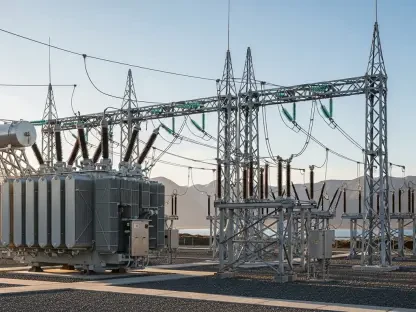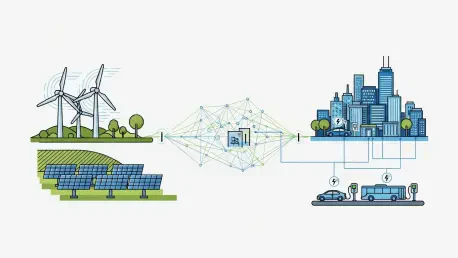

Facing stark projections of significant energy shortfalls within the next five years, Illinois has enacted a sweeping legislative package designed to fundamentally reshape its power grid and assert control over its energy destiny. Governor JB Pritzker signed the Clean and Reliable Grid Affordability Act (CRGA) into law as a direct countermeasure to looming grid instability and rising consumer costs, framing the state-level action as an essential response to what he termed detrimental federal policies that have hampered renewable energy development. The comprehensive law represents a major strategic pivot, aiming to modernize the state’s infrastructure, foster clean energy innovation, and address the dual challenges of meeting growing electricity demand while transitioning away from fossil fuels, setting a new course for millions of residents and businesses across the state.
A Blueprint for a Modern Grid
The CRGA introduces a comprehensive overhaul of the state’s energy strategy, granting significant new powers to the Illinois Commerce Commission (ICC), the state’s primary utility regulator. The ICC is now tasked with developing and approving a comprehensive integrated resource plan, which provides the authority to create and enforce long-term strategies for managing Illinois’s energy supply and demand. This centralization of planning is intended to foster a more cohesive and forward-looking approach to grid management, moving away from fragmented decision-making. In one of the bill’s most significant policy reversals, the legislation lifts a longstanding state moratorium on the construction of new, large-scale nuclear power plants. This move reopens the door for developing a critical source of carbon-free, reliable power to anchor the state’s energy portfolio, while concurrently increasing the fees paid by existing nuclear plant operators to fund state programs.
To further stabilize the grid and empower consumers, the legislation legally mandates that the state’s two largest electric utilities, ComEd and Ameren Illinois, offer optional “time-of-use” pricing plans to their customers. These programs are designed to incentivize a shift in energy consumption away from peak demand hours by offering lower rates during off-peak times, thereby reducing strain on the grid and lowering overall system costs. The act also champions other emerging clean technologies by introducing new support programs for geothermal and thermal energy network projects, which utilize underground heat to displace the need for traditional heating fuels. In addition, the law imposes more stringent energy efficiency requirements on both electric and natural gas utilities and tightens air regulations on backup power generators, a measure particularly relevant to the state’s growing number of data centers, ensuring that all facets of the energy ecosystem contribute to a cleaner, more efficient future.
Harnessing New Energy Technologies
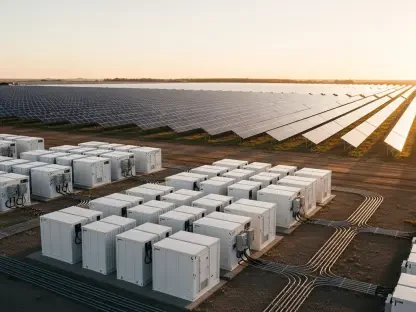
At the very core of the new law is a substantial commitment to incentivizing energy storage as a critical tool for grid reliability. The CRGA establishes a new framework to encourage the development of advanced battery storage projects, which will be funded through a new charge on ratepayer bills scheduled to begin in 2030. This mechanism allows energy generated during periods of high renewable output, such as on sunny or windy days, to be stored and then deployed during peak usage hours or when renewable sources are inactive. Supporters of the legislation, including the Illinois Power Agency, project that this upfront investment will be more than offset by significant long-term savings. They estimate a net benefit of approximately $13.4 billion for utility customers over the next two decades, achieved through enhanced grid efficiency, reduced reliance on expensive out-of-state power, and greater price stability for consumers across the state.
Beyond large-scale storage, the CRGA also establishes innovative programs to create “virtual power plants” (VPPs), a model that leverages decentralized energy resources. This system allows individual homes and businesses equipped with their own energy generation, like rooftop solar panels, and storage, such as home batteries, to pool their resources. This aggregated energy can then be sold back to the main grid, particularly during periods of high demand when wholesale electricity prices are elevated. In effect, this network of small-scale systems acts “virtually” as a single, dispatchable power plant, providing a flexible and resilient source of power to bolster the grid. Participants in these VPP programs will be compensated for the energy they contribute, creating a new revenue stream for consumers and fostering a more interactive and dynamic relationship between energy users and the broader power system.
Building an Equitable Clean Energy Economy
A crucial aspect of the CRGA, instrumental in securing its passage, is its robust focus on high labor standards and social equity initiatives. The legislation addresses and closes a significant loophole related to community solar projects, which had previously allowed some developers to circumvent prevailing wage and project labor agreement requirements. This provision was a major priority for organized labor groups, who were deeply involved in the bill’s negotiations. Labor leaders, including AFL-CIO Secretary Treasurer Pat Devaney, celebrated the law’s firm commitment to ensuring that the state’s clean energy future will be “union built,” a sentiment that reflects the broader goal of linking environmental progress with economic security for workers. Advocates for the bill project that its various programs and incentives will generate as many as 100,000 well-paying jobs across the state, from construction and installation to maintenance and technology development.
In addition to its strong labor protections, the law includes comprehensive equity provisions designed to ensure the economic benefits of the clean energy transition are distributed broadly and fairly. The CRGA specifically prioritizes the awarding of grants for clean energy projects located in historically underserved and environmentally overburdened communities. It also creates preferences for contractors from disadvantaged backgrounds, directly combating systemic discrimination and fostering a more inclusive industry. Shon Harris, the CEO of LiveWire Construction, highlighted this critical component, stating that the new law ensures “equity remains a part of Illinois’ clean energy future.” This deliberate focus aims to ensure that communities that have disproportionately borne the negative impacts of the fossil fuel economy are among the first to see the investment, job creation, and improved environmental quality resulting from this historic energy transformation.
The Debate and Path Forward
Despite its broad coalition of support from environmental advocates, utility oversight groups, and organized labor, the legislation encountered significant opposition from business organizations and Republican legislators. Their criticism centered on the financial impact on consumers and businesses, arguing that the new charge to fund battery storage amounts to a “guaranteed rate increase” for all ratepayers. Opponents also expressed deep skepticism about the reliability of the technologies being prioritized in the bill. For instance, Rep. C.D. Davidsmeyer characterized battery storage as an “unproven” strategy at the scale required for grid stability. Echoing these concerns, Rep. Norine Hammond criticized wind and solar power as inherently unreliable energy sources, arguing that the state should instead focus its efforts on preserving and expanding “reliable energy sources like coal, natural gas, and nuclear power that actually work when the wind isn’t blowing and the sun isn’t shining,” reflecting a fundamental disagreement over the state’s energy direction.
The passage of the Clean and Reliable Grid Affordability Act marked a pivotal moment for Illinois’s energy policy, reflecting a wider trend of states taking decisive action to address the interconnected challenges of climate change and grid instability. The law synthesized a complex array of objectives, from accelerating the deployment of clean energy and enhancing grid reliability with modern technologies to empowering consumers with new choices and ensuring that the green economy was built on a foundation of strong labor protections and equitable opportunity. Its ultimate success depended on its ability to deliver on the promise of a more resilient and affordable clean energy grid. The validity of its opponents’ concerns regarding costs and technological viability was set to be tested in the years ahead as its ambitious provisions were implemented, shaping the state’s economic and environmental landscape for generations to come.