
As international capital seeks new frontiers in the global energy transition, the Caribbean and Central American markets are demonstrating that the availability of natural resources is no longer the primary determinant for attracting investment. Instead, a less tangible but far more critical asset has taken center stage: regulatory certainty. Across the region, a clear trend is emerging where investors are bypassing markets with high but unpredictable potential in favor of those offering stable, well-defined, and transparent frameworks. In key nations like Panama, Costa Rica, and the Dominican Republic, the message from financiers and developers is unequivocal. Capital demands predictability, which translates into well-structured procurement processes, clear rules of engagement, and credible long-term planning that effectively mitigates both commercial and political risks, creating a bankable environment for the sophisticated energy infrastructure required for the future.
Country Spotlights Diverse Paths to a Common Goal
Panama Building Stability Through Contracts
Panama is strategically pivoting its energy sector to rebuild investor confidence after a period of significant volatility in its electricity spot market. The government’s core strategy involves a carefully planned series of staggered tenders, scheduled between 2026 and 2028, designed to secure the nation’s long-term energy supply through new wind and hydropower developments. By offering contracts that extend up to 20 years, this approach directly addresses the primary concern of developers: commercial risk. Such long-term agreements are instrumental in facilitating access to project financing from international lenders and are expected to result in more predictable and stable energy prices for consumers. This concerted effort is part of a broader vision to establish Panama as a regional logistics and energy hub, but its success is entirely contingent on the government’s ability to translate ambitious plans into concrete, actionable market signals that instill confidence in the investment community.
However, the path to implementation is proving to be complex, highlighting the delicate balance required to craft effective market rules. A significant challenge emerged with the postponement of a major tender, LPI ETESA 01-25, a delay deemed necessary to refine the auction’s specifications. The primary objectives of this revision were to ensure a more equitable competitive landscape among various renewable technologies and, crucially, to provide greater flexibility for proposals incorporating innovative solutions like battery energy storage or hybrid generation schemes. This delay underscores a critical lesson: while Panama possesses the essential foundational elements for success—including robust data, comprehensive planning, and recognized institutions—the final and most vital step is the execution. The market is now watching closely for the release of well-designed auctions and unambiguous regulations governing firm capacity, storage integration, and grid expansion, which will ultimately determine the country’s success in attracting the required capital.
Costa Rica Modernizing a Legacy System
Costa Rica, a country celebrated internationally for its high penetration of renewable energy and commitment to sustainability, now confronts the challenge of modernizing a regulatory framework that has not kept pace with the evolving energy landscape. The existing electricity concession system, which was instrumental in the country’s early success, is now in urgent need of renewal to foster continued growth, accommodate new market players, and attract fresh private investment. This push for reform is being led by a coalition of cooperative and municipal distribution companies, represented by the entity CEDET. These organizations are actively promoting the development of new solar, wind, and energy storage projects, advocating for the adoption of public-private partnership (PPP) models that require a more flexible and streamlined regulatory approval process than the current, more rigid system allows for. The future of Costa Rica’s energy transition now hinges on this critical legislative and regulatory overhaul.
The Ministry of Environment and Energy (MINAE) is currently engaged in the complex process of updating the regulations that govern these concessions, and the outcome will be a decisive factor in the country’s ability to attract the next wave of investment. The core challenge for Costa Rican policymakers is to evolve its successful but aging energy model to unlock new opportunities without introducing “unnecessary rigidities” that could stifle innovation and deter investors. Future investment appeal is directly contingent on the government’s ability to provide clear and consistent regulatory certainty that enables new projects to move forward efficiently. This requires a careful and strategic alignment of updated regulations, modernized concession policies, and a coherent long-term energy plan that maintains the nation’s leadership in sustainability while opening the door to the capital and technology needed for the next phase of its green energy journey.
Dominican Republic Setting the Regional Standard
The Dominican Republic has firmly established itself as the region’s most dynamic and trend-setting energy market, providing a powerful case study in the effectiveness of proactive and forward-thinking regulation. The nation’s success was recently showcased by a tender for 600 MW of renewable capacity paired with energy storage, which was met with an overwhelming response of nearly 3,000 MW in offers from a wide range of international companies. This massive interest is a direct result of an attractive and well-managed investment ecosystem, which combines strong and consistent growth in electricity demand—driven by a booming tourism sector and expanding industrial base—with clear political will and a suite of effective regulatory incentives. The country’s ability to attract such a high volume of competitive bids demonstrates that a clear, stable, and supportive policy environment is the most powerful magnet for international energy capital in the region.
What truly distinguishes the Dominican Republic is its proactive approach to regulation, particularly in addressing the technical challenges of integrating variable renewables. The Superintendence of Electricity has already published Resolution SIE-178-2025-MEM, which establishes essential technical rules for integrating battery energy storage systems (BESS) into the national grid. This forward-looking regulation covers critical grid-support functions such as ramp control, frequency response, and operational stability guarantees, which are vital for managing a grid with an increasing share of intermittent solar and wind generation. By providing this level of technical clarity upfront, the Dominican Republic has given investors and developers the confidence they need to incorporate storage into their projects. Consequently, the primary challenge for the nation is no longer attracting capital, but rather effectively managing its rapid growth to ensure that its energy transition is both sustainable and efficient over the long term.
The Unifying Factors for Investment
The Central Role of Energy Storage
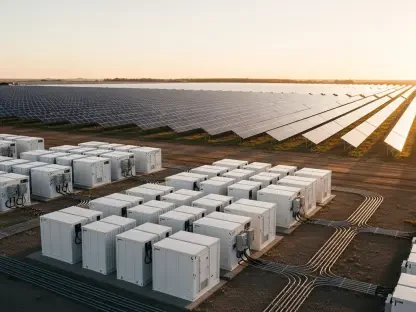
Across the diverse energy landscapes of the Caribbean and Central America, energy storage has rapidly evolved from a niche, forward-looking concept into a central and indispensable component of grid modernization and investment strategy. The Dominican Republic’s remarkable success in attracting investment is directly linked to its early and clear regulations for battery systems, which precisely define their role and compensation for providing essential grid stability services. These rules, covering functions like frequency response and ramp control, give developers a bankable framework for integrating storage. In contrast, Panama is now actively redesigning its tender processes to explicitly incorporate energy storage, acknowledging that firm, dispatchable capacity is a prerequisite for maintaining a reliable grid as the share of intermittent renewables grows. This strategic focus across different markets signals a broader, region-wide understanding that the successful integration of wind and solar power is inextricably linked to sophisticated technical and regulatory solutions for energy storage.
This shift reflects a maturing market perspective where investors and grid operators recognize that variable renewable energy sources, on their own, are not sufficient to meet the demands of modern economies. The integration of battery storage provides the critical firming capacity needed to smooth out fluctuations in generation, manage peak demand, and enhance overall grid resilience. As such, countries that fail to establish clear rules for the interconnection, operation, and remuneration of energy storage assets will find themselves at a significant competitive disadvantage. The ability to create a predictable revenue stream for these ancillary services is now a key determinant in an investor’s decision-making process. Therefore, the development of a comprehensive regulatory framework for storage is no longer just a technical consideration but a fundamental prerequisite for any nation aiming to attract the private capital necessary for a successful and sustainable energy transition.
The Investor’s Checklist for Bankable Projects
The collective experience of these nations revealed that sustained investment in the energy sector ultimately depended on a shared set of fundamental principles that created a secure and bankable environment. International investors, before committing significant capital, consistently evaluated markets based on a checklist that prioritized stability and predictability above all else. At the top of this list were well-structured contracts, such as power purchase agreements, that fairly and transparently allocated risks between the public and private sectors. This foundation had to be supported by clear and unambiguous technical regulations governing everything from grid interconnection standards to operational performance requirements for new generation and storage assets. These elements provided the technical and commercial certainty that financiers required to underwrite large-scale, long-term infrastructure projects.
Furthermore, the analysis showed that seamless inter-institutional coordination was a critical, though often overlooked, factor. A lack of alignment between government ministries, regulatory agencies, and national utilities created bottlenecks and uncertainties that could derail even the most promising projects. Finally, the most crucial element was a demonstrated commitment to long-term policy stability. Investors needed confidence that the rules of the game would not change arbitrarily over the 20- to 25-year lifespan of their assets. It became clear that without these essential components—well-designed contracts, clear technical rules, effective institutional collaboration, and a stable policy horizon—even the markets with the most abundant natural resources and pressing energy needs struggled to convert investor interest into operational projects, thereby impeding their progress toward a cleaner and more secure energy future.