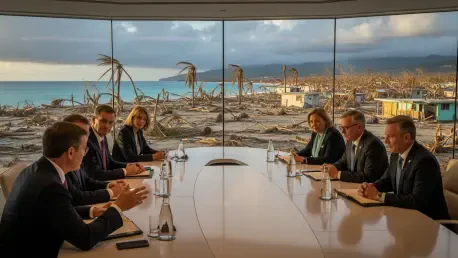

In the very heart of a region grappling with the aftermath of a devastating hurricane, a high-level dialogue recently unfolded, casting a stark light on the growing chasm between the climate pledges made on the global stage and the urgent reality faced by the world’s most vulnerable nations. The German-Caribbean Climate Talks, held in Grenada, a nation actively recovering from the impacts of Hurricane Beryl, served as a poignant backdrop for a frank assessment of international climate policy. The gathering of ambassadors, technical experts, youth advocates, and civil society leaders from across the region and beyond underscored a troubling consensus: despite incremental progress at summits like COP30, the pace and scale of global action remain dangerously out of step with the existential threats confronting small island developing states (SIDS). The conversation was not one of abstract policy but of immediate survival, questioning whether the world’s commitments are translating into the tangible support needed to avert catastrophe.
A Widening Gulf Between Pledges and Reality
The View from the Front Lines
The third German-Caribbean Climate Talks convened with a sense of gravity, hosted by His Excellency Dr. Christophe Eick, Germany’s Ambassador and Special Envoy for Climate Issues in the Caribbean. He reaffirmed Germany’s steadfast commitment to the region, acknowledging the “unmatched moral authority” that SIDS carry into global climate negotiations. Their firsthand experience with climate-induced disasters lends a powerful and undeniable voice to the call for more ambitious action. Ambassador Eick announced new German cooperation agreements with CARICOM totaling over EUR 30 million, reinforcing Germany’s position as a key partner and the largest single contributor to the international Adaptation Fund. This financial support is crucial for bolstering resilience and funding critical infrastructure projects designed to withstand the increasing frequency and intensity of extreme weather events. The pledge was a clear signal of continued partnership, aiming to empower Caribbean nations in their fight against a crisis they did little to create yet suffer from disproportionately.
However, the dialogue made it clear that while bilateral support is vital, it cannot replace the systemic change required from the international community as a whole. Ambassador Eick stressed that the primary responsibility lies with the world’s largest emitters, whose current pace of decarbonization is insufficient to keep the critical 1.5°C global warming limit within reach. The central theme emerging from the talks was that the gap between scientific necessity and political will is widening. The financial commitments from nations like Germany are essential lifelines, yet they are ultimately treating the symptoms of a much larger problem. Without a dramatic acceleration in emission reductions from major industrial powers, the support provided for adaptation will eventually be overwhelmed. The conference served as a platform to articulate this duality: celebrating the partnerships that exist while simultaneously issuing an urgent demand for the global-scale action that is desperately needed to secure a livable future for all.
Dissecting the Outcomes of COP30
An overarching sentiment from the speakers was that the recent COP30 summit, while achieving some progress, fell short of the transformative action required. In a virtual address, UNFCCC Executive Secretary Simon Stiell acknowledged that the summit demonstrated that international cooperation on climate change is still possible, a crucial proof of concept in a fractured geopolitical landscape. However, he delivered a stark warning that “ambition without support will falter,” highlighting the disconnect between the goals set and the resources allocated to achieve them. This sentiment was echoed in a detailed technical analysis by Rueanna Haynes, Director of Climate Analytics Caribbean. She pointed to significant accomplishments, such as formal commitments to triple adaptation finance by 2035 and the operationalization of the Just Transition Work Programme. These were recognized as important structural steps forward, laying the groundwork for more equitable and effective climate action in the years to come.
Despite these positive developments, the final assessment of COP30 was sobering. Rueanna Haynes concluded her analysis by stating that the “gap between what science demands and what the world is doing remains far too wide.” This conclusion captured the prevailing mood of the dialogue, which emphasized that the time for incremental adjustments and prolonged negotiations is over. The progress made at the summit, while welcome, was not commensurate with the escalating urgency of the climate crisis. The consensus among regional experts and leaders was that the world must now pivot from pledging to implementing at an unprecedented speed and scale. The frameworks and programs established at COP30 are only as valuable as their execution, and for the Caribbean, the window for that execution is rapidly closing. The talks reinforced the notion that success will not be measured by the text of agreements but by the tangible impact of actions on the ground.
Charting a Course for Survival
The Critical Need for Financial and Regional Solidarity
Caribbean leaders at the conference were unequivocal in identifying the primary barrier hindering their climate resilience efforts: the lack of accessible and predictable finance. Ambassador Dr. Spencer Thomas of Grenada articulated this frustration, stating that the single largest obstacle is the absence of “a consistent, predictable framework for finance.” He explained that while the necessary policies and national adaptation plans are largely in place across the region, their implementation is consistently stalled by the failure of the international community to deliver on its long-standing financial commitments. This creates a deeply challenging situation where vulnerable nations have done the preparatory work and are ready to build a more resilient future but are left waiting for the promised resources to materialize. The conversation highlighted that this is no longer an issue of knowledge or planning but of political will from developed nations to meet their obligations and unlock the flow of capital needed for on-the-ground projects.
In response to these external challenges, a powerful internal strategy was championed: regional unity. Ambassador Safiya Sawney of Grenada urged Caribbean nations to “speak with one voice” and to approach international forums and financial institutions as a unified bloc. She advocated for treating CARICOM not as a collection of small, individual states but as a single, cohesive investment opportunity. This strategic shift aims to maximize the region’s collective leverage, allowing it to more effectively shape global decisions that are critical to its survival. By presenting a united front, Caribbean nations can enhance their bargaining power in negotiations for climate finance, technology transfer, and loss and damage funding. This approach represents a proactive move to take greater control of their destiny, transforming their shared vulnerability into a source of collective strength and ensuring their priorities are not just heard but acted upon in the global arena.
The Rising Voices of Youth and Accountability
The dialogue also underscored the indispensable role of the next generation in shaping a sustainable future for the Caribbean. Abigail Ellis, representing the Caribbean Youth Environment Network (CYEN), delivered a powerful message that young people are not just waiting for a seat at the table; they are ready to build it themselves. She stressed that youth are prepared to lead the charge in developing innovative solutions and driving the transition to green economies. However, this potential can only be unlocked with meaningful support. Ellis called for genuine access to decision-making processes, substantial investment in youth-led initiatives, and the creation of viable opportunities that empower young people to build their futures within the region. Her intervention was a clear demand to move beyond tokenistic inclusion and toward a model of active partnership, where the energy and ingenuity of youth are recognized as a critical asset in the fight against climate change.
From Dialogue to Definitive Action The discussions ultimately converged on a powerful conclusion: the knowledge, expertise, and partnerships required to tackle the climate crisis in the Caribbean already exist, but what remains desperately lacking is the political courage from the global community to act at the required scale and speed. The conference concluded with a strong call to move beyond rhetoric and toward concrete policy implementation and robust accountability. A significant point of discussion was the exploration of new tools to hold major emitters responsible for their climate commitments, including the potential for regional climate litigation. This reflected a growing sentiment that diplomatic appeals must be fortified with legal and political pressure. The dialogue underscored that the survival of small island nations could not depend solely on the goodwill of others; it required the creation of mechanisms that ensure promises made were promises kept, thereby demanding a new era of accountability for the planet’s future.