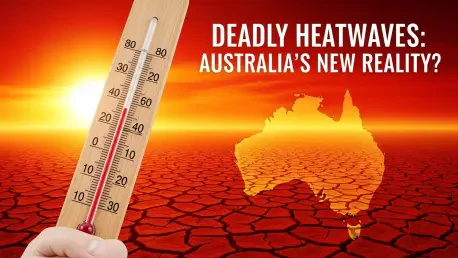

Southeastern Australia recently grappled with its most intense heatwave since 2019, a year that ominously preceded the catastrophic Black Summer fires, signaling a potentially frightening new baseline for the nation’s climate. Scientific analysis has now unequivocally linked this extreme event to human-caused climate change, revealing that the sweltering conditions, which saw temperatures soar past 40°C (104°F) for several consecutive days, were made five times more likely by global warming. This unsettling conclusion suggests that what was once a rare climatic anomaly is rapidly becoming a predictable and devastating part of the Australian summer, forcing a nationwide reckoning with the tangible consequences of a warming planet. The fact that this oppressive heat descended during a La Niña weather pattern—a phase that typically users in cooler and wetter conditions—has sounded a particularly loud alarm among researchers, indicating that the foundational drivers of climate are powerful enough to overwhelm natural atmospheric cycles.
The Scientific Underpinnings of Extreme Heat
A Climate Change Fingerprint
A rigorous analysis conducted by the World Weather Attribution group has provided stark, quantifiable evidence of climate change’s role in the recent Australian heatwave. The study determined that the 1.3°C of global warming recorded since the pre-industrial era directly contributed an additional 1.6°C to the peak temperatures experienced during the event. This intensification is not merely an incremental increase; it represents a fundamental shift in the region’s climate profile. What was once considered a 1-in-25-year heatwave event is now projected to occur approximately every five years under current warming levels. The implications for the future are even more dire. Should global temperatures continue their upward trajectory, scientists warn that a heatwave of this magnitude could become a biennial occurrence, transforming from a severe but manageable stressor into a chronic and overwhelming challenge for the nation’s infrastructure, ecosystems, and population. This data moves the conversation beyond correlation, establishing a clear line of causation between human activity and the extreme weather now plaguing the continent.
The scientific consensus underscores that these extreme heat events are no longer random acts of nature but a direct and predictable outcome of atmospheric changes driven by the burning of fossil fuels. The attribution study’s findings are particularly compelling because they isolate the specific impact of anthropogenic warming, allowing policymakers and the public to understand precisely how human actions have loaded the climatic dice. This clarity is crucial for developing effective mitigation and adaptation strategies. The research effectively serves as a preview of a future where such heatwaves are not the exception but the rule, fundamentally altering Australian life. The transition from a 25-year to a 5-year return period represents a fivefold increase in frequency, a statistical leap that has profound practical consequences for emergency services, agriculture, and public health planning. It forces a re-evaluation of risk, demanding that communities prepare for a level of heat stress that was previously unimaginable for such regular intervals.
The Anomaly of a La Niña Heatwave
The occurrence of such a severe heatwave during a La Niña phase makes the event particularly alarming for climatologists. La Niña is a climate pattern in the Pacific Ocean that typically brings cooler, wetter weather to southeastern Australia, acting as a natural buffer against extreme summer heat. The fact that an intense, record-challenging heatwave could not only manifest but also persist during this cycle highlights the overwhelming influence of long-term global warming trends. It suggests that the background warming signal is now so strong that it can neutralize or even reverse the effects of natural climate variability that societies have relied on for centuries. This disruption of established patterns poses a significant challenge for seasonal forecasting and preparedness, as historical data becomes a less reliable guide to future weather. Emergency services and agricultural sectors, which plan their resources based on expected La Niña conditions, were caught off-guard by the severity of the heat, illustrating a growing vulnerability to climate surprises in a rapidly changing world.
This climatic paradox signals a potential tipping point where the baseline temperature has risen to such a degree that even naturally cooler cycles are unable to provide respite. It implies a future where the distinction between El Niño (hotter, drier) and La Niña (cooler, wetter) years becomes less pronounced in terms of heat risk, with dangerous temperatures becoming a threat regardless of the prevailing oceanic-atmospheric phase. This development complicates risk communication and public health messaging, as the familiar signposts of weather patterns lose their meaning. Furthermore, it raises critical questions about the resilience of Australia’s ecosystems, which are adapted to periodic cycles of stress and recovery. If the “recovery” periods of La Niña are now also characterized by extreme heat, the cumulative stress on forests, rivers, and wildlife could lead to irreversible ecological damage, accelerating biodiversity loss and increasing the likelihood of systemic collapse in vulnerable natural environments.
Cascading Consequences for Society and Nature
The Human Toll on Public Health
Extreme heat is recognized as Australia’s deadliest natural hazard, and the recent heatwave placed an immense and immediate strain on the nation’s health system. As temperatures climbed, hospitals saw a sharp influx of patients suffering from heat-related illnesses. One major Melbourne hospital reported a staggering 25% increase in emergency admissions during the peak of the event, a clear indicator of the widespread public health crisis unfolding. The impacts were not felt equally across the population. Vulnerable groups, including the elderly, young children, outdoor workers, and individuals with pre-existing cardiovascular or respiratory conditions, faced the greatest risk. For these individuals, prolonged exposure to extreme heat can overwhelm the body’s ability to regulate its internal temperature, leading to conditions like heat exhaustion, heatstroke, and even death. The silent and pervasive nature of heat stress means its true toll is often underestimated, as it exacerbates underlying health issues without being listed as the primary cause of death.
Beyond the immediate crisis in emergency rooms, the heatwave’s effects ripple throughout the community, impacting mental health, productivity, and social well-being. The relentless heat disrupts sleep, increases irritability, and can worsen symptoms for those with mental health conditions. Economically, the necessity for outdoor laborers to reduce or halt work during the hottest parts of the day leads to significant productivity losses in key sectors like construction and agriculture. Furthermore, the strain on the energy grid from widespread air conditioner use raises the risk of blackouts, which can have life-threatening consequences for those who rely on powered medical equipment or effective cooling to survive. This multifaceted public health challenge underscores the urgent need for integrated heat action plans, including public cooling centers, early warning systems, and community outreach programs designed to protect the most susceptible members of society from an increasingly frequent and intense threat.
Igniting the Tinderbox for Wildfires
The scorching temperatures and dry conditions created by the heatwave provided the perfect incubator for the devastating wildfires that swept across the state of Victoria. The extreme heat effectively cured the landscape, drying out vegetation and turning vast tracts of forest and grassland into a tinderbox. As of mid-January, these fires had already burned through more than 404,000 hectares, an area of immense scale, and destroyed over 700 structures. The human cost was stark, with 228 homes lost, leaving communities shattered and residents displaced. This event served as a painful reminder of the direct and catastrophic link between rising global temperatures and fire risk. The heatwave did not just coincide with the fires; it was a primary catalyst, creating an environment where ignitions, whether from lightning or human activity, could rapidly escalate into uncontrollable infernos that overwhelmed firefighting resources and threatened lives and property on a massive scale.
This fire event inevitably drew comparisons to the devastating 2019-20 Black Summer, which burned an unprecedented 24 million hectares and had a catastrophic impact on Australia’s people, economy, and unique wildlife. The recurrence of a major fire disaster so soon after that national trauma reinforces warnings from the scientific community that such events are becoming more frequent and more severe. The specter of climate change looms large, with experts pointing to the continued burning of fossil fuels as the primary driver heating the planet and lengthening the fire season. The concern is no longer just about fires in remote bushland; there is a growing realization that these megafires could begin to encroach more regularly on urban and suburban areas, posing an existential threat to major population centers. The recent fires in Victoria demonstrated that the buffer between wildlands and communities is shrinking, demanding a radical rethinking of land management, building codes, and emergency preparedness in an era of climate-driven firestorms.
Navigating a Hotter Horizon
The analysis of Australia’s recent heatwave and its fiery aftermath confirmed that such extreme events are no longer unpredictable anomalies but are now a baked-in feature of the continent’s climate system. The clear attribution to human-caused global warming provided a sobering verdict on the nation’s vulnerability, transforming abstract scientific warnings into a tangible and life-threatening reality. The incident underscored the immense pressure being placed on public health infrastructure and emergency services, which were stretched to their limits by the dual crises of heat stress and uncontrollable wildfires. The memory of the Black Summer, combined with this latest disaster, cemented the understanding that Australia had entered a new and more dangerous era, one where the climate is increasingly hostile and the future less certain. Addressing this required moving beyond reactive crisis management toward proactive, systemic change in energy policy, urban planning, and community resilience.Fixed version:
Southeastern Australia recently grappled with its most intense heatwave since 2019, a year that ominously preceded the catastrophic Black Summer fires, signaling a potentially frightening new baseline for the nation’s climate. Scientific analysis has now unequivocally linked this extreme event to human-caused climate change, revealing that the sweltering conditions, which saw temperatures soar past 40°C (104°F) for several consecutive days, were made five times more likely by global warming. This unsettling conclusion suggests that what was once a rare climatic anomaly is rapidly becoming a predictable and devastating part of the Australian summer, forcing a nationwide reckoning with the tangible consequences of a warming planet. The fact that this oppressive heat descended during a La Niña weather pattern—a phase that typically ushers in cooler and wetter conditions—has sounded a particularly loud alarm among researchers, indicating that the foundational drivers of climate are powerful enough to overwhelm natural atmospheric cycles.
The Scientific Underpinnings of Extreme Heat
A Climate Change Fingerprint
A rigorous analysis conducted by the World Weather Attribution group has provided stark, quantifiable evidence of climate change’s role in the recent Australian heatwave. The study determined that the 1.3°C of global warming recorded since the pre-industrial era directly contributed an additional 1.6°C to the peak temperatures experienced during the event. This intensification is not merely an incremental increase; it represents a fundamental shift in the region’s climate profile. What was once considered a 1-in-25-year heatwave event is now projected to occur approximately every five years under current warming levels. The implications for the future are even more dire. Should global temperatures continue their upward trajectory, scientists warn that a heatwave of this magnitude could become a biennial occurrence, transforming from a severe but manageable stressor into a chronic and overwhelming challenge for the nation’s infrastructure, ecosystems, and population. This data moves the conversation beyond correlation, establishing a clear line of causation between human activity and the extreme weather now plaguing the continent.
The scientific consensus underscores that these extreme heat events are no longer random acts of nature but a direct and predictable outcome of atmospheric changes driven by the burning of fossil fuels. The attribution study’s findings are particularly compelling because they isolate the specific impact of anthropogenic warming, allowing policymakers and the public to understand precisely how human actions have loaded the climatic dice. This clarity is crucial for developing effective mitigation and adaptation strategies. The research effectively serves as a preview of a future where such heatwaves are not the exception but the rule, fundamentally altering Australian life. The transition from a 25-year to a 5-year return period represents a fivefold increase in frequency, a statistical leap that has profound practical consequences for emergency services, agriculture, and public health planning. It forces a re-evaluation of risk, demanding that communities prepare for a level of heat stress that was previously unimaginable for such regular intervals.
The Anomaly of a La Niña Heatwave
The occurrence of such a severe heatwave during a La Niña phase makes the event particularly alarming for climatologists. La Niña is a climate pattern in the Pacific Ocean that typically brings cooler, wetter weather to southeastern Australia, acting as a natural buffer against extreme summer heat. The fact that an intense, record-challenging heatwave could not only manifest but also persist during this cycle highlights the overwhelming influence of long-term global warming trends. It suggests that the background warming signal is now so strong that it can neutralize or even reverse the effects of natural climate variability that societies have relied on for centuries. This disruption of established patterns poses a significant challenge for seasonal forecasting and preparedness, as historical data becomes a less reliable guide to future weather. Emergency services and agricultural sectors, which plan their resources based on expected La Niña conditions, were caught off-guard by the severity of the heat, illustrating a growing vulnerability to climate surprises in a rapidly changing world.
This climatic paradox signals a potential tipping point where the baseline temperature has risen to such a degree that even naturally cooler cycles are unable to provide respite. It implies a future where the distinction between El Niño (hotter, drier) and La Niña (cooler, wetter) years becomes less pronounced in terms of heat risk, with dangerous temperatures becoming a threat regardless of the prevailing oceanic-atmospheric phase. This development complicates risk communication and public health messaging, as the familiar signposts of weather patterns lose their meaning. Furthermore, it raises critical questions about the resilience of Australia’s ecosystems, which are adapted to periodic cycles of stress and recovery. If the “recovery” periods of La Niña are now also characterized by extreme heat, the cumulative stress on forests, rivers, and wildlife could lead to irreversible ecological damage, accelerating biodiversity loss and increasing the likelihood of systemic collapse in vulnerable natural environments.
Cascading Consequences for Society and Nature
The Human Toll on Public Health
Extreme heat is recognized as Australia’s deadliest natural hazard, and the recent heatwave placed an immense and immediate strain on the nation’s health system. As temperatures climbed, hospitals saw a sharp influx of patients suffering from heat-related illnesses. One major Melbourne hospital reported a staggering 25% increase in emergency admissions during the peak of the event, a clear indicator of the widespread public health crisis unfolding. The impacts were not felt equally across the population. Vulnerable groups, including the elderly, young children, outdoor workers, and individuals with pre-existing cardiovascular or respiratory conditions, faced the greatest risk. For these individuals, prolonged exposure to extreme heat can overwhelm the body’s ability to regulate its internal temperature, leading to conditions like heat exhaustion, heatstroke, and even death. The silent and pervasive nature of heat stress means its true toll is often underestimated, as it exacerbates underlying health issues without being listed as the primary cause of death.
Beyond the immediate crisis in emergency rooms, the heatwave’s effects ripple throughout the community, impacting mental health, productivity, and social well-being. The relentless heat disrupts sleep, increases irritability, and can worsen symptoms for those with mental health conditions. Economically, the necessity for outdoor laborers to reduce or halt work during the hottest parts of the day leads to significant productivity losses in key sectors like construction and agriculture. Furthermore, the strain on the energy grid from widespread air conditioner use raises the risk of blackouts, which can have life-threatening consequences for those who rely on powered medical equipment or effective cooling to survive. This multifaceted public health challenge underscores the urgent need for integrated heat action plans, including public cooling centers, early warning systems, and community outreach programs designed to protect the most susceptible members of society from an increasingly frequent and intense threat.
Igniting the Tinderbox for Wildfires
The scorching temperatures and dry conditions created by the heatwave provided the perfect incubator for the devastating wildfires that swept across the state of Victoria. The extreme heat effectively cured the landscape, drying out vegetation and turning vast tracts of forest and grassland into a tinderbox. As of mid-January, these fires had already burned through more than 404,000 hectares, an area of immense scale, and destroyed over 700 structures. The human cost was stark, with 228 homes lost, leaving communities shattered and residents displaced. This event served as a painful reminder of the direct and catastrophic link between rising global temperatures and fire risk. The heatwave did not just coincide with the fires; it was a primary catalyst, creating an environment where ignitions, whether from lightning or human activity, could rapidly escalate into uncontrollable infernos that overwhelmed firefighting resources and threatened lives and property on a massive scale.
This fire event inevitably drew comparisons to the devastating 2019-20 Black Summer, which burned an unprecedented 24 million hectares and had a catastrophic impact on Australia’s people, economy, and unique wildlife. The recurrence of a major fire disaster so soon after that national trauma reinforces warnings from the scientific community that such events are becoming more frequent and more severe. The specter of climate change looms large, with experts pointing to the continued burning of fossil fuels as the primary driver heating the planet and lengthening the fire season. The concern is no longer just about fires in remote bushland; there is a growing realization that these megafires could begin to encroach more regularly on urban and suburban areas, posing an existential threat to major population centers. The recent fires in Victoria demonstrated that the buffer between wildlands and communities is shrinking, demanding a radical rethinking of land management, building codes, and emergency preparedness in an era of climate-driven firestorms.
Navigating a Hotter Horizon
The analysis of Australia’s recent heatwave and its fiery aftermath confirmed that such extreme events are no longer unpredictable anomalies but are now a baked-in feature of the continent’s climate system. The clear attribution to human-caused global warming provided a sobering verdict on the nation’s vulnerability, transforming abstract scientific warnings into a tangible and life-threatening reality. The incident underscored the immense pressure being placed on public health infrastructure and emergency services, which were stretched to their limits by the dual crises of heat stress and uncontrollable wildfires. The memory of the Black Summer, combined with this latest disaster, cemented the understanding that Australia had entered a new and more dangerous era, one where the climate is increasingly hostile and the future less certain. Addressing this required moving beyond reactive crisis management toward proactive, systemic change in energy policy, urban planning, and community resilience.