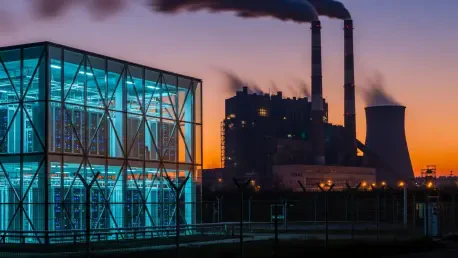

The American coal industry, long considered to be on an irreversible path toward extinction, has found an unexpected and powerful ally in the form of the artificial intelligence boom. While the fundamental forces of economics, regulation, and superior technology continue to push coal-fired power plants toward obsolescence, the voracious energy appetite of data centers is providing a temporary reprieve that few could have predicted. This unforeseen surge in electricity demand is forcing a delay in the planned retirements of numerous facilities across the country, creating a complex and tense standoff between the nation’s carbon-intensive energy past and its processing-intensive digital future. The sudden need for massive, uninterrupted power has exposed vulnerabilities in the grid’s capacity to transition, injecting new life into an industry that was otherwise facing its final chapter and complicating the national conversation about energy security and environmental responsibility.
The Unstoppable Forces Pushing Coal to the Brink
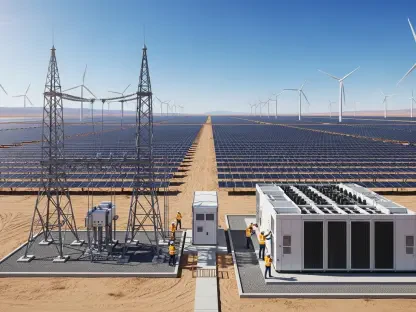
The primary driver behind coal’s long-term decline has been its failing economic proposition in an energy market transformed by innovation. Over the last two decades, coal’s once-dominant share of U.S. electricity generation has plummeted from nearly 51% to a projected 13% in 2025, a stunning collapse fueled by the dramatically lower costs of natural gas and the rapid expansion of renewable sources like solar and wind. For operators of an aging coal infrastructure, the mounting expenses of maintenance, fuel, and labor have become financially unsustainable, making closure not a strategic choice but an economic necessity. This financial pressure is unrelenting, as newer, more efficient technologies offer cheaper and more flexible power generation, leaving coal unable to compete on price. The market has rendered a clear verdict, signaling that the era of coal as a cost-effective baseload power source is definitively over, a reality reflected in the steady stream of retirement announcements that preceded the recent AI-driven surge in demand.
Compounding these severe financial pressures are decades of increasingly stringent environmental regulations designed to mitigate the public health and climate impacts of burning coal. Federal and state rules targeting emissions of sulfur dioxide, nitrogen oxides, mercury, and carbon dioxide have dramatically increased the compliance costs for plant operators, often requiring multi-million dollar investments in pollution control technologies just to remain operational. This regulatory environment, combined with a broader societal and market shift toward cleaner energy, has created an operational landscape that is increasingly hostile to coal. Furthermore, the industry is plagued by its own technological obsolescence and growing unreliability. The fact that even the nation’s newest major coal plant has been beset by persistent operational failures and will remain offline until 2027 underscores a critical reality: America’s coal fleet is not only old but also increasingly undependable and prohibitively expensive to maintain, further eroding its value proposition in a modern grid.
An Unexpected Lifeline from the Digital Age
Into this landscape of seemingly terminal decline has entered a major, unforeseen variable: the massive and abrupt surge in electricity demand driven by the AI revolution. The insatiable power consumption of data centers, which require vast amounts of energy for processing and cooling, has begun to strain the national grid in ways that planners did not anticipate just a few years ago. This AI-fueled demand has provided a critical, short-term lifeline for facilities that were otherwise destined for closure, with at least 15 coal plants delaying their scheduled retirements specifically to meet this new shortfall. This development is temporarily rewriting the timeline for America’s energy transition, forcing grid operators to keep older, fossil-fuel-based assets online to ensure reliability. While not a reversal of the long-term trend, this intervention from the digital economy has granted a stay of execution for a portion of the nation’s coal fleet, highlighting the immense energy challenge posed by emerging technologies.
However, this unexpected reprieve for coal comes at a significant environmental cost, creating a difficult trade-off for policymakers and the public. The extended operation of these aging, and often less efficient, power plants is contributing to a recent and measurable uptick in pollution levels, threatening to reverse some of the hard-won gains in emission reductions achieved over the past decade. This creates a central conflict for decision-makers who must now balance the urgent need for more power to fuel technological innovation and economic growth against national and global commitments to combat climate change and improve air quality. The AI boom, therefore, presents a classic dilemmembracing a technology poised to reshape the future requires leaning more heavily, at least for now, on a power source from the past. This tension forces a re-evaluation of the pace and strategy of the clean energy transition, as the demand for electricity is growing faster than new renewable sources can be brought online.
A Nation Divided on the Path Forward
The tension between rising energy demand and the green transition has exacerbated deep policy divisions across the United States, with different states adopting starkly contrasting approaches. In regions heavily reliant on traditional energy sources, such as West Virginia, public service commissions have taken a firm stance against plant shutdowns, citing the critical need to maintain grid reliability and prevent potential blackouts as their primary justification. This position reflects a deep-seated concern that a premature retirement of baseload power sources could jeopardize economic stability and public safety. This contrasts sharply with the strategies being pursued in states like Washington, which are actively continuing their move away from the fuel source by pursuing adaptive solutions, such as converting their last remaining coal plant to operate on cleaner-burning natural gas. This state-level fragmentation illustrates a nation without a unified vision for its energy future, where local economic realities and political ideologies often outweigh broader national goals.
This patchwork of state-level policies is further complicated by shifts in the federal regulatory landscape. A more permissive approach to air pollution limits in recent years has provided a political justification for some states to slow-walk the retirement of their coal fleets. The “market-based” plans influenced by these policies, combined with the undeniable reality of surging electricity demand from data centers and manufacturing, have created a powerful political argument for keeping coal plants online longer than previously anticipated. This dynamic deepens the divide on national energy policy, pitting advocates for rapid decarbonization against those who prioritize immediate grid stability and the economic benefits of existing infrastructure. The result is a contentious and uncertain environment, where the future of the nation’s power grid is being debated not just in boardrooms and regulatory hearings but in the political arena, with long-term consequences for both the economy and the environment.
Broader Implications of a Stalled Transition
For the communities historically built around the coal industry, this delay offered a temporary continuation of vital jobs and local economic activity, staving off an imminent crisis. However, this reprieve did not alter the fundamental long-term outlook, which remained one of decline. The eventual phase-out was still projected to eliminate tens of thousands of jobs by 2030, threatening widespread economic distress in states like Pennsylvania, where the closure of major plants like Homer City signaled the end of an era. Mitigating this disruption necessitated robust federal aid and comprehensive retraining programs designed to help displaced workers transition into new sectors. Economic modeling indicated that states heavily reliant on coal faced severe consequences without such support, with projections showing potential losses of tens of thousands of jobs and billions in GDP, underscoring the profound human cost of this national energy shift.
On the global stage, the delay in the U.S. transition appeared increasingly out of step with the actions of other developed nations that were moving more decisively away from fossil fuels. South Korea’s landmark decision to phase out all coal power by 2040, for instance, signaled a clear international retreat from the fuel, placing diplomatic and market pressure on countries that continued to rely on it. Paradoxically, while major Asian economies like China and India had recently outpaced the U.S. in cleaning up their existing power sectors, they also continued to build hundreds of new coal plants, highlighting the complex and competitive global energy landscape. Ultimately, the story of America’s coal plants was one of an industry navigating a complex and often contentious transition. The challenges ahead were not about preventing this shift but about managing its pace to ensure grid stability, support the workers and communities affected by the change, and position the nation for a sustainable energy future.