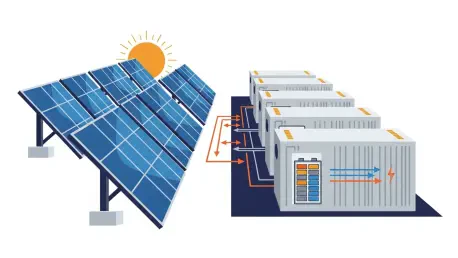

The solar industry, long defined by its ability to harness the sun’s power during the day, is now confronting its greatest limitation and most profound opportunity: the darkness of night. As demand for consistent, reliable clean energy intensifies, the conversation is shifting from mere generation to sophisticated storage. This transition is vividly illustrated by the strategic pivot of companies like SolarMax Technologies, a California-based firm moving aggressively from residential rooftops to utility-scale battery projects. Its massive new developments in Texas and Puerto Rico signal a broader transformation, where the ability to store energy is becoming as critical as the ability to produce it, reshaping corporate strategies and the very architecture of the modern power grid.
The Sun Sets on an Old Model Why Is a Solar Company Betting Its Future on Giant Batteries
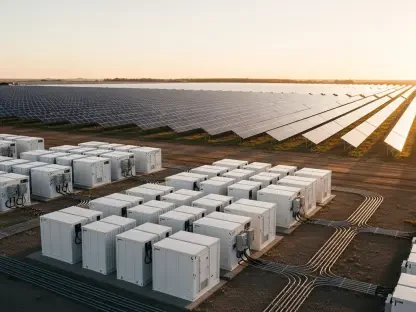
SolarMax Technologies is undertaking a fundamental reinvention, staking its future on the burgeoning energy storage market. The company has committed to deploying three massive Battery Energy Storage System (BESS) projects, totaling a combined 400 megawatts (MW) of power and 1 gigawatt-hour (GWh) of capacity. This initiative represents a decisive pivot away from its historical focus on residential solar and toward the high-stakes world of utility-scale infrastructure.
This strategic redirection is anchored by substantial financial incentives. The engineering, procurement, and construction (EPC) contracts for these projects are set to generate hundreds of millions of dollars in revenue, providing a critical new income stream. CEO David Hsu framed this move as essential for growth, stating that as demand for large-scale storage solutions grows, SolarMax is scaling its operations to become a “meaningful participant in a multi-billion-dollar market.” The company’s prior announcement of a 430-MWh battery project in Texas further solidifies this deliberate and sustained corporate evolution.
The Perfect Storm When Grid Demands and Policy Shifts Collide
The national energy landscape is under increasing strain, with growing demand for reliable power pushing aging infrastructure to its limits. This has created an urgent need for solutions that can stabilize the grid, balance supply and demand, and prevent the widespread outages that have become more common. Utility-scale battery storage directly addresses this vulnerability by providing a dependable reservoir of power that can be dispatched instantaneously when needed most.
This push toward storage is intensified by a slowdown in the residential solar sector, particularly in key markets like California. The state’s NEM 3.0 net metering policy significantly reduced the financial returns for homeowners exporting solar power, diminishing the appeal of rooftop installations. Compounded by the expiration of the federal residential solar tax credit, these policy changes have forced companies to seek new avenues for growth. This has catalyzed a market-wide shift, with capital and corporate focus moving from generating power on individual rooftops to storing it in centralized, grid-scale reservoirs.
A Tale of Two Grids Inside the Landmark Projects in Texas and Puerto Rico
In Texas, SolarMax is developing a 300 MW / 600 MWh system near Corpus Christi, designed for short-duration, high-impact grid support. With its two-hour capacity, this project is engineered to respond rapidly to fluctuations in the state’s independent power grid, providing critical services like frequency regulation and peak demand shaving. Its scale and purpose reflect the acute need for stabilizing assets in a market known for its volatility and extreme weather events.
By contrast, the projects in Puerto Rico are mission-driven, focused on long-term resiliency. The island will host two BESS installations—an 80 MW / 320 MWh system and a 20 MW / 80 MWh system—both with a four-hour energy capacity. This longer duration is vital for stabilizing an infrastructure historically plagued by underinvestment and devastated by Hurricane Maria. These batteries are not just for balancing the grid; they are foundational components in a complete rebuilding effort, designed to provide extended power during outages and support a transition to reliable, renewable energy.
Voices from the Front Lines Expert Perspectives on the Energy Transition
In Puerto Rico, the need for energy independence sparked a grassroots movement long before large-scale projects arrived. Following Hurricane Maria’s devastation, residents invested heavily in rooftop solar and batteries, creating what is now one of the world’s most sophisticated virtual power plants (VPPs). This distributed network, comprising approximately 200,000 customers, represents a formidable 1.3 GW of solar and over 1 GW of battery storage capacity.
This citizen-led energy revolution has laid the groundwork for larger utility-scale solutions. Javier Rúa-Jovet, of the Solar and Energy Storage Association of Puerto Rico, views the SolarMax projects as a crucial next step. He emphasizes that while the VPP provides resilience, centralized storage is essential for broader grid stability and resource adequacy during peak hours. Endorsing the development, he states plainly, “storage is good for the grid, period.” This sentiment underscores a consensus that a combination of distributed and utility-scale assets is the key to building a robust and modern energy system.
The Blueprint for a Battery Powered Future Lessons from the SolarMax Strategy
The strategic shift undertaken by SolarMax offers a clear blueprint for navigating the evolving energy landscape. The primary lesson is the necessity of diversification. By moving beyond a singular reliance on the residential solar market, the company has insulated itself from policy-driven volatility and positioned itself to capture the immense opportunities emerging in the utility-scale storage sector. This adaptability is becoming a prerequisite for survival and growth.
Furthermore, the company’s success is tied to its focus on critical needs. By targeting regions like Texas and Puerto Rico—areas with undeniable and urgent grid stability challenges—SolarMax ensures its projects provide essential services, making them indispensable to local energy infrastructure. This targeted approach is bolstered by aligning with broader federal initiatives. Securing support from entities like the U.S. Department of Energy’s Loan Programs Office helps de-risk these capital-intensive projects and accelerates their path to completion, creating a model for public-private collaboration.
This strategic pivot illuminated how market forces and policy shifts had created an undeniable business case for large-scale energy storage. The projects in Texas and Puerto Rico stood not just as engineering accomplishments but as tangible evidence of a fundamental realignment within the clean energy sector. The industry learned that resilience, stability, and storage were no longer secondary considerations but the central pillars upon which a sustainable energy future would be built.