
The landscape of American manufacturing is witnessing a profound transformation as SK Battery America, a subsidiary of the South Korean conglomerate SK On, fundamentally alters its operational footprint in Commerce, Georgia. This shift is not merely a minor adjustment to production schedules but a comprehensive strategic realignment that reflects the cooling demand for passenger electric vehicles across the North American market. For several years, the facility served as a cornerstone of the regional economy and a symbol of the domestic battery revolution; however, the company has recently initiated a massive workforce reduction, shedding nearly 1,000 employees. This contraction signals a departure from a business model once almost exclusively reliant on high-volume automotive contracts. By pivoting toward stationary energy storage systems, the organization is attempting to insulate itself from the volatility of consumer car buying habits while tapping into the burgeoning needs of the digital infrastructure sector, which requires massive, reliable power reserves.
Navigating Massive Workforce Reductions
The scale of the labor contraction at the Commerce production facility serves as a sobering reminder of how quickly industrial priorities can shift in the green energy sector. By eliminating 958 positions, the company has reduced its total headcount from a peak of approximately 2,566 individuals to a more lean 1,600 employees. This downsizing effectively erases the aggressive recruitment gains achieved during a period of rapid expansion in 2023, when the facility was viewed as the vanguard of Georgia’s emerging “battery belt.” While the organization has committed to providing 60 days of pay and benefits to those affected to satisfy regulatory requirements, the suddenness of the move highlights the precarious nature of manufacturing roles tied to specific, fluctuating consumer technologies. The decision to cut such a significant portion of the workforce suggests that management no longer views the immediate trajectory of the electric vehicle market as sufficient to sustain its previous operational overhead.
The broader impact of these layoffs extends beyond the factory gates, influencing the local economic ecosystem of Northeast Georgia and raising questions about the long-term stability of specialized manufacturing hubs. Industry analysts point out that this reduction in force is a direct consequence of a mismatch between optimistic production forecasts and the actual pace of consumer adoption of battery-electric vehicles. As the company files its formal Worker Adjustment and Retraining Notification, it is clear that the organizational focus has shifted from growth at any cost to fiscal preservation and structural agility. This transition period is marked by a necessary, albeit painful, recalibration of human resources to match a new set of technological objectives. Instead of maintaining idle capacity for an automotive surge that has yet to fully materialize, the facility is being retooled to support a more diversified portfolio that emphasizes utility-scale applications over individual passenger transportation.
Tapping Into the Energy Storage Market
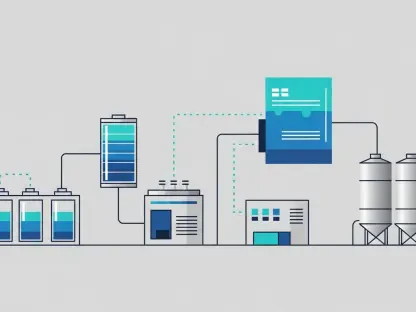
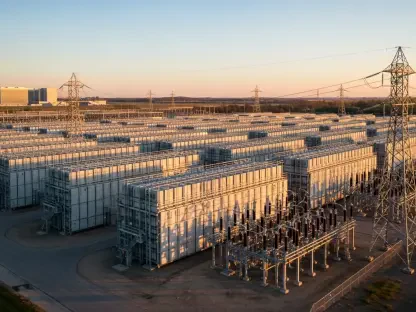
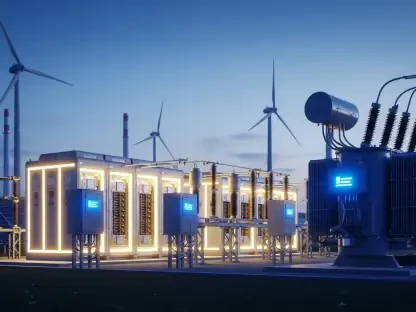
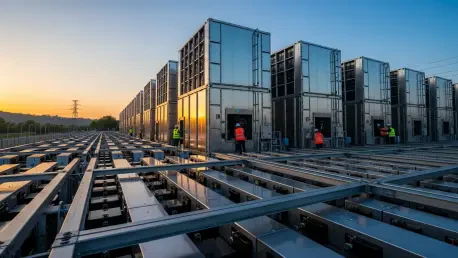
The strategic shift toward Battery Energy Storage Systems represents a calculated move to capitalize on the critical infrastructure needs of the modern digital economy. Unlike the passenger vehicle market, which is often subject to the whims of individual consumer sentiment and fluctuating fuel prices, the demand for large-scale stationary storage is anchored by the relentless growth of data centers and cloud computing. These facilities, which form the backbone of artificial intelligence and global communication networks, require immense amounts of backup power to ensure uninterrupted operations. By focusing on BESS technology, the Georgia facility can provide the massive battery arrays needed to stabilize power grids and manage the intermittent nature of renewable energy sources like wind and solar. This pivot allows the company to transition from a consumer-facing supply chain to a business-to-business model that offers more predictable, long-term revenue streams from utility providers and tech giants.
Transitioning into the energy storage arena also provides a unique opportunity for the company to leverage its existing chemical and manufacturing expertise in a more stable environment. While the fundamental lithium-ion technology remains similar, the performance requirements for stationary storage prioritize longevity and cycle life over the energy density and rapid charging speeds essential for high-performance electric cars. This allows for a more streamlined production process that is less susceptible to the frequent design changes demanded by automakers. Moreover, as national power grids face increasing pressure to modernize and decarbonize, the demand for utility-scale batteries is projected to grow exponentially through 2028 and beyond. By positioning the Commerce site as a primary provider for these infrastructure projects, the organization is betting that the path to profitability lies in powering the cities and data centers of the future rather than just the vehicles parked within them.
The Fallout of Shifting Automaker Priorities
The catalyst for this industrial restructuring can be traced directly to the dissolution of high-profile domestic partnerships that once defined the company’s American strategy. Most notably, the joint venture with Ford Motor Company, known as BlueOval SK, faced significant challenges as the legacy automaker fundamentally revised its electrification roadmap in response to tepid market reception. When Ford moved to scale back production of flagship electric models, such as the electric F-150 Lightning, the resulting production void at the Georgia facility became impossible to ignore. The loss of such a primary customer created a ripple effect through the supply chain, forcing the battery manufacturer to recognize that relying on a single major partner was no longer a viable path forward. This collapse of expectations served as a turning point, prompting a move away from specialized automotive cells toward more versatile energy products that can be sold to a broader range of industrial clients.
Beyond the specific loss of the Ford partnership, the general cooling of the automotive sector has forced battery producers to rethink their entire engagement model with traditional car brands. Many manufacturers that were once racing to transition their entire lineups to electric power by the late 2020s have since pivoted back toward hybrid configurations or extended timelines for full electrification. This strategic retreat by automakers has left battery suppliers with excess capacity and specialized machinery that is difficult to repurpose for different vehicle platforms. Consequently, the decision to diversify into energy storage is a defensive maneuver designed to mitigate the risks of future automaker pivots. By decoupling its primary revenue from the success of specific vehicle models, the organization is seeking to create a more resilient business structure that can survive the ongoing identity crisis within the American automotive industry.
Responding to Economic and Regulatory Headwinds
Macro-economic factors have played a decisive role in dampening the initial euphoria surrounding the electric vehicle revolution, leading to a period of significant industry de-risking. High interest rates have made the financing of expensive new technology more difficult for the average consumer, while a gradual reduction in federal incentives has removed some of the financial luster from the EV ownership proposition. These economic pressures are compounded by persistent anxieties regarding the national charging infrastructure, which remains inconsistent in many parts of the country. For a battery manufacturer like SK Battery America, these headwinds manifest as a slowdown in purchase orders and a need to find “future customers” who are less sensitive to interest rate hikes. The stationary storage market, often funded by large-scale capital expenditures from utilities or tech firms, provides a much-needed buffer against these consumer-level economic fluctuations.
The regulatory environment has also become increasingly complex, with shifts in federal policy making large-scale electrification initiatives more financially precarious for manufacturers. As the industry moves toward 2027, the focus is shifting from rapid expansion to operational efficiency and cost-effectiveness. The consensus among financial analysts is that the initial push for EVs was perhaps too optimistic about the speed of infrastructure development and consumer behavior change. This realization has prompted a more sober, pragmatic approach to green energy manufacturing, where the goal is no longer just to produce the most batteries, but to produce them for the most stable and profitable sectors. By realigning with the stationary storage market, the company is effectively hedging its bets against any further erosion of federal support for passenger EVs, ensuring that its massive investment in Georgia remains productive even if the automotive transition takes longer than expected.
Managing Legal and Operational Hurdles
As the facility in Commerce attempts to rebrand itself as a leader in energy storage, it must also navigate a series of immediate legal and operational challenges that threaten its reputation. Law firms have launched investigations into the recent mass layoffs, focusing on whether the organization provided sufficient written notice under federal requirements. These legal inquiries add a layer of complexity to an already difficult transition, as the company must prove that its provision of severance pay and benefits aligns with the spirit of the law. Beyond the legalities of the workforce reduction, the site has previously faced scrutiny from safety regulators regarding workplace hazards and respiratory protections. Improving the safety culture and operational standards will be essential if the company hopes to attract the highly skilled technical talent required to maintain sophisticated energy storage production lines.
The path forward for the Georgia site depends on its ability to successfully retool its existing infrastructure while resolving these lingering administrative and safety issues. To remain competitive in the energy storage arena, the facility must demonstrate not only technological prowess but also organizational maturity and a commitment to long-term sustainability. Management should focus on establishing clear communication channels with the remaining workforce and local community to rebuild trust after the recent period of volatility. Additionally, investing in automated quality control systems and enhanced safety protocols could prevent the types of citations that have plagued the facility in the past. By addressing these internal hurdles head-on, the organization can transform the Commerce site into a model of industrial adaptability, proving that a facility designed for one purpose can be successfully reinvented to meet the shifting demands of a global energy transition.
The transition at SK Battery America serves as a vital case study for the entire clean energy sector, emphasizing that flexibility is the only true defense against market volatility. While the move away from passenger vehicles was born of necessity, the focus on stationary energy storage opens a gateway to more resilient and diversified revenue streams. To secure a successful future, the organization should prioritize forming deep partnerships with utility companies and data center developers while continuing to refine the durability of its battery chemistry. By leaning into the infrastructure needs of the artificial intelligence boom, the company can turn a period of painful restructuring into a foundation for long-term industrial relevance. Stakeholders must now watch closely as the facility evolves, recognizing that the ability to pivot from consumer products to critical infrastructure may define the next decade of American manufacturing success. This era of de-risking was ultimately an inevitable step toward a more mature and realistic energy economy.