
A looming energy crisis, silently fueled by the voracious appetite of artificial intelligence, is forcing a critical reckoning in state legislatures across the nation. A comprehensive analysis of the key energy issues poised to dominate state legislative agendas reveals a complex and pressing challenge driven by a confluence of technological advancement, economic ambition, and consumer protection. The central topic of analysis is the strategic response of state governments to a significant and rapid surge in electricity demand, a phenomenon primarily fueled by the proliferation of power-intensive data centers essential for AI and other digital infrastructure. Lawmakers find themselves at a critical juncture, tasked with navigating a delicate balancing act between three often-competing priorities: ensuring energy affordability for residents and businesses, meeting this unprecedented growth in demand to foster economic development, and, in many states, adhering to established decarbonization goals. The legislative sessions in the upcoming year are set to become a crucial battleground for policies that will shape the future of the nation’s energy landscape.
The Core Challenge: Balancing Growth, Costs, and Green Goals
The Affordability Squeeze
The primary conflict for states is reconciling the immense economic opportunity of the high-tech boom with the immense strain it puts on the electrical grid and, consequently, on consumer wallets. The overarching trend identified across states is the urgent need to manage this tension. As articulated by Marc Brown of the Consumer Energy Alliance, the fundamental challenge is to “find the most affordable, reliable way to meet this growing demand without shifting costs onto consumers.” This sentiment encapsulates the core issue that will drive policy debates. The issue of affordability is not merely an economic concern but a potent political one, having already played a prominent role in recent state elections in Georgia, New Jersey, and Virginia. With the vast majority of legislative seats on the ballot in 2026, it remains a top priority for incumbents and challengers alike, who understand that voters will hold them accountable for any significant increases in their monthly utility bills, regardless of the underlying economic benefits promised by the burgeoning tech sector.
States Push Back on Rising Bills
In response to these mounting affordability concerns, lawmakers are actively exploring a diverse array of policy interventions aimed at keeping power costs in check. These strategies include direct financial controls, such as proposals to limit the profits of utility companies or to implement temporary freezes on utility rates. Another key area of focus is enhancing grid efficiency and reliability through the increased deployment of battery storage systems, which can help manage peak loads and reduce the need for expensive “peaker” power plants. A more nuanced and emerging concern revolves around the accuracy of utilities’ energy demand forecasts. Legislators in states like New Jersey and Pennsylvania have introduced bills to increase public and regulatory scrutiny of this forecasting process, fearing that utilities might artificially inflate future demand by overcounting anticipated data center projects. This could lead to unnecessary and expensive build-outs of generation and transmission capacity, the costs of which would unfairly fall on existing customers. Beyond internal state policies, states are also pressuring PJM Interconnection, the nation’s largest grid operator, for greater transparency from its utility members, with some threatening the drastic step of leaving the regional grid altogether.
The Race to Power the Future
An All of the Above Energy Strategy
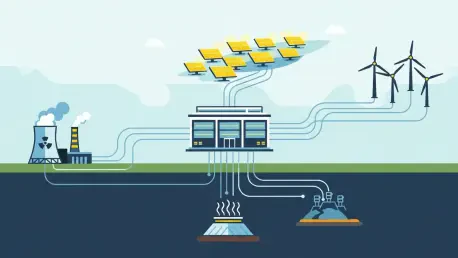
Concurrently with managing costs, states are pursuing an “all-of-the-above” strategy to meet the burgeoning demand for electricity, resulting in a flurry of legislative activity aimed at both preserving existing power sources and accelerating the development of new ones. A significant trend is the move to delay the planned retirement of existing power plants, including traditional coal-fired facilities, to maintain grid stability in the short to medium term. Measures to this effect have already been passed in Arizona, Arkansas, and Indiana. At the same time, states are removing regulatory barriers to unlock new forms of carbon-free energy; Illinois, for example, has eased restrictions on new nuclear power development, while New Mexico has done the same for geothermal energy. Recognizing that these large-scale projects represent longer-term solutions, states are also looking for ways to have a more immediate impact. This includes investing in grid enhancement technologies and promoting the use of virtual power plants (VPPs), which aggregate smaller, distributed energy devices to provide power back to the grid during times of peak demand. Additionally, a legislative push for “plug-in solar” is expected in as many as 24 states, a policy that would allow residents in apartments to easily install small solar panels.
The Data Center Dilemma
At the heart of this energy conundrum are the data centers themselves. These specialized facilities, which can consume as much electricity as a small city, are the primary catalyst for the demand surge. A Department of Energy report highlighted the scale of this challenge, estimating that of the 100 gigawatts of new peak capacity needed by 2030, a staggering 50 gigawatts will be attributable to data centers alone. In response to this reality, states have adopted a dual-pronged legislative approach that seeks to both incentivize the industry’s growth and shield the public from its energy-intensive side effects. This strategy acknowledges that while data centers are valuable economic engines that bring jobs and investment, their unparalleled power consumption requires a new regulatory framework. States are carefully crafting policies that welcome technological innovation while simultaneously establishing guardrails to protect public resources and ensure the long-term stability and affordability of the energy grid for all consumers, not just the largest industrial users.
Crafting a Sustainable Path Forward
Making Big Tech Pay Its Way
A key policy emerging from state-level discussions is the creation of specialized electricity rates or new customer categories specifically for data centers and other large-load users. Rather than allowing the enormous costs associated with serving these facilities to be socialized across the broader ratepayer base, this approach ensures that these large power users pay their fair share. Oregon has already enacted such a measure, empowering regulators to design rate structures that reflect the true cost of service, which includes not only the electricity consumed but also the necessary investments in new generation capacity and transmission infrastructure required to meet their demand. This method prevents a scenario where residential customers and small businesses effectively subsidize the energy consumption of some of the world’s largest technology companies. By creating these dedicated rate classes, states are working to attract valuable high-tech investment without compromising the principle of energy affordability for the general public, striking a crucial balance between economic development and consumer protection.
A Self Sufficient Solution On Site Power
In the end, one of the most promising and collaborative solutions that emerged was the promotion of “behind-the-meter” power generation, which encouraged data centers to develop their own independent power sources. West Virginia, Texas, and Ohio all passed legislation that facilitated this, often through the development of microgrids—localized energy networks that generate and distribute power close to where it is used. This approach not only alleviated significant pressure on the main public grid but also enhanced the operational resilience of the data centers themselves, a win-win for both industry and the public. The data center industry, through organizations like the Data Center Coalition, signaled its commitment to being an engaged stakeholder in these policy discussions. This cooperative stance was crucial in finding collaborative solutions that allowed states to remain competitive hubs for development while responsibly managing the unprecedented growth in energy demand driven by the digital age.