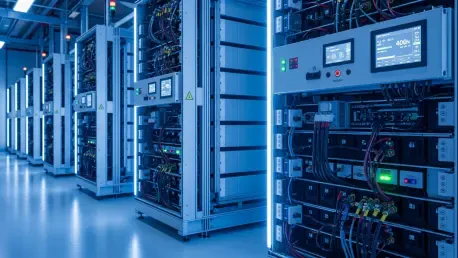

The American electrical grid is currently undergoing its most profound transformation since the era of Thomas Edison, shifting from a rigid system of immediate consumption to a dynamic network powered by massive battery reserves. This evolution is not merely a technical upgrade but a response to the fundamental instability of a decarbonizing economy. The recent crossing of the 51 GWh storage threshold signaled that the nation has moved beyond experimentation, placing energy storage at the very center of industrial and environmental policy.
The 51 GWh Milestone: Why the Grid Is Trading Stability for Storage
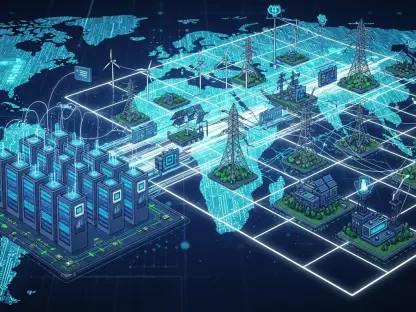
The U.S. power grid recently crossed a threshold that seemed impossible a decade ago, installing over 51 GWh of storage capacity in a single year—a 52% surge that signals a fundamental shift in how America manages electricity. This landmark achievement reflects a growing consensus that the traditional “just-in-time” delivery of power is no longer viable in an age of intermittent renewable energy. By integrating large-scale battery arrays, the grid is finally gaining the ability to store surplus energy, effectively decoupling generation from consumption for the first time in history.
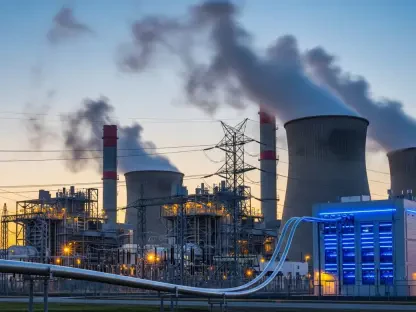
This isn’t just about backup power for a few sunny states; it is a nationwide infrastructure overhaul where batteries are transitioning from luxury assets to the primary stabilizers of the modern electrical system. As coal and gas plants retire, these storage systems have become the silent guardians of grid frequency and voltage. The rapid adoption of these technologies indicates that utilities have recognized that storage is the only way to maintain a reliable flow of electricity while managing the inherent volatility of wind and solar resources.
From Niche to Necessity: The State of Play in 2025 and Beyond
The urgency behind the energy storage boom is driven by a perfect storm of retiring fossil fuel plants, an aging grid, and an unprecedented spike in electricity demand from data centers and domestic manufacturing. In previous years, the conversation was limited to early adopters, but the landscape shifted when 22 different states successfully deployed utility-scale storage projects. This geographical diversification proved that the technology has matured into a nationwide solution, capable of operating in diverse climates and regulatory environments.
As the U.S. moves toward a more volatile energy mix, these systems act as the essential “shock absorbers” that prevent localized outages and manage the peak loads of a high-tech economy. The massive expansion of artificial intelligence and semiconductor fabrication facilities has created a level of power demand that traditional infrastructure cannot meet alone. Consequently, energy storage is no longer viewed as a supplementary “green” initiative but as a non-negotiable requirement for national economic security and industrial resilience.
Mapping the Divergent Growth of the Storage Landscape
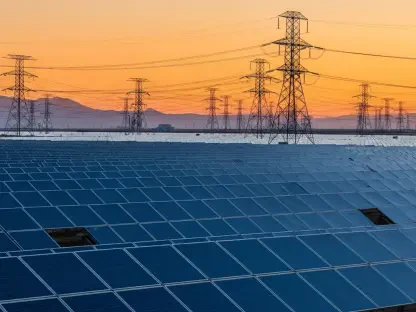
Utility-scale projects remain the heavy hitters of the industry, accounting for the vast majority of new capacity. Even as component prices saw a temporary 23% uptick, demand remained inelastic because utilities are no longer buying batteries just for the environmental benefits; they are buying them for reliability. The shift toward longer-duration storage is allowing grid operators to bridge the gap between daytime solar production and nighttime consumption patterns across diverse geographic regions, effectively turning intermittent assets into baseload power.
The residential sector has also experienced a massive expansion, largely fueled by a sense of urgency regarding federal tax incentives and increasing concerns over grid reliability. Beyond the financial benefits, homeowners are increasingly viewing storage as a safeguard against climate-related grid instability and extreme weather events. This surge in “behind-the-meter” storage is turning neighborhoods into distributed power plants, capable of feeding energy back into the local grid when it is most needed during peak demand hours.
While the community, commercial, and industrial segment faces specific localized challenges, such as commissioning delays in certain states, its long-term trajectory is underpinned by policy shifts like California’s Net Billing Tariff. These regulations are forcing businesses to pair solar with storage to realize the full economic value of their energy investments. Although the commercial sector’s growth has been more gradual than the utility-scale explosion, it remains a vital engine for local grid resilience and corporate sustainability goals.
The Domestic Manufacturing Pivot and the FEOC “Cloud of Uncertainty”
The most significant shift in the market is the aggressive move toward domestic production, with U.S. battery cell manufacturing projected to hit 133 GWh by 2027. However, industry experts like Ravi Manghani warn that physical capacity does not always equal “usable” supply. The “One Big Beautiful Bill Act” and its Foreign Entity of Concern (FEOC) restrictions have created a complex regulatory labyrinth. If a domestic factory relies on restricted upstream materials or intellectual property from certain regions, its products may become ineligible for the federal tax credits that make these massive projects financially viable.
This creates a potential disconnect where the U.S. may have plenty of batteries, but few that meet the strict criteria for government-backed incentives. Developers are currently navigating a landscape where the origin of every mineral and the ownership of every patent must be scrutinized. This “cloud of uncertainty” has led to a bifurcated market where compliant, “clean” supply chains command a premium, while other projects face significant financing hurdles. The ability of the industry to scale will depend on how quickly domestic suppliers can untangle themselves from restricted international dependencies.
Strategies for Developers: Navigating a Shifting Regulatory Climate
To thrive in this environment, developers were required to prioritize supply chain transparency. This involved auditing every upstream supplier to ensure total compliance with evolving FEOC guidelines, thereby protecting their eligibility for lucrative tax credits. Furthermore, firms began to diversify their geographic footprints, looking beyond traditional hubs like California to emerging markets where grid congestion created high-value opportunities for rapid storage deployment.
Stakeholders also adopted flexible financing models to account for the gap between high and low market forecasts. By utilizing modular project designs that could scale based on regulatory clarity and local load growth, companies mitigated the risk of stranded assets. Finally, a significant shift toward long-duration technologies took place, moving the focus from short-term frequency regulation to multi-hour energy shifting. These strategic adjustments ensured that the energy storage market remained the primary engine of the American energy transition.