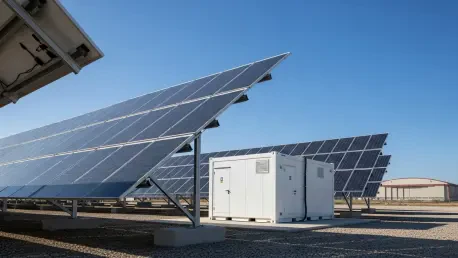

In an age where the stability of civilian power grids faces increasing threats from extreme weather, cyberattacks, and geopolitical tensions, the operational readiness of strategic military installations has become inextricably linked to their energy independence. Acknowledging this vulnerability, the U.S. Navy has taken a significant step forward in ensuring mission continuity by bringing a state-of-the-art microgrid online at Naval Air Station (NAS) Sigonella in Sicily, Italy. This pioneering project, the first of its kind within the Navy Region Europe, Africa, Central area of command, establishes a new benchmark for energy security and resilience, ensuring that critical functions can persist even when the primary power supply is severed. The system’s activation marks a crucial milestone in a broader effort to insulate vital defense infrastructure from the unpredictability of external energy sources, providing a self-sustaining power bubble for one of the most strategic locations in the Mediterranean.
A New Standard for Energy Resilience
Advanced Technological Integration
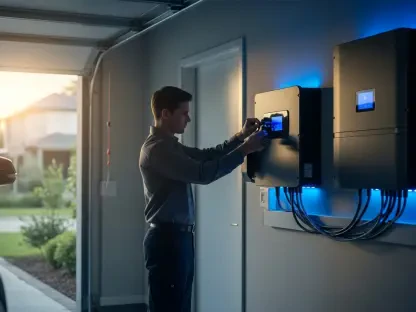
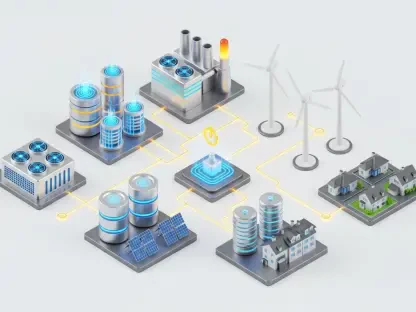
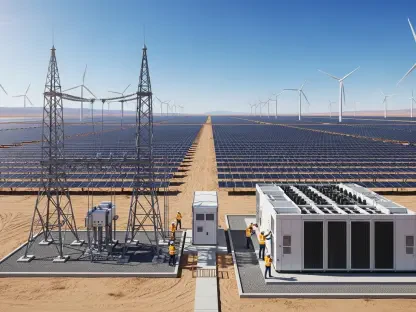
The newly activated microgrid at NAS Sigonella represents a sophisticated fusion of renewable energy generation, advanced storage, and intelligent power management designed for maximum autonomy. At its heart, the system integrates two new solar arrays with cutting-edge sodium nickel chloride battery energy storage systems. These batteries are engineered to capture and store surplus solar energy generated during peak sunlight hours, creating a substantial power reserve. Each battery unit boasts a capacity of up to 400 kilowatt-hours, providing a robust reservoir of electricity that can be dispatched on demand. This architecture ensures that power remains available throughout the night or during overcast conditions when solar generation diminishes. The system’s design prioritizes seamless operation, with sophisticated controls managing the flow of energy between the solar panels, the batteries, and the base’s electrical loads to optimize efficiency and maintain grid stability under all conditions.
During a commercial power failure, the microgrid’s true capabilities are unleashed through its automated control system, which immediately detects the disruption and transitions the facility into an isolated operating mode. In this “island mode,” the microgrid disconnects from the external grid and begins to power critical operations independently. It orchestrates a seamless combination of the stored battery energy, ongoing solar generation, and backup generator support to create an uninterrupted flow of electricity. This intelligent integration is engineered to sustain continuous operations for an impressive duration of up to 14 days on a single fuel load for the generators. This extended period of autonomy is a critical strategic advantage, providing mission commanders with the certainty that essential functions will remain powered long enough to overcome prolonged grid outages, thereby guaranteeing the base’s ability to execute its vital missions without interruption.
Mission Support and Installation-Wide Impact
While the technological framework of the microgrid is impressive, its primary purpose is to directly enhance the operational capabilities of the Defense Logistics Agency (DLA) Distribution Sigonella. As a vital logistics hub, the DLA’s mission to receive, store, and distribute supplies, equipment, and fuel throughout the region is fundamentally dependent on a consistent and reliable power source. Any interruption could create significant delays and disruptions for military operations across Europe, Africa, and Central Asia. The microgrid was specifically engineered to shield these critical logistics functions from external grid failures, ensuring that the flow of essential materials remains unbroken. This targeted resilience provides a critical layer of mission assurance, guaranteeing that DLA Sigonella can perform its duties under the most challenging circumstances and serve as a dependable cornerstone of U.S. military logistics in the theater.
Beyond its designated role in supporting the DLA, the microgrid delivers substantial benefits that ripple across the entire NAS Sigonella installation, enhancing its overall operational readiness and sustainability. By providing a clean and reliable power source during outages, the system significantly reduces the base’s reliance on traditional diesel generators, which are typically resource-intensive and require significant logistical support for refueling. This reduction in fuel consumption not only lowers operational costs but also eases the demand on the base’s infrastructure and personnel during emergency situations. Furthermore, the integration of solar power contributes to the installation’s broader environmental goals. The microgrid serves as a powerful model for how strategic military facilities can achieve greater energy independence while simultaneously strengthening their capacity to withstand and recover from disruptions, ultimately making the entire base more resilient.
A Strategic Imperative for Global Operations
The Broader Department of Defense Initiative
The activation of the Sigonella microgrid is not an isolated event but a key component of a comprehensive, decade-long Department of Defense (DoD) strategy aimed at fortifying energy resilience at critical military facilities across the globe. Recognizing that the vast majority of its installations depend on civilian power grids, the Pentagon has prioritized initiatives that enable bases to sustain their core missions independently for extended periods. This strategic shift is driven by a modern threat landscape where vulnerabilities in public infrastructure can be exploited by adversaries or compromised by natural disasters. The DoD’s overarching goal is to ensure that essential operations, from command and control to logistics and intelligence, can continue without interruption, regardless of the stability of the local power supply. This forward-looking approach reflects a fundamental understanding that in modern warfare and global security, energy is a critical enabler of military power.
This focus on energy independence is a unified effort across all branches of the U.S. military, demonstrating a collective commitment to enhancing mission assurance through resilient infrastructure. The U.S. Army, for instance, is concurrently pursuing ambitious goals to expand microgrid coverage for its own critical missions, mirroring the Navy’s efforts. This trend signifies a paradigm shift in how military installations are designed and operated, moving away from passive reliance on external utilities toward a more proactive, self-sufficient model. By investing in technologies like solar arrays, battery storage, and intelligent grid controls, the armed forces are not only bolstering their defensive posture but also increasing their operational flexibility. These projects collectively create a more robust and distributed energy network that is less susceptible to single points of failure, ultimately strengthening the foundation of national security in an increasingly unpredictable world.
A Blueprint for Future Installations
The successful implementation of the microgrid at NAS Sigonella provided a powerful and practical blueprint for future energy resilience projects across the Department of Defense. The project demonstrated the viability of integrating advanced battery technologies with renewable energy sources in a complex operational environment, offering valuable lessons in system design, automation, and management. This initiative became a reference point, showcasing how a strategic investment in energy infrastructure directly translated into enhanced mission assurance and operational longevity. The data and performance metrics gathered from the Sigonella system informed subsequent designs, allowing for the refinement of technical specifications and operational protocols. Its success created a clear pathway for other critical installations to follow, accelerating the adoption of similar technologies and ensuring that the military’s global energy posture was strengthened with proven solutions.