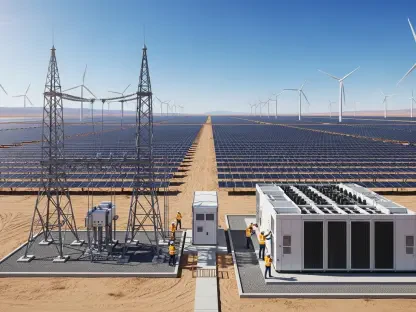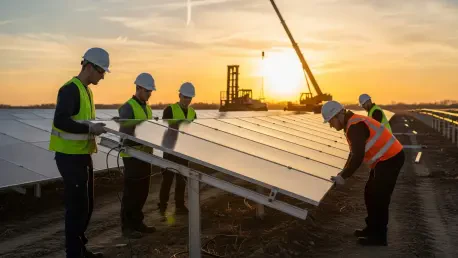

The American energy landscape is currently defined by a profound contradiction, where the solar industry is experiencing an unprecedented surge in growth even as it navigates a labyrinth of challenging and often contradictory government policies. This peculiar situation, aptly described as a “tale of two 2025s,” showcases a powerful dynamic where fundamental market forces are decisively overpowering political and bureaucratic headwinds. In a stunning display of momentum, solar power accounted for an incredible 58% of all new energy generation added to the grid in the first three quarters of the year. When combined with the increasingly crucial component of battery storage, that figure climbs to a dominant 85%, signaling a seismic shift in the nation’s power infrastructure. This explosive expansion is not happening in a vacuum but rather in direct opposition to a policy environment that has become increasingly difficult for developers to navigate, creating a fascinating case study of an industry thriving on sheer economic and logistical necessity.
Policy Hurdles in a Growing Market
Despite the remarkable installation figures, the solar sector is concurrently weathering what could be considered a perfect storm of policy-driven challenges emanating from Washington. These obstacles represent the “worst of times” for many in the industry, creating significant uncertainty and operational friction. A major blow came with the expiration of the federal tax credit for residential rooftop solar, a key incentive that fueled widespread adoption among homeowners for years. In parallel, the tax credits for large-scale commercial and utility installations are being phased out years ahead of their originally scheduled expiration, injecting a sense of artificial urgency and complicating long-term financial planning for major projects. Compounding these financial pressures are severe administrative bottlenecks. Federal agencies tasked with granting permits for new developments have been plagued by significant delays and a lack of responsiveness, leaving numerous projects stalled in bureaucratic limbo or, in some cases, forcing their cancellation altogether.
Irresistible Forces of Demand and Economics
The industry’s remarkable resilience stemmed from a convergence of powerful market drivers that rendered solar the only viable path forward. The impending expiration of federal tax credits ironically created an urgent rush to build, as developers raced to lock in projects before incentives disappeared. This was magnified by a historic surge in energy demand from power-hungry data centers, a resurgent domestic manufacturing sector, and the accelerating adoption of electric vehicles, all of which required massive infusions of new electricity. In this environment, solar emerged as the only energy source capable of scaling rapidly enough to meet this near-term demand. Alternative sources faced insurmountable barriers: new coal plants were a non-starter, major offshore wind projects were halted, new nuclear power took years to construct, and the supply chain for new natural gas turbines was severely backlogged. Ultimately, the rapidly falling costs of both photovoltaic panels and battery storage systems made the combination an economically compelling and reliable solution that could power the grid even after sunset, cementing its role as the dominant force in new energy generation.