
The Dawn of a New Era in American Renewable Energy
The American energy landscape is undergoing a profound transformation, moving away from centralized fossil fuel reliance toward a decentralized, renewable-centric grid. As of early 2026, the United States has reached a critical tipping point where solar power and battery storage are no longer peripheral supplements but foundational pillars of the national power supply. This shift reflects a systemic change in how electricity is generated, distributed, and consumed across the country. By examining generation shares, installed capacities, and the massive influx of utility-scale storage, this analysis provides a comprehensive look at the forces driving this clean energy surge and what it means for the future of the American grid.
From Niche Technology to Grid Dominance: A Historical Context
For decades, solar energy was viewed as a costly alternative restricted to specific geographic pockets with high subsidies and abundant sunshine. However, a recent decade of plummeting hardware costs, coupled with federal incentives and aggressive state-level renewable portfolio standards, has fundamentally altered the industry’s trajectory. These economic tailwinds have converted solar from an experimental environmental pursuit into the most cost-effective option for new generation in many markets.
Historically, California stood alone as the primary incubator for solar innovation, utilizing its unique regulatory environment to prove that high-penetration renewables were viable. This foundation paved the way for other states to recognize solar not just as an environmental choice, but as a hedge against volatile fuel prices and a tool for long-term energy independence. Understanding this shift from a niche regional industry to a dominant national sector is essential for grasping why even traditionally fossil-fuel-dependent states are now pivoting toward a solar-first strategy.
The Dual Hegemony of California and Texas
California’s Penetration and the Rise of the Texas Powerhouse
California continues to hold its position as the national benchmark for solar integration, with solar energy now accounting for over 32% of its total electricity generation. Its long-term commitment to decarbonization has resulted in a mature ecosystem of residential, commercial, and utility-scale installations that provide a blueprint for other regions. However, the most significant development in the current market is the emergence of Texas as a formidable rival. With approximately 51,900 MW of cumulative capacity, Texas has leveraged its vast land area and streamlined interconnection processes to nearly match California’s long-standing lead.
The Critical Role of Utility-Scale Battery Storage
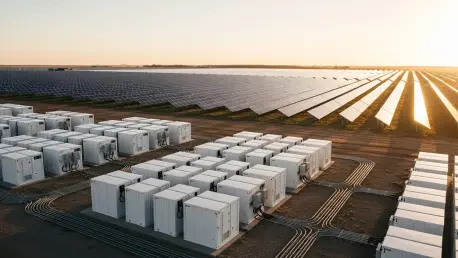
As solar generation increases, the intermittency of the sun creates a “duck curve” challenge, where peak production does not always align with peak demand. To solve this, California and Texas have spearheaded the deployment of a 40 GW national utility-scale battery fleet. California currently leads with 18.5 GW of operational storage, while Texas follows closely with 12.2 GW. This infrastructure is vital for grid stability, allowing operators to “time-shift” solar energy for use during evening hours. The concentration of storage in these two states highlights a necessary evolution: the transition from simply generating green electrons to managing them through high-capacity, dispatchable storage systems.
Geographical Diversification and Emerging Markets
While the “Big Two” dominate the headlines, the geographical distribution of solar development is shifting toward the Midwest and the South. Data reveals a massive expansion in the three-year forecast, particularly in states like Kentucky and Missouri, which are experiencing triple-digit percentage increases in their solar footprints. Kentucky, for instance, has seen growth of over 251%, signaling that the economic benefits of solar—low operational costs and job creation—are overcoming traditional political or regional barriers. This diversification suggests that solar and storage technologies have reached a level of economic maturity that makes them viable across varied climates.
The Next Frontier: Rapid Growth and Technological Evolution
Looking toward the end of the decade, the trajectory of the U.S. energy market points toward an even more aggressive expansion. Texas is poised to dwarf all other states with a projected 38,000 MW pipeline from 2026 to 2028, potentially overtaking California in total installed capacity. This growth is supported by a robust supply chain and a regulatory environment that favors rapid deployment of large-scale infrastructure.
Beyond sheer volume, the industry is bracing for technological shifts, including more efficient long-duration energy storage and advanced grid-forming inverters. These innovations allow renewable plants to provide the same reliability services as traditional coal or gas plants. Economic and regulatory changes, such as improved permitting processes and enhanced grid interconnection rules, are expected to further accelerate this momentum, turning once-stagnant energy markets into hubs of renewable innovation.
Navigating the Transition: Strategies for a Renewable Future
The rapid ascent of solar and storage offers clear takeaways for stakeholders across the energy spectrum. For policymakers, the success of Texas and California underscored the importance of investing in transmission infrastructure to move renewable power from rural areas to urban centers. Without a modernized grid, the sheer volume of new generation could lead to curtailment and inefficiencies. For businesses and investors, emerging markets like Indiana and Ohio represented high-growth opportunities where early entry yielded significant returns as these states modernized their power portfolios.
Applying these insights required a shift in perspective: viewing solar not as a standalone asset, but as part of a sophisticated, storage-backed energy portfolio. Consumers and corporate energy buyers who prioritized integrated solar-plus-storage solutions successfully insulated themselves from price volatility. This strategic approach to energy procurement became essential for modern economic resilience, ensuring that businesses could maintain operations while reducing their carbon footprints in an increasingly competitive global market.
Conclusion: A Nationwide Pillar of the American Power Grid
The 2026 landscape confirmed that the U.S. solar and storage market transitioned from a period of experimentation to one of massive, cross-country scaling. While California and Texas remained the primary engines of this growth, the aggressive expansion into new territories proved that the renewable transition was a national phenomenon. This shift was critical for long-term energy security, environmental sustainability, and economic competitiveness. As the grid continued to evolve, the integration of high-capacity solar and storage remained the most significant energy story of the decade, reshaping how America powered its future.