
Amid the immense challenge of transforming global industrial operations to meet climate targets, Swedish manufacturing firm SKF has announced a significant advancement in its sustainability journey by achieving decarbonized status at six additional international factories. This development, which brings the company’s total number of such facilities to nine, represents a concrete step in the heavy industry sector, where reducing carbon emissions is notoriously complex and capital-intensive. The newly certified sites, located across Malaysia, Mexico, India, Italy, and the United States, now contribute to a network that accounts for approximately one-fifth of the company’s baseline manufacturing emissions. This progress is a crucial part of SKF’s broader environmental strategy, which aims for a substantial reduction in carbon emissions from its operations by 2030 and aspires to achieve net-zero emissions throughout its entire value chain by the year 2050, demonstrating a structured and ambitious approach to corporate responsibility.
A Deeper Dive into Decarbonization Milestones
Defining a Decarbonized Factory
Central to SKF’s announcement is the company’s stringent and internally defined criteria for what constitutes a “decarbonized factory,” a standard that moves beyond vague environmental pledges. To earn this designation, a manufacturing site must successfully eliminate at least 95% of its Scope 1 and Scope 2 carbon emissions when measured against a 2019 baseline. Scope 1 emissions refer to direct greenhouse gases released from sources owned or controlled by the company, such as fuel combustion in boilers or vehicles. Scope 2 covers indirect emissions generated from the purchase of electricity, steam, heat, or cooling. By setting such a high bar, the company ensures that its achievements are substantial and not merely marginal improvements. Furthermore, the qualification process requires each factory to present a robust and credible plan to address its remaining emissions, ensuring a path toward complete carbon neutrality. This rigorous definition is critical in an era of increasing scrutiny over corporate environmental claims, as it provides a transparent and measurable benchmark for progress and helps to build trust with stakeholders, customers, and the public.
Global Implementation and Technological Solutions
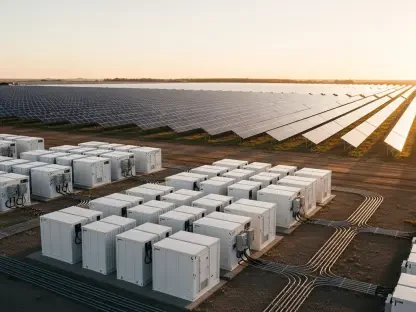
The successful decarbonization of these six factories was not the result of a single solution but rather a multifaceted strategy tailored to the specific operational and geographical context of each site. This global implementation showcases a commitment to deploying tangible, on-the-ground changes rather than relying solely on carbon offsetting. Key to this success was a significant investment in both the procurement and generation of renewable energy, effectively neutralizing the carbon impact of electricity consumption. Concurrently, the facilities underwent comprehensive upgrades to enhance energy efficiency across all processes. This included the integration of advanced technologies such as industrial heat pumps to recycle waste heat, high-efficiency chiller systems for cooling processes, and the optimization of fuel systems to minimize consumption and emissions. These actions, implemented across diverse industrial landscapes from North America to Southeast Asia, illustrate that the path to decarbonization requires a holistic approach that combines large-scale energy transitions with granular improvements in day-to-day operational efficiency, setting a practical example for the global manufacturing sector.
The Ripple Effect of Corporate Climate Action
Enhancing Operational Resilience and Value
The benefits of SKF’s decarbonization efforts extend far beyond environmental stewardship, creating a cascade of positive impacts that enhance both operational and commercial value. By systematically reducing energy consumption and transitioning to renewable sources, the company simultaneously strengthens its operational resilience. Lower energy demand directly translates to reduced operating costs and lessens the company’s exposure to the volatility of global fossil fuel markets, creating a more stable and predictable financial outlook. This internal advantage has a significant external effect as well. For SKF’s customers, who are increasingly facing their own sustainability pressures and targets, sourcing components from a decarbonized supply chain is a distinct competitive advantage. It enables them to build more sustainable end-products and more accurately report a lower carbon footprint for their own operations. This symbiotic relationship, where one company’s environmental progress directly facilitates another’s, highlights how strategic decarbonization can become a powerful driver of value throughout the entire industrial ecosystem.
A Scalable Framework for Industrial Sustainability
The strategic approach employed by SKF in decarbonizing its factories provided a compelling and scalable framework for the broader manufacturing industry. By methodically combining a clear, internally-defined target with targeted investments in proven technologies, the company created a repeatable model that could be adapted to various production environments and geographies. This initiative was not merely a series of isolated projects but a systematic progression toward the firm’s long-term environmental ambitions, including its 2030 operational emissions target and its 2050 net-zero goal for the entire supply chain. The successful execution across multiple continents demonstrated that substantial emissions reductions were achievable without compromising industrial output. In doing so, SKF’s actions contributed to the wider global transition toward a more sustainable economy by offering a tangible blueprint. This approach ultimately showcased how a commitment to climate action, when integrated with core business strategy, could yield a powerful synergy between environmental responsibility and operational excellence.