
A delicate compact that has guaranteed Oregonians reliable and affordable electricity for decades is now fracturing under the immense weight of a rapidly changing energy landscape. The state finds itself at a critical juncture, navigating a perfect storm of challenges that threaten the very foundation of its power system. An unprecedented surge in electricity demand, driven by the voracious appetite of the tech industry, is colliding with soaring utility rates and one of the nation’s most aggressive clean energy mandates. This trifecta of pressures has pushed Oregon into a precarious position, forcing a difficult and urgent conversation about its energy future. The state’s ambitious goal to slash greenhouse gas emissions by 80% by 2030 was already a monumental undertaking; now, the explosive and largely unanticipated energy consumption of new data centers has severely complicated this transition, placing immense stress on an aging electrical grid. As power planners, regulators, and stakeholders grapple with this complex dilemma, a clear consensus has emerged: there are no fast, easy, or inexpensive fixes. The path forward will inevitably require difficult compromises and a concerted, multi-pronged effort to balance the competing demands of reliability, affordability, and decarbonization.
Taming the Tech Boom: Managing Data Center Demand
The Root of the Surge
The dramatic spike in Oregon’s projected energy needs can be traced almost entirely to a single, powerful source: the data center industry. Fueled by the transformative boom in artificial intelligence, these massive, power-hungry facilities are expanding at a staggering rate, fundamentally reshaping the state’s energy consumption profile. Current forecasts from industry experts and state planners paint a stark picture: by 2030, data centers could consume as much as a quarter of Oregon’s total electricity. This projection is particularly alarming as it coincides with the very same year that energy consultants warn of a potential massive shortfall between the Pacific Northwest’s energy supply and its demand. The sheer scale and speed of this new demand have caught many off guard, creating a scenario where the state’s climate goals are on a direct collision course with the energy requirements of a burgeoning tech sector that was initially welcomed for its economic benefits. The challenge is no longer just about transitioning to clean energy sources, but about doing so while accommodating a level of demand growth that was unimaginable just a few years ago.
In an effort to hold the industry accountable for its immense energy footprint, state lawmakers passed the POWER Act in 2023. This landmark legislation is designed to ensure that the data center industry bears the full financial burden of the new power plants and transmission lines required to serve their operations, theoretically shielding residential and other business customers from the associated costs. However, the implementation of this act has sparked an intense and ongoing debate between utilities and consumer advocates. The core of the conflict lies in the complex methodology for calculating and assigning these substantial costs. Utilities and data center operators argue for formulas that spread some infrastructure costs more broadly, while ratepayer advocates insist on a strict interpretation that isolates all new costs directly to the large industrial users causing them. This financial tug-of-war underscores the high stakes involved, as the final rules will have significant implications for both the future cost of electricity for all Oregonians and the long-term attractiveness of the state as a hub for the tech industry.
Proposed Regulatory and Operational Fixes
Beyond financial accountability, a key strategy being explored involves making data centers more flexible and responsive consumers of electricity. One prominent proposal would require these facilities to significantly reduce their power consumption during periods of extreme grid stress, such as during a severe winter storm or a blistering summer heatwave when the energy system is pushed to its limits. In exchange for agreeing to these intermittent curtailments, which would be triggered by the utility, the data centers could gain access to a larger overall power capacity to support their continued growth. This demand-response model is not without precedent; Texas has implemented a similar law that mandates power curtailment for large, flexible consumers like data centers and crypto-mining operations during energy crises. Such an arrangement could provide a critical buffer for the grid, helping to prevent blackouts without requiring the construction of new power plants that would sit idle for most of the year, though it requires sophisticated coordination and a willingness from the tech industry to accept a degree of operational uncertainty.
Another set of proposals focuses on shifting the burden of reliability directly onto the data centers themselves. Policymakers are actively considering regulations that would mandate new facilities to be built with their own robust, on-site power sources, such as long-duration batteries or, more controversially, diesel generators. The goal is to enable these energy-intensive operations to function independently during an energy crunch, effectively “islanding” themselves from the public grid and reducing the strain on the system for everyone else. However, these solutions come with significant limitations that temper their appeal. Diesel generators, while a reliable backup, face strict environmental restrictions on their runtime hours due to air pollution concerns, making them unsuitable for prolonged outages. Even the largest and most advanced battery systems, which are incredibly expensive, could be depleted during an extended, multi-day weather event, leaving the data centers once again reliant on a stressed public grid. These practical constraints highlight the difficulty in finding a single, perfect solution to manage the industry’s impact.
Recognizing the multifaceted nature and urgency of the issue, Governor Tina Kotek has convened an expert panel tasked with conducting a comprehensive study of the data center industry’s impact on the state’s power supply and environment. This panel, composed of industry representatives, environmental advocates, and utility experts, is charged with delivering a slate of policy recommendations ahead of the 2025 legislative session. The formation of this task force signals a high-level acknowledgment of the crisis and a commitment to finding a sustainable path forward. However, it is critical to note that the panel’s official mandate does not include an examination of the generous tax incentives that first lured the data center industry to Oregon. This omission has drawn criticism from some quarters, who argue that any meaningful long-term strategy must also reconsider the financial policies that have fueled the industry’s explosive and often unchecked growth in the state, suggesting a potential blind spot in the current approach to solving the problem.
Strengthening the Foundation: Efficiency and Grid Modernization
Tapping into Energy Efficiency
Amid the complex discussions about new power plants and transmission lines, energy efficiency is consistently championed by experts at the Oregon Department of Energy and beyond as the cheapest, fastest, and most effective tool for shoring up the state’s precarious power supply. It is often described as the “first fuel” because saving a kilowatt-hour of electricity is almost always less expensive than generating a new one. A primary focus of this strategy is on the residential sector, where a significant portion of homes still rely on outdated and highly inefficient electric resistance heating systems, such as baseboard heaters. Converting these homes to modern, high-efficiency heat pumps for both air and water heating could dramatically reduce peak electricity demand, particularly during cold winter mornings, while also generating substantial cost savings on consumer utility bills. With approximately 20% of houses and 65% of apartments in the state still using this older technology, the potential for large-scale energy savings is immense.
Despite the clear benefits, the main barrier to the widespread adoption of these energy-saving retrofits is their high upfront cost. The Community Energy Project, a nonprofit focused on weatherization, illustrates this challenge vividly, with its average project cost exceeding $42,000 for low-income homes. This figure is often inflated because these homes frequently require extensive prerequisite repairs, such as new insulation, upgraded electrical wiring, and even mold remediation, before new heating systems can be safely installed. To overcome this significant financial hurdle, consumer advocates at the Oregon Citizens’ Utility Board have proposed a novel and compelling solution: requiring data centers to directly fund energy-efficiency upgrades in low-income households. This “beneficiary pays” model would function as a way for the industry to offset a portion of its own massive power consumption by investing in permanent demand reduction elsewhere in the system. In parallel, new state energy performance standards set to take effect in 2028 will target large commercial buildings, which account for nearly 20% of Oregon’s energy use, mandating that building owners measure and systematically reduce their energy consumption over time.
Overcoming the Transmission Bottleneck
A major and often overlooked roadblock preventing Oregon from integrating new renewable energy sources is the severe lack of available capacity on the state’s high-voltage transmission lines. The regional grid is, for all practical purposes, full. The Bonneville Power Administration (BPA), the federal agency that operates the majority of the region’s transmission system, faces a years-long backlog of requests from new wind and solar projects that are ready to be built but have nowhere to plug in. This transmission bottleneck effectively chokes off the supply of clean energy, creating a critical weak link in the state’s decarbonization strategy. Even if developers could build new renewable projects overnight, the electricity they generate would have no path to reach customers, leaving the state reliant on existing, often fossil-fuel-based, power plants to meet growing demand. Addressing this infrastructure deficit is therefore not just a logistical challenge but a prerequisite for achieving Oregon’s climate goals.
Experts argue that a significant portion of this problem stems from the fact that the existing grid is severely underutilized due to outdated and inefficient contracting rules. Currently, a power producer must secure “firm” transmission rights for the full capacity of their plant on a 24/7 basis, a model designed for traditional power plants but ill-suited for intermittent renewable sources like wind and solar, which do not generate power around the clock. Modernizing these rules and shifting toward more flexible transmission contracts would allow grid operators to use the available capacity far more efficiently, only curtailing service in the rare instances when the system is physically constrained. Furthermore, achieving greater coordination between the Pacific Northwest’s fragmented, “balkanized” utility territories could unlock significant hidden capacity and improve overall grid reliability by allowing power to be shared more freely across the region. While political and institutional resistance has historically been a major hurdle to such cooperation, the current crisis is creating new momentum for change.
In addition to regulatory reforms, new grid-enhancing technologies offer a promising pathway to squeeze more capacity out of the existing infrastructure without the lengthy and expensive process of building new lines. Artificial intelligence platforms and advanced, high-performance conductors can be deployed to optimize power flow and increase the carrying capacity of current transmission corridors. A recently completed pilot project between Portland General Electric (PGE) and the AI company Gridcare demonstrated this potential in a real-world application. By using improved forecasting and dynamic line ratings, the platform successfully unlocked an average of 84 megawatts of additional capacity on existing lines serving a data center—enough to power tens of thousands of homes. At the state level, Governor Kotek has issued an executive order directing state agencies to develop a framework to accelerate the development of new transmission projects by streamlining siting and permitting processes and identifying strategic energy corridors, signaling a clear recognition that modernizing the grid is essential to Oregon’s energy future.
Charting a New Course: Decentralization and Future Realities
Empowering the People: The Rise of a Decentralized Grid
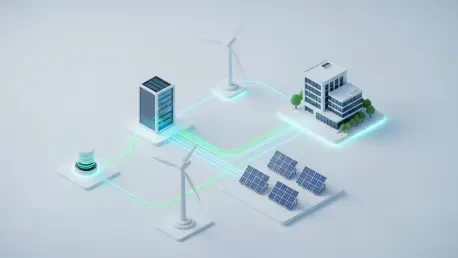
A growing movement among energy experts and community advocates is championing a fundamental paradigm shift away from the traditional, centralized utility model toward a more democratic, resilient, and distributed grid. This innovative approach empowers residents, businesses, and entire communities to become active participants in the energy system rather than passive consumers. It involves customers not only managing their energy demand through smart technologies like connected thermostats and electric vehicle chargers but also contributing to the power supply by generating their own electricity with rooftop solar panels and storing it in home battery systems. At a larger scale, this can manifest as community-scale projects like microgrids, which can operate independently from the main grid during an outage, providing enhanced reliability for critical facilities like hospitals and emergency shelters. This vision reimagines the grid as a dynamic, two-way network where power flows in multiple directions, creating a more flexible and robust system.
A key concept driving this transition is the aggregation of these distributed energy resources into what is known as a “virtual power plant,” or VPP. By networking thousands of individual home batteries, a utility or a third-party aggregator can create a powerful, controllable resource. During periods of peak demand, the utility can draw upon this aggregated capacity, dispatching the stored energy from these batteries back to the grid to help meet the system’s needs. This reduces the necessity of building expensive new “peaker” power plants and transmission lines that are only needed for a few hours a year. PGE has a pilot program that allows it to draw power from residential battery systems in exchange for customer savings, demonstrating the technical feasibility of the concept. However, critics note that utility-led efforts in Oregon are currently smaller in scale and less cost-effective than VPPs managed by third-party aggregators in other states. The high cost of technologies like home batteries, which can exceed $20,000, remains a major barrier for many consumers, and some utilities have been slow to fully embrace a model where widespread customer-owned generation can cut into their traditional profits from selling electricity.
Confronting Existential Threats
The escalating frequency and severity of wildfires across the West now pose a severe, and some argue existential, financial threat to Oregon’s electric utilities, with significant and direct consequences for ratepayers. Utilities are now advocating for legislative action to either place a cap on the damages they can be forced to pay for wildfires caused by their equipment or to create a mechanism that allows them to share some of these enormous costs with their customers through rate increases. The financial precarity of the situation was starkly illustrated when PacifiCorp’s credit rating was downgraded to near junk status after the utility paid out billions in settlements for the devastating 2020 Labor Day fires, with billions more in potential liabilities still pending in court. This financial instability is not an abstract problem for investors; it directly impacts every customer.
This financial fragility has a ripple effect that touches all aspects of the energy crisis. A lower credit rating significantly increases a utility’s cost of borrowing money for essential projects, including the construction of new renewable energy generation, the modernization of the grid, and the expansion of transmission lines—all critical components of the solution to Oregon’s power crunch. These higher financing costs are ultimately passed on to ratepayers in the form of higher monthly electricity bills, exacerbating affordability concerns. The chair of the Public Utility Commission has highlighted that Oregon is one of only two states in the West without some form of wildfire liability cap for utilities. Many stakeholders now argue that solving this immense financial risk is a foundational prerequisite for addressing the state’s broader energy challenges. Without financially stable utilities capable of making massive long-term investments, the ambitious goals of decarbonization and grid modernization may remain out of reach.
The Future on the Horizon and a Contentious Reality
While the immediate focus remains on meeting the 2030 targets, several advanced, carbon-free technologies are being seriously considered as part of Oregon’s long-term energy mix. A new generation of small modular nuclear reactors (SMRs) is being promoted by tech companies and some utilities as a potential source of reliable, 24/7 carbon-free power that could complement intermittent renewables like wind and solar. However, nuclear power plants have been illegal in Oregon since a 1980 ballot measure, which cannot be overturned until a permanent federal disposal site for high-level nuclear waste is established—a political and technical problem that remains unsolved after decades of debate. Furthermore, SMR technology is still in its infancy in the United States, with significant uncertainties surrounding its cost-effectiveness, technological feasibility, and timeline for deployment, making it an unlikely contributor before the 2030 deadline.
Other long-term prospects, such as massive offshore wind farms and power turbines that burn clean hydrogen, are also touted as potentially transformative sources of clean energy. Like SMRs, however, they face immense technical, regulatory, economic, and political hurdles that must be overcome. These technologies require massive infrastructure investments and complex permitting processes that will take many years to complete, placing them well outside the timeframe for addressing the immediate power crunch. This reality has forced a difficult and highly contentious conversation about the final, and for many, least palatable option on the table: relaxing Oregon’s highly ambitious clean-energy deadlines. State law already includes “offramps” that allow utilities to request a delay in compliance if meeting the targets would either compromise service reliability or raise costs beyond a specified threshold. Such a delay would almost certainly mean a prolonged reliance on natural gas power plants. While this is anathema to climate advocates, some industry stakeholders and regulators have argued that a pragmatic adjustment of the timelines may be necessary to align the state’s “deeply aspirational” goals with the practical and evolving realities of the energy landscape. The state’s path forward had been set on an ambitious course, but unforeseen challenges have now forced a reconsideration of the map, the timeline, and the very definition of success.