
As the global maritime industry navigates the turbulent waters of decarbonization, a groundbreaking approach is emerging that sidesteps the colossal infrastructure challenges posed by hydrogen fuel. Onboard hydrogen generation represents a significant advancement, offering a pragmatic path to harness hydrogen’s clean energy potential. This review will explore the evolution of the technology, its key features, performance metrics, and the impact it has had on various applications. The purpose of this review is to provide a thorough understanding of the technology, its current capabilities, and its potential future development.
The Strategic Imperative for Onboard Hydrogen
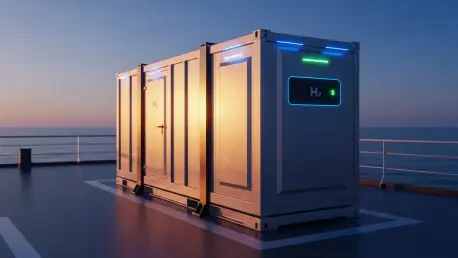
Onboard hydrogen generation is fundamentally about creating fuel at the point of use, addressing a critical bottleneck in the maritime energy transition. The core principle involves converting a more easily manageable feedstock into pure hydrogen directly on the vessel, which then powers fuel cells or internal combustion engines. This innovative strategy has emerged in direct response to the immense logistical hurdles associated with direct hydrogen bunkering.
The global supply chain for green hydrogen is still in its infancy, and the infrastructure required for its large-scale transportation and bunkering at ports worldwide is years, if not decades, away. Furthermore, storing hydrogen onboard as a compressed gas or cryogenic liquid demands significant space and complex, costly systems, often making it impractical for many vessel types. By generating hydrogen as needed, this approach allows the maritime industry to leverage its benefits without waiting for a fully developed global supply chain, making decarbonization more accessible today.
Core Technologies and Feedstock Options
The effectiveness of onboard generation hinges on a sophisticated interplay of fuel reforming technologies and their seamless integration into the vessel’s operational systems. At the heart of this approach lies the ability to use existing, more manageable fuels as hydrogen carriers, converting them into a clean power source through carefully engineered onboard plants.
Fuel Reforming from Alternative Feedstocks
The process of generating hydrogen onboard relies on converting energy-dense, easily handled liquid or gaseous fuels. This method commonly utilizes feedstocks such as Liquefied Natural Gas (LNG), methanol, or ammonia, which are chosen for their high hydrogen content and relatively mature handling and storage protocols. These substances effectively act as carriers, transporting hydrogen in a more stable and compact form than pure hydrogen itself.
The conversion is achieved through a chemical process known as reforming, where the feedstock reacts with agents like steam or air at high temperatures to release hydrogen gas. Different reformers are designed for specific feedstocks, each with its own efficiency, operational complexity, and byproduct profile. The selection of a feedstock and its corresponding reforming technology is therefore a critical decision, influencing the vessel’s overall emissions footprint, operational costs, and system complexity.
System Design and Marine Integration
Integrating a hydrogen generation plant into the unique marine environment is a significant engineering feat. The system is far more than just a reformer; it includes a suite of critical components such as gas purification units, fuel cells or modified engines for power generation, and extensive safety monitoring systems. Each element must be “marinized” to withstand the constant motion, vibration, and corrosive conditions experienced at sea.
The design process places a paramount emphasis on safety and spatial efficiency. Adapting these land-based technologies involves enclosing components in gas-tight compartments, installing sophisticated ventilation and detection systems, and developing robust control logic to manage the process safely. The integration must also align with the vessel’s existing power management and operational workflows, ensuring that this novel power source works in harmony with the ship’s primary functions, meeting the stringent requirements of maritime classification societies.
Evolving Regulatory and Safety Frameworks
As with any disruptive technology, the path to adoption is paved with regulatory challenges. The lack of mature international rules for onboard hydrogen generation has been a significant barrier, creating uncertainty for investors and operators. However, the industry is now responding proactively to fill this void, led by key classification societies.
A landmark development in this area is the release of Lloyd’s Register’s “Guidance Notes for Onboard Hydrogen Generation.” This document establishes the industry’s first clear, risk-based framework for the safe design, installation, and operation of these systems. By drawing on established rules for fuel cells and low-flashpoint fuels, the guidance provides a credible technical foundation for stakeholders, helping to align safety principles with existing classification standards and offering a clear basis for engagement with flag administrations.
Applications in the Maritime Sector
Onboard hydrogen generation is proving to be a highly versatile solution, finding applications across a diverse range of vessel types and operational profiles. Its flexibility makes it suitable for both newbuilds designed around the technology and for retrofits on existing vessels, offering shipowners a tangible pathway to meet tightening emissions targets like those set by the International Maritime Organization.
In practice, the technology is being explored for auxiliary power generation on large vessels, such as tankers and container ships, where it can power hotel loads while at port, eliminating local emissions. For smaller vessels or specific applications requiring zero-emission operations in sensitive areas, it can serve as the primary power source. This adaptability showcases its role as a key enabler for shipowners seeking to future-proof their fleets and advance their decarbonization goals without committing to a single, unproven fuel pathway.
Overcoming Technical and Regulatory Challenges
Despite its promise, the technology is not without its hurdles. The primary technical challenges revolve around the safety and operational complexities of managing multiple hazardous substances onboard, including the low-flashpoint feedstock, the generated hydrogen, and potentially toxic byproducts like carbon monoxide. Ensuring system reliability, efficiency, and durability in the demanding marine environment remains a key focus for technology developers.
This is where proactive guidance from classification societies becomes invaluable. By establishing clear safety standards and approval processes, frameworks like those from Lloyd’s Register help de-risk investments and mitigate operational uncertainties. Such guidance provides a structured approach to hazard identification and risk management, significantly shortening project approval timelines and giving shipowners the confidence needed to invest in and implement these innovative systems.
Future Developments and Industry Outlook
Looking ahead, onboard hydrogen generation is positioned to serve as a critical “bridge” technology, accelerating the wider adoption of hydrogen as a marine fuel. By allowing the industry to gain operational experience with hydrogen systems before a global supply infrastructure is in place, it smooths the transition and builds crucial competencies in handling hydrogen safely and effectively.
In the long term, this technology is expected to have a profound impact on the maritime energy transition. It not only offers an immediate solution for reducing emissions but also fosters innovation in related fields like carbon capture and storage, as reformers processing hydrocarbon feedstocks can be paired with capture systems. As such, onboard generation is a key enabler, positioning the maritime industry to meet its ambitious future environmental targets.
Concluding Assessment
This review found that onboard hydrogen generation presents a viable and highly pragmatic solution to the immediate infrastructure and storage challenges hindering the direct use of hydrogen as a marine fuel. The technology cleverly leverages more easily managed feedstocks to unlock the benefits of hydrogen power, offering a flexible and adaptable pathway toward decarbonization. With the crucial support of emerging regulatory frameworks that provide clarity and de-risk investment, onboard hydrogen generation is poised to play a pivotal role in the maritime industry’s journey toward a sustainable future.