
A significant transformation is sweeping across the Czech Republic’s energy landscape, where a recent convergence of progressive legislation and cutting-edge energy storage technology is catalyzing an unprecedented boom in utility-scale battery projects. This pivot marks a decisive departure from a market previously dominated by smaller, behind-the-meter installations, thrusting the nation into a new era of grid-scale energy management. The strategic shift is not merely theoretical; it is being powerfully demonstrated by landmark agreements poised to reshape the country’s power infrastructure. As the region grapples with the need to stabilize its grid amid a growing influx of renewable energy sources, the development of massive battery energy storage systems (BESS) has become a critical national priority. This evolving environment has created a fertile ground for investment, attracting international technology providers and local engineering expertise to collaborate on projects that promise to enhance energy security and flexibility for years to come.
A Landmark Partnership for Grid Stability
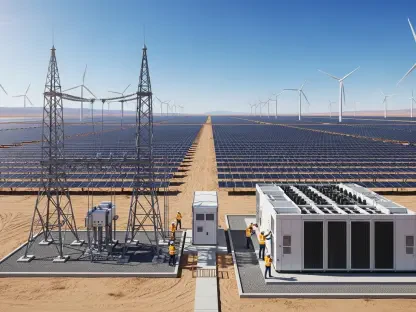
At the forefront of this market expansion is a major agreement between technology provider AlphaESS and EPC partner Eltodo a.s., which together are set to deliver a total of 320 MWh of BESS capacity. This collaboration encompasses two of the country’s most ambitious standalone energy storage projects to date: the 230 MWh facility at the Chvaletice site and a 90 MWh installation in Kladno. Upon completion, these sites will become the largest of their kind in the Czech Republic, symbolizing a monumental step forward in the nation’s energy infrastructure capabilities. Their sheer scale is designed to provide essential stability to the regional power network, offering the flexibility required to seamlessly integrate intermittent renewable sources like solar and wind. This partnership serves as a powerful testament to the market’s newfound maturity, illustrating how targeted regulatory support can directly translate into tangible, large-scale infrastructure investments that address critical grid challenges.
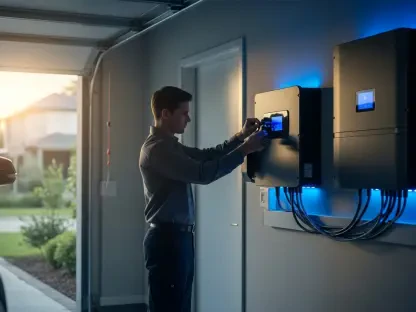
The technological core of these projects consists of AlphaESS’s advanced Aster 5000 units, which are fully integrated, containerized systems designed for rapid and efficient deployment. Each 5 MWh unit utilizes liquid-cooled lithium iron phosphate (LFP) battery chemistry, a choice prized for its enhanced safety profile and long operational lifespan. The systems are engineered with a multi-layer safety architecture and sophisticated thermal management to ensure reliable performance under various grid conditions. A key innovation is the inclusion of cell-level bidirectional active balancing, an advanced feature that optimizes the charge and discharge of individual cells. This not only boosts overall system efficiency but is also proven to extend the battery’s lifetime by more than 10%. These technical capabilities are crucial for delivering high-value ancillary services, including frequency regulation, which helps maintain the delicate balance between power supply and demand, thereby reinforcing the stability and resilience of the entire electrical grid.
The Legislative Catalyst for Investment
The surge in utility-scale battery development was directly ignited by a series of pivotal legislative reforms enacted in 2024, which fundamentally reshaped the energy market’s financial and regulatory landscape. The most impactful of these were amendments to the Energy Act in March, which officially opened pathways for battery storage systems to participate in lucrative wholesale and ancillary service markets. This change allowed BESS operators to generate revenue by providing critical grid-balancing services, such as Frequency Containment Reserve (FCR), automatic Frequency Restoration Reserve (aFRR), and manual Frequency Restoration Reserve (mFRR). Furthermore, subsequent reforms passed in August addressed a long-standing obstacle by streamlining grid connection procedures. By simplifying this complex and often time-consuming process, the new rules significantly reduced development timelines and project risks, making large-scale storage investments far more attractive to both domestic and international developers.
This newly supportive regulatory framework, combined with strong regional energy prices, has cultivated a highly compelling investment climate. An in-depth analysis by Aurora Energy Research underscores this potential, projecting that a new two-hour battery system deployed in the current market could achieve an internal rate of return (IRR) exceeding 15%. Such robust financial prospects have fueled a wave of optimism and investment, leading to ambitious forecasts for market growth. Projections indicate that Czechia’s total battery storage capacity is on a trajectory to expand from approximately 2.3 GWh today to a formidable 6 GWh by 2030. Critically, this growth represents a structural transformation of the market. While 98% of the country’s current capacity is from smaller, behind-the-meter systems, the coming years will be defined by a decisive pivot toward the utility-scale infrastructure necessary for a modern, renewables-heavy energy grid.
A Blueprint for Energy Transformation
The strategic alignment of forward-thinking policy and advanced technological deployment ultimately redefined the Czech Republic’s role in the European energy transition. The clear legal pathways for BESS participation in ancillary service markets, coupled with simplified grid integration processes, created a stable and highly profitable environment that attracted significant international investment and expertise. These developments became the foundational pillars that supported not only the rapid expansion of energy storage capacity but also the broader goal of decarbonization. By establishing a robust framework for grid stability, the nation effectively prepared its infrastructure for a higher penetration of intermittent renewable energy sources, ensuring that its green energy ambitions were built on a secure and resilient foundation. This successful model served as an influential blueprint, demonstrating how targeted legislative action could unlock the full potential of energy storage and accelerate the shift toward a sustainable power system.