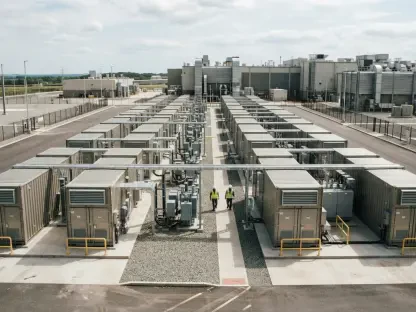

The most efficient power plant in America today is not a massive concrete facility with cooling towers; it is a sprawling, invisible network of smart thermostats, industrial motors, and residential batteries. When Google and Voltus recently inked a deal to deliver over 1,000 megawatts of capacity to the PJM Interconnection, they did not break ground on a single new building. Instead, they tapped into the “virtual megawatt”—the power saved when thousands of participants synchronize their energy reductions. This shift signifies a world where finding existing capacity within the system is faster, cheaper, and more urgent than constructing a new nuclear reactor.
The speed of power innovation represents a tectonic shift in how grid operators view consumers. Rather than seeing a household as a mere point of consumption, modern utility models treat every connected device as a potential asset. This approach bypasses the traditional decade-long wait for new transmission projects, allowing capacity to be “built” in weeks by simply aggregating the demand flexibility of existing infrastructure. As the industry moves further into 2026, the reliance on these decentralized resources has moved from an experimental concept to a fundamental necessity for maintaining a stable electrical frequency across the national grid.
The Megawatt You Don’t Use Is the Most Valuable Asset on the Grid
The economic reality of the modern grid is that energy conservation is no longer just a “green” initiative; it is a hard utility asset with a market price. In the current energy landscape, the cost of building a new natural gas peaker plant has become prohibitive when compared to the agility of a demand-response network. By leveraging sophisticated software, aggregators can now bundle thousands of small energy-saving actions into a single block of power that behaves exactly like a traditional generator. This creates a more resilient system that can respond to heat waves or supply shortages in seconds rather than the hours it takes to ramp up thermal plants.
Moreover, the financial incentives for participating in these programs have reached a level that captures the attention of major industrial players and tech giants alike. The 1,070-megawatt capacity delivered in the recent PJM deal demonstrates that virtual resources can rival the output of a large-scale nuclear unit. This creates a secondary market where energy efficiency is traded as a commodity, providing a new stream of revenue for companies that can flex their consumption. However, the success of this entire ecosystem rests on the ability to measure these minute changes with extreme precision, turning every household meter into a fiscal ledger.
Navigating the Looming Energy Gap and the Move to the Grid Edge
The American power landscape is currently facing a perfect storm of soaring demand and stagnant infrastructure growth. Electricity demand is projected to skyrocket by mid-century, driven largely by a 300% increase in data center consumption required for artificial intelligence and cloud computing. While the appetite for electricity is growing at an unprecedented rate, traditional grid expansion is currently paralyzed by bureaucratic permitting delays, capital shortages, and labor backlogs. This mismatch between demand and supply creates a precarious gap that traditional construction cannot close fast enough.
Consequently, grid operators are pivoting toward the “grid edge,” where demand response and microgrids are expected to meet 20% of peak demand by 2030. This shift moves the focus of the utility industry from high-voltage transmission lines to the low-voltage distribution networks that directly serve homes and businesses. By managing energy where it is consumed, the industry can alleviate the strain on aging transformers and substations. This decentralized strategy provides a buffer against infrastructure bottlenecks, allowing the grid to absorb the massive load of new electric vehicles and heat pumps without requiring an immediate overhaul of the physical wires.
The Virtual Power Plant: Transforming Efficiency into Utility-Grade Capacity
To scale from a niche program to a grid-wide solution, Virtual Power Plants (VPPs) must move beyond theoretical savings to verifiable performance. VPPs function by orchestrating resources, aggregating diverse assets like electric vehicle chargers and smart HVAC systems to mimic the reliability of traditional baseload power. When a grid operator calls for a reduction, the software must ensure that millions of small, distributed devices act in concert to drop the required load. This level of coordination is what transforms a collection of smart gadgets into a utility-grade resource capable of preventing rolling blackouts during localized energy crises.
However, a significant trust gap remains between grid operators and aggregated resources. Many engineers who manage the grid require absolute proof that these small devices will actually respond when called upon, especially during extreme weather events. Verification acts as the currency of the VPP model; the financial viability of these projects depends entirely on the ability to indisputably prove that a specific load was dropped. Without highly accurate data, the risk of non-performance is too high for operators to rely on VPPs for emergency capacity. Therefore, the advancement of metering technology is the only way to build the technical credibility needed for wide-scale adoption.
Establishing Technical Credibility Through Standardized Measurement
The energy transition requires a unified “source of truth” to ensure that every participant is compensated fairly and the grid remains stable. ANSI NEMA C12.1-2026 stands as the new cornerstone standard that establishes performance criteria and accuracy classes for modern meters. This document provides a universal language for energy measurement, merging previous accuracy standards into a single, cohesive framework. By ensuring that every meter reading adheres to the same rigorous testing protocols, the standard eliminates the discrepancies that once made distributed resources difficult to quantify.
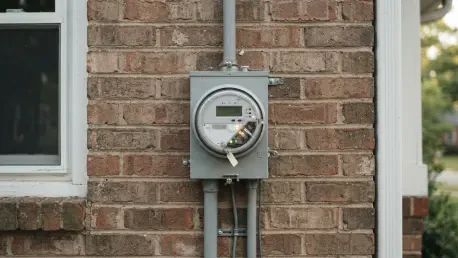
Expert perspectives on meter reliability emphasize that high-speed, secure, and standardized metering is the prerequisite for treating aggregated resources as “utility-grade.” Modern meters are no longer simple dials on the side of a house; they are high-frequency data sensors that provide real-time visibility into grid health. The 2026 standards ensure that these devices can handle the complex, bidirectional data flows required for modern energy trading. When a meter is certified under these new rules, it provides the level of certainty that utilities need to treat a homeowner’s battery as a reliable component of the national power supply.
Strategic Framework: Preparing for the Next Twenty Years of Infrastructure
Utilities are currently entering a massive replacement cycle for first-generation smart meters, presenting a once-in-a-generation opportunity to modernize. The metering decisions made from 2026 onward will define grid reliability and ratepayer value until the 2040s. Because these devices have a lifespan of nearly two decades, installing outdated or low-precision hardware today would lock the grid into an inferior performance tier for a generation. Forward-thinking utilities are prioritizing hardware capable of managing the surge in electric vehicle charging and the complex oscillations of residential solar panels.
Furthermore, securing the supply chain has become a top priority for national grid stability. By leveraging domestic manufacturing frameworks like “Make It American®,” utilities are ensuring that their critical infrastructure complies with “Build America, Buy America” requirements. This approach not only supports local labor but also ensures that the components of the modern grid are transparent and secure from external interference. Integrating these domestic standards with the latest technical requirements ensures that the next twenty years of infrastructure are built on a foundation of quality, accuracy, and domestic resilience.
The transition to a decentralized grid has moved away from a reliance on physical expansion and toward the mastery of data and measurement. Policymakers and utilities recognize that the virtual megawatt is only as strong as the meter that verifies its existence. By adopting the ANSI NEMA C12.1-2026 standards, the industry has successfully closed the trust gap, allowing distributed resources to take their place alongside traditional power plants. Stakeholders prioritized high-precision infrastructure during the current replacement cycle, which secured the stability of the American power grid for the next generation. The shift toward verifiable performance ensured that the decentralized revolution remained financially viable and operationally sound.