
Lingering perceptions from decades past have often overshadowed one of the most significant evolutions in home climate control, leaving many homeowners to rely on outdated information when making crucial decisions about their heating and cooling systems. The truth is that the poorly performing heat pumps of the 1970s and 80s bear little resemblance to the sophisticated, high-efficiency models available today. These modern systems are not just incremental improvements; they represent a fundamental technological leap forward, engineered to deliver exceptional performance, remarkable energy savings, and a smaller environmental footprint. As energy costs continue to fluctuate and climate concerns grow more pressing, a reexamination of this technology is not just warranted but essential for any household looking to embrace a smarter, more sustainable, and cost-effective future. The myths of yesterday are holding back the progress of today, preventing a wider adoption of a technology that has come of age.
Reevaluating Performance in Extreme Conditions
Overcoming the Cold Weather Barrier
The most persistent and damaging myth surrounding heat pumps is their supposed ineffectiveness in cold climates, a belief rooted in the performance of antiquated technology. While it is true that early models struggled significantly once temperatures dipped below freezing, contemporary systems have been specifically engineered to conquer this challenge. Advanced compressor technology and improved refrigerants allow modern heat pumps to efficiently extract heat from the air even in frigid conditions. Independent testing has conclusively shown that many new models can effectively heat a home when outdoor temperatures are as low as 5 degrees Fahrenheit. Beyond standardized tests, anecdotal evidence from colder regions reveals systems functioning capably in even more extreme conditions, with some reports citing consistent operation at a staggering minus 29 degrees. This demonstrates a resilience and capability that fundamentally invalidates the old narratives, proving that modern heat pumps are a viable and reliable primary heating source for the vast majority of climates.
The Synergy of System and Structure
Maximizing the impressive cold-weather performance of a modern heat pump involves more than just the unit itself; it requires a holistic view of the home as an integrated energy system. The efficiency gains of the technology can be either amplified or diminished by the quality of the building’s thermal envelope. A home that is well-weatherized—featuring proper insulation in the walls and attic and meticulous air sealing around windows, doors, and ductwork—minimizes heat loss, creating a stable indoor environment. In such a setting, the heat pump does not have to work as hard to maintain a comfortable temperature, allowing it to operate at peak efficiency and further reduce energy consumption. This symbiotic relationship between the HVAC system and the home’s structure is critical. Homeowners who invest in these foundational improvements find that their heat pump not only handles cold snaps with ease but also delivers more consistent comfort and lower utility bills throughout the heating season.
The Financial and Environmental Equation
Unlocking Unprecedented Efficiency
The core advantage of a heat pump lies in its fundamentally different approach to creating warmth. Unlike traditional furnaces or gas boilers that generate heat through the combustion of fuel, a heat pump operates on the principle of heat transfer, moving existing thermal energy from the outside air into the home. This process is vastly more efficient than creating heat from scratch, allowing some of the most advanced systems to be up to five times more efficient than their fossil-fuel-burning counterparts. This operational superiority translates directly into substantial financial benefits for the homeowner. By leveraging this technology, households can achieve dramatic reductions in their energy costs, with some experiencing savings of up to 50% on their utility bills. On a broader scale, this efficiency facilitates a critical shift away from dependence on fossil fuels for residential heating, leading to a significant decrease in air pollution and mitigating associated public health risks like heart attacks and strokes.
Making Advanced Technology Accessible
Despite the clear long-term benefits, the initial investment required for a heat pump system can be a significant barrier for many households, with installation costs ranging anywhere from $1,300 for a simple unit to over $20,000 for a comprehensive, whole-home system. Recognizing this challenge, the industry has developed more affordable entry points, such as ductless mini-split systems, which can provide targeted heating and cooling without the need for extensive ductwork. More importantly, innovative financial models have emerged to make this technology accessible to a much wider range of homeowners. Subscription and lease programs, for instance, are revolutionizing the purchasing process. These plans often require no upfront payment, instead bundling the cost of the equipment and installation into a low, predictable monthly payment. Crucially, these programs frequently include long-term maintenance and service agreements, removing another layer of financial uncertainty and making the transition to a high-efficiency heat pump a manageable and appealing option for all.
A New Paradigm for Home Energy
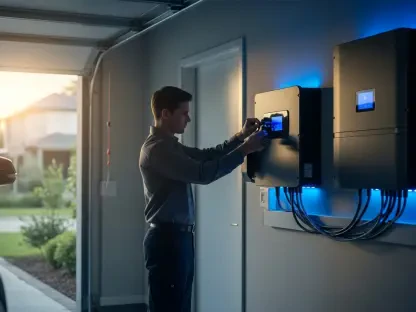
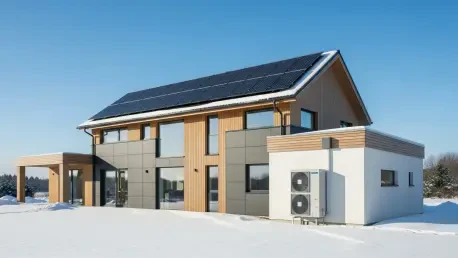
The journey of this technology culminated in a solution that addressed not only efficiency and cost but also resilience. By pairing a modern heat pump with a home solar array and a battery backup system, homeowners established a new level of energy independence. This integrated setup ensured that the home’s heating and cooling could continue to operate seamlessly even during power outages, a critical advantage in an era of increasingly unpredictable weather events. Furthermore, this synergy allowed the heat pump to be powered by clean, free energy generated directly on-site, effectively zeroing out the operational costs and environmental impact associated with climate control. This final step transformed the heat pump from a standalone appliance into the cornerstone of a self-sufficient and truly sustainable home energy ecosystem.