
The maritime industry’s long-standing reliance on conventional heavy fuels is rapidly giving way to a new era, with liquefied natural gas (LNG) emerging as a dominant alternative that is reshaping global shipping logistics and environmental strategies. Recent data reveals a dramatic acceleration in the adoption of LNG as a marine fuel, a trend driven not just by regulatory pressures for decarbonization but by a maturing global infrastructure that is making LNG more accessible and operationally viable than ever before. This transition is marked by a significant increase in the number of LNG-powered vessels joining the global fleet and a corresponding expansion of bunkering facilities in key strategic ports. The surge signals a clear industry consensus forming around LNG as a critical pathway toward achieving substantial emissions reductions, bridging the gap between today’s energy needs and the long-term vision of a zero-carbon shipping future. This momentum is creating a ripple effect, influencing vessel newbuild orders, port development projects, and investment in related supply chain technologies worldwide.
Iberian Peninsula Emerges as a Bunkering Powerhouse
Spain’s Exponential Bunkering Growth
The Iberian Peninsula has firmly established itself as a critical hub in the global LNG bunkering network, with Spanish ports leading a remarkable expansion in supply volumes. In 2025 alone, LNG bunkering operations in Spain reached an unprecedented 8.1 TWh, a figure that represents more than a fourfold increase compared to the volumes recorded just two years prior. This exponential growth is not an isolated phenomenon but rather the result of a confluence of factors, including the strategic development of local bunkering infrastructure and a substantial rise in the number of international LNG-powered vessels choosing to refuel in the region. The commitment to enhancing port capabilities has transformed these locations from simple stopovers into comprehensive energy hubs capable of servicing the most advanced dual-fuel ships. This surge underscores Spain’s pivotal role in facilitating the shipping industry’s green transition, demonstrating how targeted investment in infrastructure can catalyze widespread adoption of cleaner marine fuels and support the operational needs of a rapidly evolving global fleet.
Operational Shifts and Regional Expansion
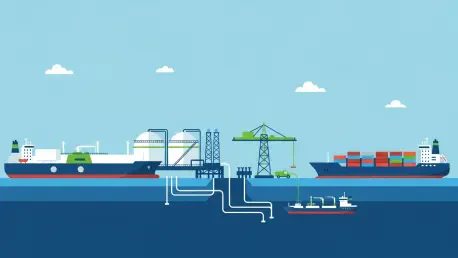
Coinciding with the dramatic increase in volume, the methodology of LNG bunkering has undergone a significant operational transformation, moving toward more efficient and flexible systems. The once-dominant truck-to-ship transfers have been largely superseded by ship-to-ship (STS) operations, which now account for a commanding 80% of all LNG bunkering activities. This represents a substantial structural shift from the previous year, when STS transfers constituted only 44% of the total, highlighting a move toward models that can support larger vessels and quicker turnaround times. The strategic advantage of the Iberian Peninsula was further enhanced in 2025 as Portugal officially commenced its own LNG bunkering activities. The port of Sines successfully supplied 342 GWh of LNG, marking the country’s entry into this burgeoning market and reinforcing the entire region’s status as a premier destination for alternative marine fuels. This coordinated regional growth solidifies the peninsula’s importance in the global energy supply chain for maritime transport.
Global Fleet Transformation and Infrastructure Expansion
The Rise of LNG-Powered Vessels
The momentum observed in regional bunkering is a direct reflection of a much broader, global trend in fleet modernization and expansion. According to authoritative industry data, LNG and its renewable counterpart, bio-LNG, have become the leading alternative fuel choices for new vessel orders. In 2025, a total of 188 new ships capable of running on LNG were ordered, a figure that accounts for an impressive 31% of the total gross tonnage of all newbuilds commissioned that year. This commitment to LNG is further evidenced by the significant number of vessels delivered and entering service. The global fleet of LNG-powered ships grew by 30% in 2025 with the addition of 193 new vessels. This rapid expansion brings the total number of such ships, including those in operation and on order, to nearly 1,500 worldwide. This robust pipeline of newbuilds signals a long-term industry commitment to LNG as a cornerstone of its decarbonization strategy, fundamentally altering the composition of the world’s commercial maritime fleet for decades to come.
Pioneering Sustainable Fuel Alternatives
Beyond the sheer volume of LNG being adopted, a crucial development is the increasing integration of renewable alternatives into the supply chain, which signals a tangible move toward deeper decarbonization. In 2025, renewable bio-LNG constituted 12% of the total LNG supplied as marine fuel in Spain, a significant milestone that underscores the viability of drop-in green fuels. The use of bio-LNG, derived from sustainable biomass sources, allows vessel operators to substantially reduce their net greenhouse gas emissions without requiring any modifications to existing LNG-powered engines or fuel infrastructure. This development is pivotal because it demonstrates a practical and scalable pathway for the maritime industry to transition beyond fossil-based LNG toward a net-zero future. The successful integration of bio-LNG into commercial bunkering operations provides a clear proof of concept, encouraging further investment in production capacity and helping to build confidence across the industry that the long-term environmental goals are achievable.
Charting a Course for a Cleaner Maritime Future
The developments of the past year solidified liquefied natural gas’s role as an indispensable fuel in the maritime industry’s journey toward sustainability. The exponential growth in bunkering volumes, particularly in strategic regions like the Iberian Peninsula, reflected a matured and increasingly efficient supply chain capable of meeting the demands of a rapidly expanding global fleet. The structural shift toward more flexible ship-to-ship operations became the new industry standard, optimizing logistics and reducing vessel downtime. Moreover, the significant influx of newbuild orders for LNG-powered vessels demonstrated a firm and lasting commitment from shipowners and operators. This transition was further supported by a parallel expansion of the global bunkering infrastructure, with 62 dedicated vessels in operation and another 38 on order, which assured the market of reliable fuel availability. Perhaps most importantly, the successful integration of bio-LNG into the fuel mix provided a clear and viable path toward achieving deeper decarbonization, transforming the conversation from one of transition to one of long-term, sustainable operation.