
In a decisive move to reconcile its advanced industrial economy with pressing climate obligations, Japan is initiating a major strategic shift in its energy policy by forging a landmark partnership with the United States. Confronted with a heavy reliance on fossil fuels that complicates its path to decarbonization, the nation is looking across the Pacific for a stable supply of low-carbon ammonia, a hydrogen carrier fuel seen as a crucial tool for weaning its power sector off coal and natural gas. This transatlantic energy pact represents more than a simple trade deal; it is a foundational pillar of Japan’s ambitious plan to navigate the difficult transition toward a net-zero future. By securing a long-term source of cleaner fuel, Japan aims to systematically reduce its carbon footprint while ensuring the energy security required to power its economy, marking a significant and calculated gamble on the future of global energy logistics and low-carbon technologies.
A Strategic Pivot to Low-Carbon Fuel
Addressing Ambitious Climate Targets
The urgency behind Japan’s turn toward ammonia is underscored by its stringent national climate commitments, which stand in stark contrast to its current energy infrastructure. The country has pledged to achieve a 60% reduction in greenhouse gas emissions by 2035 and an even more aggressive 73% cut by 2040, using 2013 levels as the baseline. These targets are part of a ‘linear pathway’ designed to align Japan with global net-zero goals by 2050. However, the nation’s energy grid presents a formidable obstacle to realizing these ambitions. As of early 2025, over half of Japan’s electricity is generated from fossil fuels, with coal and natural gas plants forming the backbone of its power supply. This deep-seated dependency makes a rapid transition to renewables alone a challenging proposition. In this context, low-carbon ammonia has emerged as a pragmatic transitional fuel, allowing Japan to leverage its existing thermal power infrastructure while progressively lowering emissions through co-firing, thereby creating a more viable and immediate route to decarbonization.
The Economics of a Green Transition
Facilitating this ambitious energy pivot required a carefully orchestrated financial and logistical framework, led by Japan’s largest power producer, JERA. The company has secured a government-supported, 15-year agreement to import approximately 500,000 tons of low-carbon ammonia annually from the United States, with shipments scheduled to begin around 2029. This long-term commitment is designed to provide the market stability needed for such a large-scale undertaking. A critical component of the plan involves substantial Japanese government subsidies, which are essential for bridging the significant cost difference between traditional coal combustion and the more expensive process of co-firing with ammonia. This financial support effectively de-risks the transition for power producers and industrial users, making the adoption of cleaner fuel economically feasible. By underwriting the initial cost premium, the government is not only accelerating the shift away from coal but also stimulating the development of a broader supply chain and market for low-carbon fuels, positioning Japan as a key player in the emerging global hydrogen economy.
The Transpacific Partnership and Its Impact
Sourcing Ammonia From the American Gulf Coast
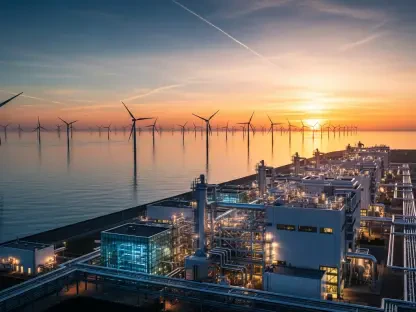
The heart of this landmark energy agreement is the Blue Point project, a state-of-the-art low-carbon ammonia production facility set to be constructed in Louisiana. This nearly $4 billion venture is a powerful collaboration between JERA, American fertilizer giant CF Industries, and Japanese trading house Mitsui. Upon its scheduled start of operations by 2030, Blue Point is poised to become one of the world’s largest facilities of its kind, dedicated to producing ammonia with a significantly reduced carbon footprint. While JERA will be the primary offtaker, receiving the bulk of the annual output to fuel its power plants, the project is structured to serve a wider consortium of Japanese industrial partners. Companies including Hokkaido Electric Power, Mitsubishi UBE Cement, and the chemical manufacturer Tosoh are also slated to receive supplies from the facility. This collaborative sourcing model not only secures a massive and reliable supply of low-carbon fuel for Japan but also demonstrates a new paradigm of international cooperation aimed directly at tackling industrial-scale decarbonization.
Diversified Applications for a Cleaner Future
The imported ammonia is not destined solely for power generation but is integral to a multifaceted decarbonization strategy targeting several key sectors of the Japanese economy. JERA plans to pioneer the co-firing process by introducing a 20% ammonia blend at its 1 GW Hekinan coal-fired power unit, a demonstration project with the potential to be scaled up and replicated. The fuel will also be utilized at the Tomata-Atsume thermal power plant, further expanding its use in the electricity sector. Beyond power plants, the ammonia will serve as a direct replacement for fossil fuels in heavy industry, with Mitsubishi UBE Cement using it as an industrial fuel for its manufacturing processes. Simultaneously, the chemical company Tosoh will leverage the ammonia as a low-carbon feedstock for its production lines. Industry analysis suggests this comprehensive agreement provides tangible momentum to Japan’s hydrogen policy, transforming ambitious plans into concrete action. This deal is widely seen as a crucial first step in a broader green transition that includes exploring future ammonia applications, such as a clean fuel for marine engines.
Forging a New Energy Pathway
The comprehensive agreement to import low-carbon ammonia from the United States marked a pivotal moment in Japan’s journey toward energy independence and environmental stewardship. This strategic decision was not merely a procurement deal but a foundational investment in a cleaner industrial future. It established a tangible and scalable pathway for reducing the nation’s heavy reliance on coal and natural gas, providing a pragmatic solution to the immense challenge of decarbonizing a modern economy. By creating a stable, long-term supply chain and fostering international collaboration, Japan positioned itself at the forefront of the emerging global market for hydrogen-based fuels. This initiative served as a powerful signal of intent, demonstrating that with strategic planning, government support, and cross-border partnerships, even the most entrenched energy systems could begin a meaningful transition toward sustainability.