
A strategic collaboration between the Chicago-based startup Blip Energy and the esteemed National Laboratory of the Rockies (NLR) is redefining the boundaries of our electrical grid, suggesting a future where grid stability is managed not by massive, centralized power stations, but by a network of small devices in our homes. This partnership, propelled by the Wells Fargo Innovation Incubator (IN2) program, is focused on the rigorous validation of the blipOne smart battery system. The initiative seeks to demonstrate how a simple, consumer-facing product can be scaled into a sophisticated, grid-supporting solution that enhances energy efficiency, slashes electricity costs for households, and bolsters the reliability of our increasingly strained power infrastructure. It represents a pivotal shift from building more power plants to making smarter use of the energy we already produce, turning individual living rooms into active participants in a more resilient and cost-effective energy ecosystem.
The Dawn of a Plug-and-Play Energy Solution
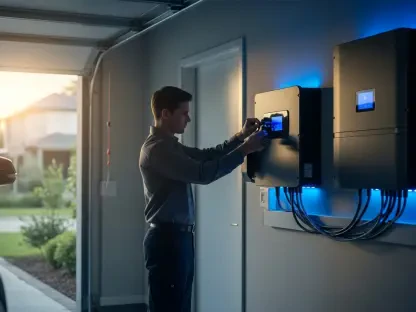
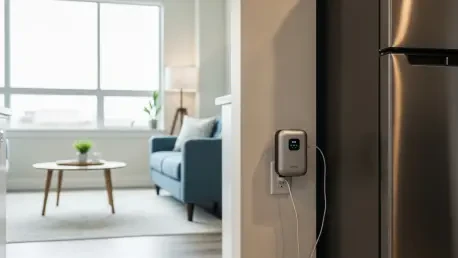
At the heart of this transformative effort is the blipOne, a compact smart battery meticulously engineered for user accessibility and immediate impact. Physically smaller than a carry-on suitcase, it stands as a true “drop-in solution” designed to democratize energy management. The device sidesteps the complex and costly installations typically associated with home energy storage, requiring users to simply plug it into a standard wall outlet near a high-load appliance, such as a refrigerator or a window air conditioner, and connect it to their home Wi-Fi network. This elegant simplicity makes advanced energy technology available to a broader audience than ever before, including renters and residents of older buildings who have historically been excluded from the benefits of clean-tech innovations. The blipOne effectively removes the barriers to entry, offering a tangible path for everyday consumers to take control of their energy consumption without needing specialized knowledge or permanent modifications to their homes.
The core function of the blipOne is to execute a process known as energy arbitrage with sophisticated precision. The intelligent system continuously monitors real-time electricity pricing and grid conditions, strategically charging its internal battery during off-peak hours when electricity is both cheapest and most abundant. It then automatically discharges this stored power to run connected appliances during peak demand periods, typically in the late afternoon and early evening, when electricity is most expensive and the grid is under maximum strain. By shifting electricity usage from high-cost to low-cost times, the device generates direct savings for the end-user, with Blip Energy estimating that a single unit can reduce a household’s annual utility bill by up to $300. Beyond the financial benefits, the battery is engineered to provide up to 2.5 kilowatt-hours of energy, offering the invaluable bonus of backup power during grid outages and ensuring that essential appliances remain operational when they are needed most.
A Strategic Partnership Forged in Innovation
Blip Energy’s trajectory from an ambitious startup to a commercially viable enterprise is being significantly accelerated by its selection into the 14th cohort of the Wells Fargo Innovation Incubator (IN2) program, which launched in November 2023. This cohort was specifically assembled to support the development of scalable, drop-in solutions that maximize energy efficiency in the built environment. Through the IN2 program, Blip Energy received $200,000 in non-dilutive funding, a crucial form of support that allows the company to retain full ownership while advancing its technology. This funding is uniquely structured as a grant for technical assistance from the National Laboratory of the Rockies, giving the startup direct access to the lab’s world-class facilities, cutting-edge capabilities, and, most importantly, its deep reservoir of scientific and engineering expertise. This model serves as a powerful catalyst, bridging the gap between a promising prototype and a market-ready product ready for widespread adoption.
The collaboration’s technical work is spearheaded by Ravi Kishore, a mechanical engineer on NLR’s building technologies team, who serves as the principal investigator for Blip’s project. His team is conducting a rigorous, third-party techno-economic assessment of the blipOne system to validate its performance and market potential from an unbiased, scientific perspective. This comprehensive analysis involves meticulous measurement of the battery’s technical capabilities, including its charging and discharging efficiency, its response speed to grid signals, and its long-term energy storage capacity. Simultaneously, the NLR team is employing sophisticated models to simulate the battery’s economic and environmental impact across a diverse range of real-world scenarios. These simulations account for variables such as different building types—from single-family homes to large hospitals—as well as varying climates and complex utility rate structures, like the time-of-use rates found in New York, to precisely quantify the technology’s value in both energy units and dollar savings.
From a Single Device to a Grid-Scale Solution
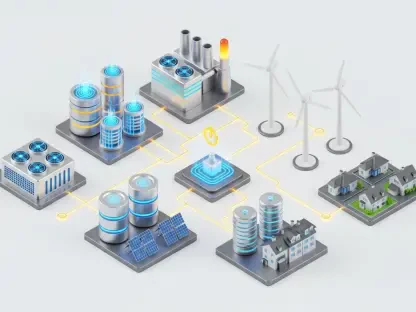
While individual blipOne units provide tangible benefits to homeowners and renters, the technology’s true transformative power is realized when deployed at a massive scale. The collective vision shared by Blip Energy and NLR is to elevate the blipOne from a smart home gadget into a powerful grid-stabilization tool. This is achieved through the creation of a “virtual power plant” (VPP)—a distributed network of thousands of connected blipOne devices that can be intelligently orchestrated to collectively reduce electricity demand on command. By aggregating the storage capacity of these individual units, a VPP can function like a traditional power plant, providing dispatchable resources to utilities to help balance supply and demand. This demand-side management strategy directly addresses one of the most pressing challenges facing the energy sector: rapidly rising electricity demand that is consistently outpacing the expansion of physical grid infrastructure.
This VPP approach offers a flexible and cost-effective alternative to building new power generation facilities, a process that is often prohibitively expensive, time-consuming, and environmentally impactful. As noted by Blip’s CEO, Chance Cobb, utilities are increasingly turning to innovative, demand-side solutions like the blipOne to manage grid constraints more efficiently, especially in dense urban areas and older buildings where infrastructure upgrades are most difficult. For owners of commercial properties and multifamily apartment buildings, the VPP model presents a compelling financial incentive. By deploying a fleet of blipOne units, building managers can significantly lower their property’s overall utility costs, pass those savings on to tenants as a value-added amenity, and ultimately increase the property’s market value and appeal. It represents a paradigm shift where consumers become active partners in creating a more reliable and affordable energy future.
The Foundation of Credibility and Growth
The partnership with the National Laboratory of the Rockies provided Blip Energy with a foundation of scientific validation and strategic insight that proved indispensable. Chance Cobb, Blip’s CEO, highlighted that the “thought leadership” from Ravi Kishore and his team was instrumental, challenging the company’s internal assumptions and helping to sharpen its value proposition for diverse customer segments. This expert guidance was critical in refining the business strategy and identifying the optimal incentive structures needed for a successful commercial launch. Beyond the technical data, the unbiased verification from a globally respected institution like NLR lent the blipOne immense credibility in the market. This third-party, science-based validation strengthened confidence among potential customers, strategic partners, and investors, providing a solid platform as the company pursued essential UL certification for safety and quality. The tangible financial impact of this support structure was clear, as portfolio companies in the IN2 program had historically raised an average of over $121 in follow-on funding for every dollar invested by Wells Fargo, underscoring how such programs catalyze the transition of innovative technologies from prototype to commercial success.Fixed version:
A strategic collaboration between the Chicago-based startup Blip Energy and the esteemed National Laboratory of the Rockies (NLR) is redefining the boundaries of our electrical grid, suggesting a future where grid stability is managed not by massive, centralized power stations, but by a network of small devices in our homes. This partnership, propelled by the Wells Fargo Innovation Incubator (IN2) program, is focused on the rigorous validation of the blipOne smart battery system. The initiative seeks to demonstrate how a simple, consumer-facing product can be scaled into a sophisticated, grid-supporting solution that enhances energy efficiency, slashes electricity costs for households, and bolsters the reliability of our increasingly strained power infrastructure. It represents a pivotal shift from building more power plants to making smarter use of the energy we already produce, turning individual living rooms into active participants in a more resilient and cost-effective energy ecosystem.
The Dawn of a Plug-and-Play Energy Solution
At the heart of this transformative effort is the blipOne, a compact smart battery meticulously engineered for user accessibility and immediate impact. Physically smaller than a carry-on suitcase, it stands as a true “drop-in solution” designed to democratize energy management. The device sidesteps the complex and costly installations typically associated with home energy storage, requiring users to simply plug it into a standard wall outlet near a high-load appliance, such as a refrigerator or a window air conditioner, and connect it to their home Wi-Fi network. This elegant simplicity makes advanced energy technology available to a broader audience than ever before, including renters and residents of older buildings who have historically been excluded from the benefits of clean-tech innovations. The blipOne effectively removes the barriers to entry, offering a tangible path for everyday consumers to take control of their energy consumption without needing specialized knowledge or permanent modifications to their homes.
The core function of the blipOne is to execute a process known as energy arbitrage with sophisticated precision. The intelligent system continuously monitors real-time electricity pricing and grid conditions, strategically charging its internal battery during off-peak hours when electricity is both cheapest and most abundant. It then automatically discharges this stored power to run connected appliances during peak demand periods, typically in the late afternoon and early evening, when electricity is most expensive and the grid is under maximum strain. By shifting electricity usage from high-cost to low-cost times, the device generates direct savings for the end-user, with Blip Energy estimating that a single unit can reduce a household’s annual utility bill by up to $300. Beyond the financial benefits, the battery is engineered to provide up to 2.5 kilowatt-hours of energy, offering the invaluable bonus of backup power during grid outages and ensuring that essential appliances remain operational when they are needed most.
A Strategic Partnership Forged in Innovation
Blip Energy’s trajectory from an ambitious startup to a commercially viable enterprise is being significantly accelerated by its selection into the 14th cohort of the Wells Fargo Innovation Incubator (IN2) program, which launched in November 2023. This cohort was specifically assembled to support the development of scalable, drop-in solutions that maximize energy efficiency in the built environment. Through the IN2 program, Blip Energy received $200,000 in non-dilutive funding, a crucial form of support that allows the company to retain full ownership while advancing its technology. This funding is uniquely structured as a grant for technical assistance from the National Laboratory of the Rockies, giving the startup direct access to the lab’s world-class facilities, cutting-edge capabilities, and, most importantly, its deep reservoir of scientific and engineering expertise. This model serves as a powerful catalyst, bridging the gap between a promising prototype and a market-ready product ready for widespread adoption.
The collaboration’s technical work is spearheaded by Ravi Kishore, a mechanical engineer on NLR’s building technologies team, who serves as the principal investigator for Blip’s project. His team is conducting a rigorous, third-party techno-economic assessment of the blipOne system to validate its performance and market potential from an unbiased, scientific perspective. This comprehensive analysis involves meticulous measurement of the battery’s technical capabilities, including its charging and discharging efficiency, its response speed to grid signals, and its long-term energy storage capacity. Simultaneously, the NLR team is employing sophisticated models to simulate the battery’s economic and environmental impact across a diverse range of real-world scenarios. These simulations account for variables such as different building types—from single-family homes to large hospitals—as well as varying climates and complex utility rate structures, like the time-of-use rates found in New York, to precisely quantify the technology’s value in both energy units and dollar savings.
From a Single Device to a Grid-Scale Solution
While individual blipOne units provide tangible benefits to homeowners and renters, the technology’s true transformative power is realized when deployed at a massive scale. The collective vision shared by Blip Energy and NLR is to elevate the blipOne from a smart home gadget into a powerful grid-stabilization tool. This is achieved through the creation of a “virtual power plant” (VPP)—a distributed network of thousands of connected blipOne devices that can be intelligently orchestrated to collectively reduce electricity demand on command. By aggregating the storage capacity of these individual units, a VPP can function like a traditional power plant, providing dispatchable resources to utilities to help balance supply and demand. This demand-side management strategy directly addresses one of the most pressing challenges facing the energy sector: rapidly rising electricity demand that is consistently outpacing the expansion of physical grid infrastructure.
This VPP approach offers a flexible and cost-effective alternative to building new power generation facilities, a process that is often prohibitively expensive, time-consuming, and environmentally impactful. As noted by Blip’s CEO, Chance Cobb, utilities are increasingly turning to innovative, demand-side solutions like the blipOne to manage grid constraints more efficiently, especially in dense urban areas and older buildings where infrastructure upgrades are most difficult. For owners of commercial properties and multifamily apartment buildings, the VPP model presents a compelling financial incentive. By deploying a fleet of blipOne units, building managers can significantly lower their property’s overall utility costs, pass those savings on to tenants as a value-added amenity, and ultimately increase the property’s market value and appeal. It represents a paradigm shift where consumers become active partners in creating a more reliable and affordable energy future.
The Foundation of Credibility and Growth
The partnership with the National Laboratory of the Rockies provided Blip Energy with a foundation of scientific validation and strategic insight that proved indispensable. Chance Cobb, Blip’s CEO, highlighted that the “thought leadership” from Ravi Kishore and his team was instrumental, challenging the company’s internal assumptions and helping to sharpen its value proposition for diverse customer segments. This expert guidance was critical in refining the business strategy and identifying the optimal incentive structures needed for a successful commercial launch. Beyond the technical data, the unbiased verification from a globally respected institution like NLR lent the blipOne immense credibility in the market. This third-party, science-based validation strengthened confidence among potential customers, strategic partners, and investors, providing a solid platform as the company pursued essential UL certification for safety and quality. The tangible financial impact of this support structure was clear, as portfolio companies in the IN2 program had historically raised an average of over $121 in follow-on funding for every dollar invested by Wells Fargo, underscoring how such programs catalyze the transition of innovative technologies from prototype to commercial success.