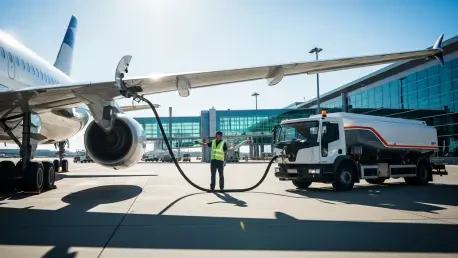

A new legislative proposal, Representative Sharice Davids’ “Securing America’s Fuels Act,” is aiming to fundamentally reshape the financial landscape for sustainable aviation fuel (SAF), potentially accelerating the aviation industry’s sluggish journey toward decarbonization. This ambitious bill, H.R. 6518, introduced on December 9, 2025, proposes significant amendments to the Internal Revenue Code, signaling a major federal push to make greener skies an economic reality rather than a distant aspiration. By enhancing tax credits and providing long-term market stability, the legislation directly confronts the primary obstacles that have historically hindered the widespread adoption of SAF: high production costs and investment uncertainty. The bill’s success could mark a pivotal moment, determining whether alternative fuels remain a niche solution or become the mainstream power source for the next generation of air travel.
A Closer Look at the Legislative Framework
Revamping Financial Incentives
The core of the “Securing America’s Fuels Act” is a strategic overhaul of the clean fuel production tax credit, specifically tailored to invigorate the SAF market through a sophisticated, tiered incentive structure. The legislation proposes a substantial increase in the credit amount, raising it from 20 cents to 35 cents per gallon for fuel produced at one category of qualified facility, a move designed to support emerging technologies and smaller-scale producers. More significantly, for fuel originating from another, presumably more advanced or capital-intensive, type of qualified facility, the bill escalates the credit from an already notable $1.00 to a powerful $1.75 per gallon. This dual-pronged approach is not merely a blanket subsidy; it is a carefully calibrated mechanism intended to foster a diverse and resilient SAF supply chain. By offering different levels of support, the policy encourages both the scaling of existing, proven production methods and the commercialization of next-generation technologies that are crucial for long-term sustainability and cost reduction in the aviation sector.
Further bolstering its economic impact, the bill addresses one of the most significant barriers to long-term investment in the green fuels sector: policy uncertainty. By proposing a crucial extension of the clean fuel production credit’s applicability, the legislation aims to provide the market stability necessary for companies to commit to large-scale, capital-intensive projects. The eligibility deadline for fuel sales to qualify for the enhanced credits would be moved from the end of 2029 to the end of 2033, creating a much longer and more predictable runway for investment. This four-year extension is a clear signal to producers, financiers, and infrastructure developers that the federal government is committed to a sustained energy transition in aviation. Such long-term certainty is paramount for projects that can take years to plan, permit, and build. It de-risks private investment, making it more attractive for companies to build new biorefineries and scale up production capacity, with all proposed changes slated to apply to any fuel produced after December 31, 2025, ensuring immediate relevance.
Defining the Terms of Sustainability
To ensure that these powerful financial incentives are channeled exclusively toward genuinely sustainable products, the bill establishes a precise and rigorous definition of “sustainable aviation fuel.” To qualify for the tax credits, a liquid fuel must first meet the stringent technical benchmarks set by ASTM International, a globally recognized leader in standards development. Specifically, the fuel must conform to either Standard D7566, which covers the production and blending of synthetic aviation fuels, or the Fischer-Tropsch provisions outlined in Standard D1655, which governs conventional jet fuel but includes an annex for synthetically derived kerosene. Adherence to these standards is non-negotiable, as it guarantees that the fuel is a “drop-in” replacement, meaning it is chemically identical to its petroleum-based counterpart and can be used safely in existing aircraft and airport infrastructure without any modifications. This technical requirement is critical for maintaining the aviation industry’s impeccable safety record while facilitating a seamless transition to cleaner energy sources.
Beyond the technical specifications, the legislation makes a clear statement on the sources of SAF by explicitly excluding fuels derived from certain controversial or unsustainable feedstocks. The bill states that fuels created from kerosene, petroleum, or palm fatty acid distillates will not qualify for the tax credits. The exclusion of kerosene and petroleum is foundational, as it ensures the incentives are directed away from fossil fuels and toward advanced alternatives. The specific prohibition of palm fatty acid distillates is particularly noteworthy, reflecting a growing global awareness of the environmental issues associated with palm oil production, including deforestation and habitat loss in critical ecosystems. By drawing these clear lines, the bill actively steers the burgeoning SAF industry toward more responsible and innovative sources, such as agricultural residues, municipal solid waste, and other non-traditional feedstocks, thereby promoting a more holistic and globally conscious approach to decarbonizing air travel.
Broader Implications for Industry and Investment
Impact on Airlines and Manufacturers
The ripple effects of the “Securing America’s Fuels Act” are expected to extend far beyond fuel producers, creating significant opportunities for major players across the aviation ecosystem, particularly airlines and aircraft manufacturers. For major carriers like Delta Air Lines (DAL) and American Airlines (AAL), the availability of tax-incentivized SAF presents a direct pathway to reducing one of their largest and most volatile expenses: fuel costs. A lower net price for sustainable fuel would not only improve their operating margins but also empower them to make substantial progress toward their ambitious corporate sustainability goals and meet evolving regulatory mandates for emissions reductions. This could translate into a distinct competitive advantage, appealing to an increasingly environmentally conscious customer base and ESG-focused investors. Widespread adoption of cost-effective SAF would allow airlines to decarbonize their operations without necessarily passing the full cost premium on to passengers, a critical factor for maintaining affordability and demand in the highly competitive travel market.
Simultaneously, a thriving and stable SAF market, as envisioned by the bill, is poised to stimulate innovation and demand within the aerospace manufacturing and technology sectors. A company like The Boeing Company (BA) would likely see an increased appetite for its modern, fuel-efficient aircraft, especially as the industry moves toward certifying aircraft to fly on 100% SAF blends, up from the current 50% limit. This policy-driven demand for greener fuels creates a powerful business case for manufacturers to continue investing in research and development for more efficient airframes and propulsion systems. Furthermore, technology and defense giants such as Lockheed Martin (LMT) could also find new avenues for growth. Their expertise in advanced materials, complex systems integration, and logistics could be pivotal in developing new SAF production technologies or in deploying the necessary infrastructure to support a global SAF supply chain, including applications for military aircraft that share fuel requirements with their commercial counterparts.
A New Legislative Precedent
The introduction of the “Securing America’s Fuels Act” sparked a significant and necessary conversation about the federal government’s role in decarbonizing hard-to-abate sectors. The bill’s detailed framework for enhanced, multi-tiered tax credits and its long-term policy horizon established a new precedent for how to bridge the economic gap between conventional fossil fuels and their sustainable alternatives. This legislative action moved the dialogue beyond corporate pledges and industry roadmaps, grounding the transition in concrete financial mechanisms designed to catalyze private investment and accelerate technological scaling. It provided a clear and actionable blueprint that stakeholders in the aviation and energy industries could use to model future investments and operational strategies. The bill’s focus on both economic viability and strict sustainability criteria demonstrated a sophisticated understanding of the challenges at hand, ultimately setting a higher standard for future climate-related industrial policy and creating a tangible pathway toward a cleaner future for aviation.