
The intersection of high-capacity telecommunications and energy infrastructure has transformed Chattanooga into a living laboratory for the next generation of municipal power management. EPB Chattanooga has evolved from a traditional utility into a global leader in smart grid innovation, fundamentally changing how cities approach energy reliability. By integrating a community-wide fiber-optic network with advanced energy assets, the utility is pioneering a “self-healing” grid designed to automatically detect, isolate, and resolve disruptions. This transition leverages a massive deployment of battery storage, sophisticated microgrid technology, and federal investment to redefine the relationship between a utility and its customers. The strategic combination of physical hardening and digital intelligence allows the region to maintain power even during the face of extreme weather and surging demand.
The Evolution of the Smart Grid in Chattanooga
The journey toward a fully automated grid began when EPB deployed one of the first community-wide gigabit fiber-optic networks. This communication backbone provided the essential digital nervous system required for real-time monitoring and high-speed data transfer. Historically, utilities relied on manual reporting and physical inspections to address outages—a slow process that often left customers without power for extended periods. However, by layering automation atop its existing fiber infrastructure, EPB shifted the paradigm from reactive maintenance to proactive management. This commitment to modernization set the stage for current milestones, including the deployment of five battery-based microgrids that represent the next frontier in utility-scale resilience.
Integrating Advanced Infrastructure for Grid Autonomy
Leveraging Energy Storage for Financial Stability and Peak Shaving
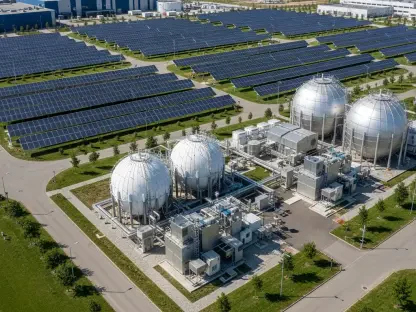
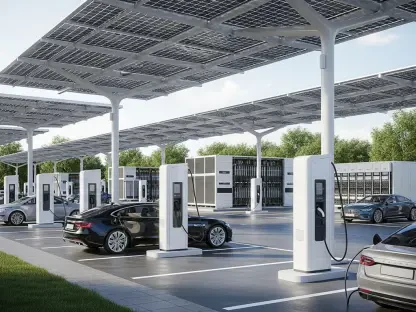
A critical pillar of the current strategy is the deployment of 29 MW/58 MWh of battery-based storage, which is part of a larger plan to scale up to 150 MW within the next three years. These front-of-the-meter assets serve a dual purpose that balances operational needs with economic logic. Primarily, the storage systems are used for “peak shaving” to mitigate high demand charges imposed by the Tennessee Valley Authority (TVA). Since these charges can account for nearly one-third of total power purchase costs, using batteries to discharge during the highest-usage hour of the month creates massive financial savings. This economic efficiency provides the capital necessary to reinvest in grid hardening, creating a sustainable cycle of improvement.
Enhancing Reliability Through Dynamic Microgrid Control
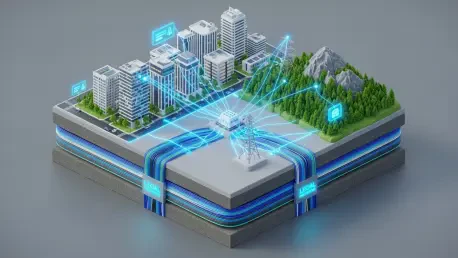
Beyond financial gains, the utility is implementing a sophisticated microgrid control platform developed in collaboration with Oak Ridge National Laboratory (ORNL). This technology allows microgrid boundaries to be “elastic,” expanding or contracting based on real-time supply and demand conditions. Unlike traditional static systems, these “nested” microgrids can isolate themselves from the main grid during a failure while still providing power to localized areas. For a service territory that includes both dense urban centers and rugged mountainous terrain, this flexibility is essential. It ensures that if a main transmission line fails, the microgrid automatically reconfigures itself to keep the lights on for critical customers.
Physical Hardening and the Mitigation of Environmental Risks
The self-healing grid is not purely a digital creation; it requires a robust physical foundation to survive environmental stressors. Supported by a $32.3 million Department of Energy grant, EPB is aggressively replacing aging infrastructure and moving over 100 miles of power lines underground. This transition is vital for mitigating the impacts of extreme weather, which remains the leading cause of large-scale outages across North America. By combining undergrounding with long-duration storage—specifically at the ends of radial distribution lines in semi-rural areas—the utility ensures that isolated communities are not left behind during storms. This multi-layered approach proves that hardware durability is just as critical as software intelligence.
Future Trends in Autonomous Utility Management
The success of the Chattanooga model signals a broader shift toward the decentralization of the American power grid. In the coming years, more municipal utilities will likely adopt behind-the-meter storage strategies to gain independence from bulk power providers. Innovations in artificial intelligence and machine learning will further refine control platforms, allowing grids to predict equipment failures before they occur based on weather patterns and health metrics. Furthermore, as battery costs continue to decline, the expansion of storage capacity will become a standard roadmap for utilities seeking to balance renewable energy integration with twenty-four-hour reliability. The transition toward autonomous, self-balancing networks is becoming the new baseline for urban development.
Strategic Takeaways for Modern Grid Resilience
For utility professionals and policymakers, the Chattanooga initiative offers several actionable insights into modernizing aging infrastructure. First, the integration of telecommunications and energy infrastructure is a prerequisite for true grid automation and real-time response. Second, storage should be viewed as both a financial tool for cost suppression and a physical tool for localized resilience. Best practices suggest that utilities should prioritize nested microgrid architectures to provide support during catastrophic events that bypass traditional backup systems. By securing federal grants and partnering with national laboratories, other regions can implement similar hybrid models that protect against both rising energy costs and increasing environmental volatility.
Establishing a New Standard for Energy Security
EPB Chattanooga’s initiative demonstrated that a self-healing grid was no longer a futuristic concept but a functional reality for modern municipalities. By blending high-capacity hardware with dynamic software and proactive physical hardening, the utility created a blueprint for the modern energy landscape. This transformation addressed the core challenges of infrastructure aging and climate volatility while providing a stable economic foundation for the community. Ultimately, the commitment to innovation ensured that the region remained at the forefront of the global energy transition. The project successfully established a resilient, cost-effective power solution that secured the technological and economic future for all residents, proving that localized control is the key to long-term stability.