
The utility industry stands at a dangerous crossroads where its rapid technological evolution has dramatically outpaced its cybersecurity capabilities, creating an environment where traditional, rule-based security is no longer sufficient to protect the nation’s power infrastructure from a new wave of sophisticated, relentless cyber threats. This stark reality demands a fundamental and urgent shift toward “smart cybersecurity”—a proactive, adaptive, and deeply integrated multi-layered defense strategy powered by artificial intelligence. Such a paradigm shift is not merely an enhancement but an absolute necessity for ensuring the resilience and integrity of the critical services that power modern society. By moving beyond outdated, reactive measures, organizations can begin to build a defense that learns, anticipates, and neutralizes threats before they can cause widespread disruption, transforming security from a constant firefight into a strategic, predictive operation that is equipped to handle the complexities of the modern threat landscape.
The Modern Threat Landscape
A Perfect Storm of Vulnerability
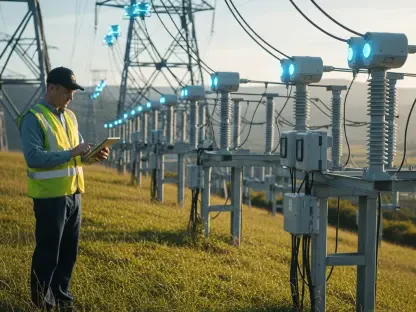
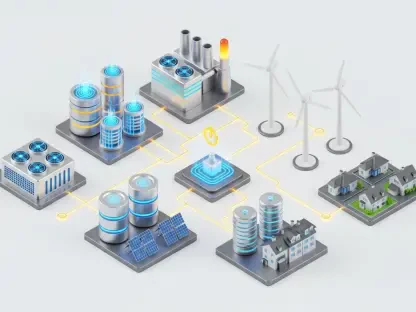
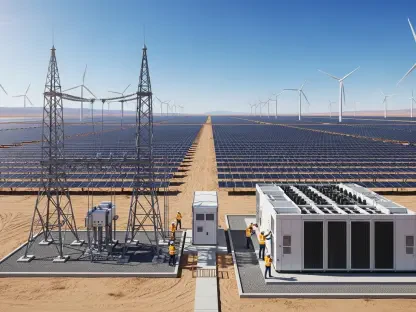
A perfect storm of vulnerabilities has emerged from the ongoing convergence of legacy operational technology (OT) with modern information technology (IT), a process that has fundamentally reshaped the security posture of the utility sector. Previously isolated industrial control systems, such as SCADA, which manage physical processes, are now increasingly connected to corporate IT networks and the broader internet. This integration is driven by the need to support advanced smart grid functionalities, enable remote monitoring, and leverage the efficiency gains offered by a vast ecosystem of Internet of Things (IoT) devices like smart meters and environmental sensors. While this digital transformation unlocks significant operational benefits, it has inadvertently created a vast and porous attack surface. This interconnectedness has effectively dissolved the air gap that once protected critical systems, opening countless new and often unsecured entry points for malicious actors to probe, infiltrate, and exploit systems that were never designed with modern cybersecurity principles in mind.
The inherent risks of this convergence are compounded by the age and design of the underlying operational infrastructure, much of which predates the era of modern cyber threats. Many utilities continue to rely on outdated and often unpatchable legacy systems that were engineered for reliability and physical isolation, not for resilience against sophisticated digital attacks. These systems frequently contain critical security gaps, such as hardcoded credentials or a lack of encryption, that are trivial for attackers to exploit once they gain a foothold on the network. The challenge is that these vulnerabilities cannot be easily remediated through standard patching cycles, as taking these systems offline for updates could disrupt essential services. Consequently, this creates a landscape of persistent, unmitigated risks, where attackers can leverage well-known weaknesses to move laterally from less critical IT systems into the highly sensitive OT environment, where they can manipulate physical processes with potentially catastrophic consequences for public safety and national security.
A High-Value, Under-Resourced Target
This dangerously expanded and fragile attack surface is made all the more precarious by a set of systemic weaknesses that plague much of the utility industry, particularly smaller municipal and cooperative organizations. These entities often operate with severely limited security budgets and face a chronic shortage of skilled cybersecurity professionals who possess the specialized knowledge required to defend both IT and OT environments. This resource constraint forces many security teams into a perpetually reactive, “firefighting” mode, where they are stretched thin just trying to manage a constant stream of alerts and incidents, leaving little to no time for proactive threat hunting, strategic planning, or security architecture improvements. This operational reality means that even basic security hygiene practices can fall by the wayside, creating an environment ripe for exploitation by attackers who are adept at identifying and capitalizing on such organizational weaknesses to achieve their objectives with minimal effort.
Simultaneously, the national power grid and its associated infrastructure have solidified their status as a prime target for a diverse range of malicious actors, each with distinct motivations and capabilities. On one hand, profit-driven cybercriminals see utilities as lucrative targets for ransomware, correctly assuming that these organizations are highly likely to pay a ransom quickly to restore essential services and avoid public backlash. On the other hand, the grid is a strategic objective for sophisticated and patient nation-state actors, such as the group known as “Volt Typhoon,” who seek to establish long-term, persistent access for the purposes of espionage or to position themselves to cause widespread disruption during a future conflict. These advanced persistent threats (APTs) often exploit low-hanging fruit like default credentials and outdated software to gain initial access, then use stealthy techniques to remain undetected for months or even years while they map the network and escalate privileges, patiently waiting for the opportune moment to strike.
The Five-Layered AI Defense Architecture
Foundational and Assistive Layers
The foundation of this advanced defense architecture is established by the first layer, which incorporates First-Generation AI and Deep Learning ML. This layer serves as the predictive core of the entire security system, moving far beyond the limitations of traditional, signature-based detection methods that can only identify known threats. Instead, it leverages sophisticated machine learning algorithms to process and analyze vast streams of historical and real-time data from across the entire IT/OT environment. By establishing a dynamic baseline of normal user and system behavior, it can instantly identify subtle deviations and anomalous activities—such as unusual login patterns from a new geographic location, abnormal data transfer volumes, or unexpected process executions—that are often the earliest indicators of compromise. This predictive analytics capability enables security teams to detect and neutralize threats, including novel malware and zero-day exploits, with a speed and accuracy that is simply unattainable for human analysts or legacy systems alone.
Building upon this predictive foundation, the second layer introduces Generative AI as a powerful force multiplier for human defenders. Functioning as an intelligent “copilot” or personal assistant, this layer is designed to augment the capabilities of the Security Operations Center (SOC) team. When the foundational AI layer flags a potential threat, Generative AI can instantly help analysts triage the alert by summarizing petabytes of relevant log data, providing crucial context about the affected systems, and correlating the event with global threat intelligence feeds. It can articulate the potential impact of an incident in plain language and even suggest initial investigation steps or containment actions. This dramatically reduces the cognitive load on analysts, accelerates incident response times, and allows even junior team members to investigate complex threats more effectively, freeing up senior personnel to focus on high-level strategic initiatives and proactive threat hunting rather than being bogged down in routine, time-consuming analysis tasks.
Advanced Correlation and Automation
The third layer of the architecture employs Graph ML, a specialized form of machine learning uniquely suited to uncovering the hidden relationships between seemingly disparate security alerts and events. In a complex cyberattack, malicious activity is rarely confined to a single system or alert; instead, it manifests as a chain of events spread across multiple endpoints, servers, and network segments. Human analysts often struggle to piece together this puzzle from a sea of noisy, isolated alerts. Graph ML automates this process by mapping the intricate connections between users, devices, applications, and data flows. By doing so, it can automatically surface complex, multi-stage attack campaigns—such as an intrusion that begins with a phishing email, moves laterally to a domain controller, and culminates in data exfiltration—providing a holistic, visual narrative of a threat’s progression that would be virtually undetectable to the human eye, enabling a more comprehensive and effective response.
Following the advanced correlation provided by Graph ML, the fourth layer introduces Hyperautomation, representing a significant evolution of traditional Security Orchestration, Automation, and Response (SOAR) platforms. While early automation focused on executing simple, linear playbooks in response to specific triggers, Hyperautomation is designed to orchestrate and execute entire complex security operations workflows with minimal human involvement. It integrates deeply with the entire security stack to automate the end-to-end threat response lifecycle, from initial detection and investigation to containment, eradication, and recovery. For example, upon detection of a sophisticated threat, a Hyperautomation workflow could automatically isolate the compromised endpoint from the network, retrieve relevant forensic artifacts, detonate the malicious file in a sandbox, and update firewall rules and endpoint protection policies across the enterprise—all within seconds. This dramatically reduces mean time to respond (MTTR), minimizes the potential for human error in high-pressure situations, and ensures a consistent, scalable defense.
Transforming Security Operations
The Pinnacle of Proactive Defense
At the apex of this multi-layered architecture is the fifth and most advanced layer: Agentic AI. This technology represents the final step in the transition from a reactive to a truly proactive defense posture by enabling goal-driven autonomy within security operations. Unlike automated systems that simply follow predefined scripts, Agentic AI systems are designed to understand high-level security objectives—such as “prevent disruption to power distribution” or “protect sensitive customer data”—and then independently reason, plan, and execute the necessary actions to achieve those goals. These AI agents can autonomously prioritize threats based on their potential impact, triage alerts without human supervision, and initiate defensive countermeasures in real time. This capability is a game-changer, especially for the lean security teams common in the utility sector, allowing them to scale their effectiveness exponentially and manage a volume and velocity of threats that would otherwise be completely overwhelming.
The implementation of Agentic AI fundamentally alters the operational dynamic of the SOC, empowering security teams to get ahead of adversaries rather than constantly playing catch-up. By offloading the bulk of threat prioritization and initial response actions to these intelligent agents, human analysts are liberated from the tyranny of the alert queue. This allows them to shift their focus toward more strategic, high-value activities that require human creativity and critical thinking, such as proactive threat hunting for novel adversary techniques, analyzing systemic risks within the infrastructure, and refining the organization’s overall security strategy. In essence, Agentic AI acts as an autonomous extension of the security team, tirelessly monitoring the environment and handling threats at machine speed, thereby creating a resilient and adaptive defense that can anticipate and counter threats before they escalate into major incidents.
A New Paradigm in Resilience
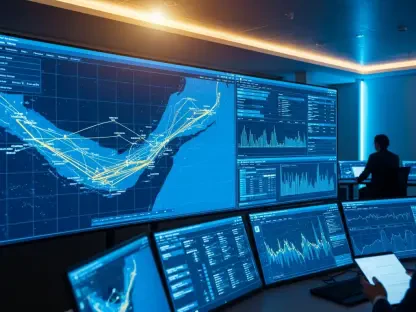
The holistic implementation of this five-layered AI framework ultimately redefined what resilience meant for the nation’s critical infrastructure. By integrating these distinct yet interconnected layers of artificial intelligence, utility organizations successfully achieved unified visibility across their entire, previously fragmented IT and OT landscapes, which eliminated the dangerous security blind spots that had long plagued their defensive efforts. This comprehensive approach catalyzed a fundamental transformation within the Security Operations Center, evolving it from a chaotic, reactive environment struggling to keep pace with an endless flood of alerts into a strategic and predictive command center. The fusion of predictive analytics, assistive AI, advanced correlation, and autonomous agents created an intelligent, adaptive shield that not only responded to threats in real time but also learned continuously from the ever-changing threat landscape, ensuring that defenses grew stronger and smarter with every attempted attack, which secured the vital services that underpinned modern society.