
For local governments caught between tightening budgets and the escalating demands of climate change, the path forward often appears to be a choice between fiscal responsibility and environmental stewardship. Yet, the Telford & Wrekin Council has demonstrated that these two objectives are not mutually exclusive but are deeply interconnected. By strategically framing climate action as a direct investment in economic resilience, the council has achieved an impressive 63% reduction in its carbon emissions while simultaneously generating substantial cost savings and protecting public services. This comprehensive approach, which balances aggressive emissions mitigation with pragmatic adaptation to current climate realities, provides a powerful blueprint for how proactive environmental policy can become a cornerstone of sound financial management, ultimately benefiting the entire community. The rising costs of flood defenses and emergency responses to extreme weather are no longer distant threats but present-day financial burdens, reinforcing the urgent economic case for immediate and decisive action.
Modernizing Public Infrastructure for Long-Term Savings
A foundational element of the council’s success has been its systematic focus on reducing energy consumption across its own buildings and infrastructure, leading to a 28% overall drop in energy use. This strategy is vividly illustrated by targeted, high-impact projects at key community facilities. For instance, upgrades at the Oakengates Leisure Center have delivered remarkable results, cutting annual carbon emissions by 161 tonnes and slashing energy costs by an incredible 45%. These are not just numbers on a spreadsheet; the council has ensured that these financial savings are directly reinvested into vital frontline public services, creating a virtuous cycle of economic and environmental benefit. This model is further supported by the strategic use of external funding, such as the £1.1 million grant secured for the Wellington Leisure Center, which is projected to reduce its carbon footprint by 70 tonnes of CO₂ equivalent each year while significantly lowering ongoing operational expenses.
Beyond retrofitting existing structures, the council is embedding sustainability into the very fabric of its future developments, a strategy designed to preemptively minimize long-term operational costs. The planned Captain Matthew Webb Swimming and Fitness Center in Dawley serves as a prime example of this forward-thinking approach. By integrating energy efficiency and sustainable design as core principles from the initial planning stages, the council aims to ensure the facility is future-proofed against rising energy prices and environmental regulations. This proactive investment in green architecture is a calculated financial decision, shielding public services from the volatility of future energy markets and guaranteeing that new community assets remain affordable and resilient for decades. This philosophy underscores a crucial shift from viewing sustainability as an added expense to recognizing it as an essential component of responsible, long-term asset management and fiscal prudence.
Building Sustainable Communities and Easing Resident Burdens
The council’s climate strategy extends far beyond its own operations, directly addressing the needs of its residents by linking carbon reduction efforts with initiatives to combat fuel poverty and the ongoing cost-of-living crisis. Through its housing company, NuPlace, it has delivered 132 new, highly energy-efficient properties equipped with modern features like solar panels and electric vehicle (EV) charging points. With an additional 161 low-energy homes currently under construction, including a major development achieving the highest possible EPC ‘A’ rating for environmental impact, the council is actively lowering the daily running costs for hundreds of families. This focus on sustainable housing makes the climate agenda tangible and personally beneficial for the local population, demonstrating that environmental responsibility can lead directly to improved financial well-being and a higher quality of life for residents across the economic spectrum.
To further amplify its impact, the council has implemented programs that provide direct financial and practical support to households, particularly those most vulnerable to rising energy costs. By securing a £6.7 million grant for its Affordable Warmth program, the council is financing critical energy performance upgrades for low-income families, delivering immediate and significant savings on their utility bills. This targeted aid ensures that the benefits of decarbonization are distributed equitably throughout the community. In a complementary, practical measure, the council also distributed over 16,000 energy-efficient LED bulbs to local families, a simple yet effective initiative that reduces both energy consumption and household expenses. These actions collectively reinforce the message that a comprehensive climate strategy is also a powerful tool for social support, improving financial stability and resilience for residents while advancing borough-wide environmental goals.
Investing in Clean Transport and Local Energy
Recognizing that the transport sector is a major source of emissions, the council has made substantial investments to accelerate the shift toward cleaner mobility. It is rapidly expanding its public EV charging network, leveraging over £1.7 million in grant funding to install hundreds of charging points in public parking lots and on streets. This infrastructure development is critical for removing barriers to EV adoption and supporting a widespread transition away from fossil-fuel-powered vehicles. However, the strategy is not solely focused on new technology. The council also champions active travel, as evidenced by a remarkable 47% surge in participation in its Bikeability cycle training program, which trained 1,281 pupils in the 2024/25 period. This holistic approach promotes healthier lifestyles and zero-emission transportation, demonstrating a commitment to transforming how the community moves by providing both the infrastructure for new technologies and the skills for traditional, sustainable travel.
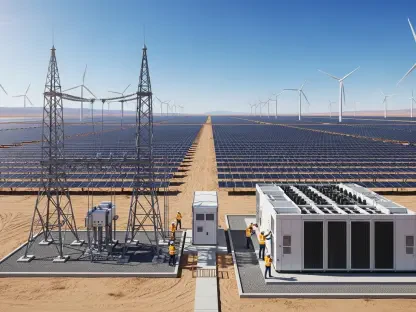
In addition to tackling energy demand, the council has become a direct contributor to the clean energy supply, positioning itself as a producer of renewable power. The Wheat Leasows solar farm stands as a key achievement in this area, having generated 3,144 MWh of electricity in the past year—a quantity sufficient to power an estimated 1,084 homes. This initiative not only contributes directly to the decarbonization of the local grid but also enhances regional energy security and creates a new revenue stream. By operating on both the demand side through efficiency measures and the supply side through generation, the council is building a more robust and resilient local energy system. This diversified portfolio of climate actions showcases a sophisticated understanding of the energy landscape, proving that local authorities can play a pivotal role in driving the transition to a sustainable, self-sufficient energy future for their communities.
Fostering a Borough-Wide Climate Alliance
The council’s strategy is built on the understanding that meaningful climate action requires a collective, community-wide effort. To this end, it has moved beyond its own operational boundaries to empower local businesses, community groups, and residents to become active participants in the transition. It actively leads the Climate Change Borough Partnership, which convenes an annual conference to unite stakeholders, share best practices, and foster a collaborative environment for innovation. This partnership model ensures that knowledge and resources are disseminated throughout the community, creating a unified front against climate change. Financial support is a critical component of this empowerment strategy. Programs like the Climate Change Fund and the Marches Energy Grant have awarded nearly £850,000 to help local organizations and businesses implement their own energy-saving and sustainability projects, amplifying the impact of the council’s initiatives and embedding climate consciousness into the fabric of the local economy.
While celebrating its significant progress in reducing emissions, the council has also formally acknowledged the immediate and escalating risks posed by a changing climate. Through a comprehensive Corporate Climate Change Risk Register, it has institutionalized a proactive approach to adaptation, ensuring that the borough is prepared for current and future environmental challenges. This forward-looking strategy prioritizes practical measures designed to build resilience and avoid the far greater future costs of inaction. Initiatives already underway include natural flood management techniques, such as strategic reed planting in Local Nature Reserves, alongside efforts to bolster emergency response capabilities for extreme weather events. This pragmatic focus on adaptation reinforces the core argument that investing in climate resilience today is an essential financial decision, safeguarding the local economy, protecting public health, and ensuring the long-term well-being of the community against the inevitable impacts of climate change.
The Financial Case for Adaptation and Resilience
Ultimately, the council’s successful journey hinged on a fundamental redefinition of value, where investments in decarbonization and resilience were understood not as expenditures but as essential safeguards for the community’s future prosperity. The formal acknowledgment of existing climate risks, coupled with proactive adaptation measures like natural flood management and enhanced emergency response, demonstrated a clear-eyed view of present-day realities. This dual strategy of mitigation and adaptation proved to be more than just an environmental policy; it was a sophisticated financial plan that protected public services, eased the cost-of-living burden on residents, and fortified the local economy against future shocks. By collaborating with partners like the Midlands Net Zero Hub, the council established a framework for continuous improvement, ensuring that its efforts to strengthen climate resilience would evolve alongside the challenges. This comprehensive approach confirmed that taking decisive, multi-faceted action was the most prudent investment to secure a sustainable and economically stable future.