
The urgent global transition toward renewable energy has created an insatiable demand for storage solutions that are not only effective but also sustainable and economically viable, a challenge that a groundbreaking class of sodium-sulfur batteries is now poised to meet. The development of high-voltage sodium-sulfur batteries represents a significant advancement in the energy storage sector. This review will explore the evolution of the technology, its key features, performance metrics, and the impact it has had on various applications. The purpose of this review is to provide a thorough understanding of the technology, its current capabilities, and its potential future development.
The Emergence of High-Voltage Sodium-Sulfur Technology
At its core, the high-voltage sodium-sulfur battery operates on the electrochemical interaction between sodium and sulfur, two of the most abundant and inexpensive elements on Earth. This fundamental chemistry positions the technology as a highly sustainable and low-cost alternative to lithium-ion systems, which rely on scarcer and more geographically concentrated materials. By leveraging common resources, these batteries present a path toward democratizing large-scale energy storage.
Historically, sodium-sulfur battery development has been constrained by significant limitations. Conventional designs required extremely high operating temperatures to maintain the molten state of the reactants, introducing complexity and safety concerns. Room-temperature variants, while safer, were plagued by low operating voltages, typically below 1.6V, which severely limited their energy density. Furthermore, their use of volatile, flammable electrolytes and large quantities of metallic sodium made them impractical for widespread adoption, a set of challenges that the new high-voltage technology directly confronts and overcomes.
Key Technological and Chemical Innovations
High-Valent Sulfur Redox Chemistry
The breakthrough that elevates this technology is a novel approach to sulfur chemistry. Researchers have successfully enabled a high-valent S⁰/S⁴⁺ redox reaction, a process that was previously considered inaccessible in a stable battery system. This reaction oxidizes sulfur to a much higher state than in traditional sodium-sulfur batteries, a shift that is directly responsible for unlocking a significantly higher operating voltage.
This advanced chemical process hinges on the in-situ formation of sulfur tetrachloride (SCl₄) within the cathode during the charging cycle. By pushing sulfur to this higher oxidation state, the battery can store and release a far greater amount of energy per unit of mass. This leap in electrochemical potential is the primary driver behind the battery’s dramatically improved energy density, allowing it to compete with the performance metrics of established lithium-ion technologies for the first time.
Advanced Electrolyte and Electrode Design
Achieving this high-valent reaction required a complete redesign of the battery’s core components. A key innovation is the integration of a bismuth catalyst into the sulfur cathode, which is instrumental in facilitating the reversible formation and decomposition of sulfur tetrachloride. This catalyst effectively lowers the energy barrier for the reaction, allowing it to proceed efficiently without requiring extreme conditions.
Equally critical is the development of a specialized sodium dicyanamide (NaDCA) electrolyte. Standard electrolytes would decompose at the voltages required to initiate the S⁰/S⁴⁺ reaction, but the NaDCA formulation remains stable, promoting the reversible S/SCl₄ conversion while also improving the efficiency of sodium plating and stripping. This electrolyte works in concert with a highly porous carbon cathode, which physically traps the newly formed SCl₄, preventing its dissolution into the electrolyte and ensuring the long-term electrochemical stability of the cell.
Anode-Free Architecture for Enhanced Safety and Cost-Effectiveness
In a significant departure from conventional battery design, this new system features an “anode-free” architecture. Instead of incorporating a pre-loaded metallic sodium anode, the battery temporarily plates a thin layer of sodium onto a simple aluminum foil current collector during the charging process. This sodium is then consumed during discharge, effectively eliminating the need for a dedicated anode component.
This innovative design yields substantial benefits in terms of cost, weight, and safety. By removing the built-in sodium anode, the material cost and overall weight of the battery are significantly reduced. More importantly, this architecture dramatically improves the safety profile. Puncture and air exposure tests have demonstrated the battery’s resilience; it does not catch fire or explode when damaged, a crucial advantage for large-scale and consumer-facing applications.
Recent Developments and Performance Benchmarks
Recent prototypes have delivered remarkable performance, achieving a milestone operating voltage of 3.6V. This figure is not only a significant leap for sodium-based batteries but is also directly comparable to the operating voltages of many commercial lithium-ion systems. This achievement effectively closes the performance gap that has long hindered room-temperature sodium batteries from being considered a viable alternative for high-power applications.
Beyond its impressive voltage, the technology has demonstrated significant advancements in safety and stability. The non-flammable electrolyte provides a foundational level of safety, which is further enhanced by its unique self-sealing property. Upon exposure to air, the liquid electrolyte solidifies, physically preventing any leakage of corrosive materials. This combination of high performance and inherent safety represents a crucial step toward creating a battery that is both powerful and reliable enough for widespread deployment.
Potential Applications for Large-Scale Energy Storage
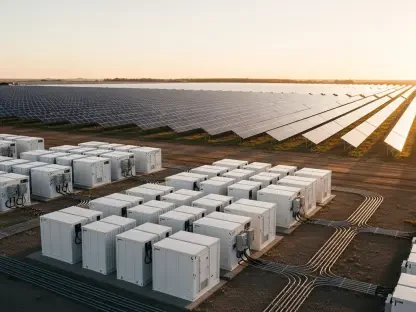
The most promising application for high-voltage sodium-sulfur technology is in grid-scale energy storage. The projected ultra-low material cost, estimated at around $5 per kilowatt-hour, makes it an economically compelling solution for utility companies and grid operators. This cost-effectiveness is derived from the use of sodium and sulfur, which are thousands of times more abundant in the Earth’s crust than lithium.
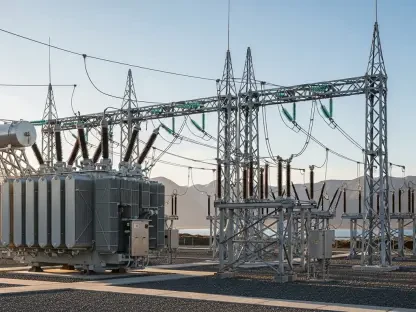
By providing an affordable and scalable method for storing energy, these batteries are positioned to play a pivotal role in modernizing the electrical grid. They can help stabilize power grids by balancing supply and demand, smooth the intermittent output from renewable energy sources like wind and solar, and reduce reliance on fossil-fuel-based peaker plants. This capability is essential for accelerating the global transition to a sustainable energy infrastructure.
Current Challenges and Ongoing Research Efforts
Despite its considerable promise, the technology must overcome several technical hurdles before widespread adoption is feasible. A primary challenge lies in scaling the manufacturing processes from laboratory prototypes to commercial-scale production without compromising performance or safety. Managing the long-term stability of the sulfur tetrachloride compound within the cathode remains a key area of focus to ensure a long operational lifespan.
Furthermore, the specialized electrolyte, while effective, can be corrosive to certain battery components over extended periods. Active research is underway to refine the electrolyte composition and identify more robust materials for other cell components to mitigate this issue. These ongoing efforts are critical for ensuring the durability and reliability required for applications like grid storage, where batteries must operate consistently for thousands of cycles.
Future Outlook and Commercialization Trajectory
The development path for high-voltage sodium-sulfur technology appears to be on an accelerated track. Based on current progress, the first small-scale products incorporating this technology are anticipated to reach the market within the next three years. A full market entry, with systems suitable for larger applications, is projected to follow within five years, positioning this technology to make a substantial impact before the end of the decade.
In the long term, the successful commercialization of this technology could fundamentally alter the global energy storage landscape. By providing a secure, affordable, and sustainable alternative to lithium-ion batteries, it has the potential to break supply chain dependencies on critical minerals. This would not only enhance energy security for many nations but also drive down the overall cost of the clean energy transition.
Conclusion: A Paradigm Shift in Sodium-Based Batteries
This review detailed the emergence of a high-voltage sodium-sulfur battery that has overcome longstanding barriers in energy storage. The core innovations—including a novel high-valent redox chemistry, a specialized electrolyte, and a safer anode-free design—were shown to be instrumental in achieving lithium-ion-like performance from abundant, low-cost materials. The analysis of its performance benchmarks and safety features confirmed its potential as a leading candidate for grid-scale applications. The examination of its commercialization timeline and remaining challenges suggested a clear but focused path toward market entry. Ultimately, the development of this technology marked a transformative moment, establishing a realistic pathway to a secure, sustainable, and affordable energy storage future.